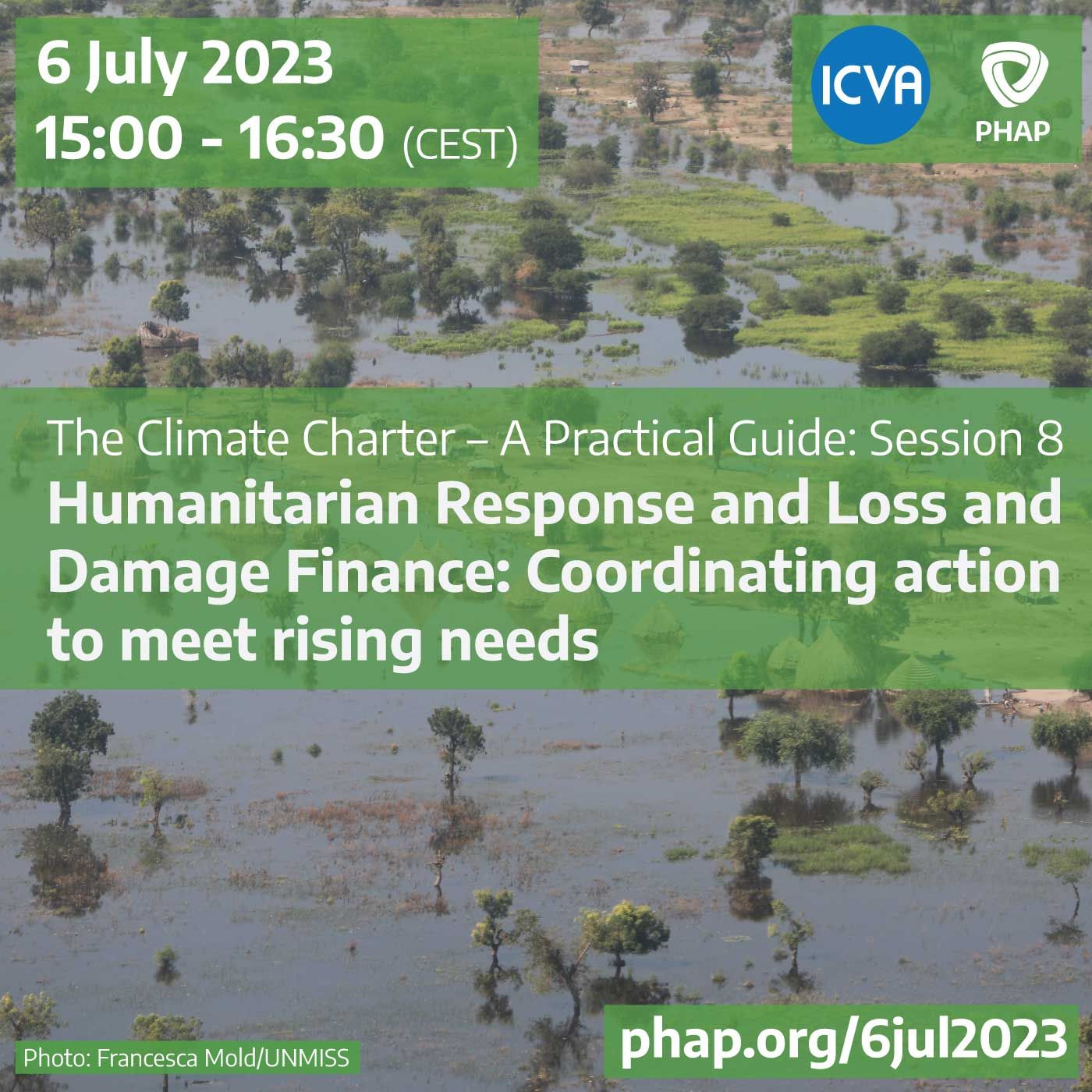
Humanitarian Response and Loss and Damage Finance: Coordinating action to meet rising needs
While both climate finance and humanitarian response aim to address the negative effects of climate change, they have different mechanisms a...

Radio and PodcastLive Radio & PodcastsOpening Radio and Podcast...

Radio and PodcastLive Radio & PodcastsFetching podcast shows and categories...
Radio and PodcastLive Radio & PodcastsFetching podcast episodes...

Learning sessions and webinars organized by the International Association of Professionals in Humanitarian Assistance and Protection open to members and the wider humanitarian community.

While both climate finance and humanitarian response aim to address the negative effects of climate change, they have different mechanisms a...
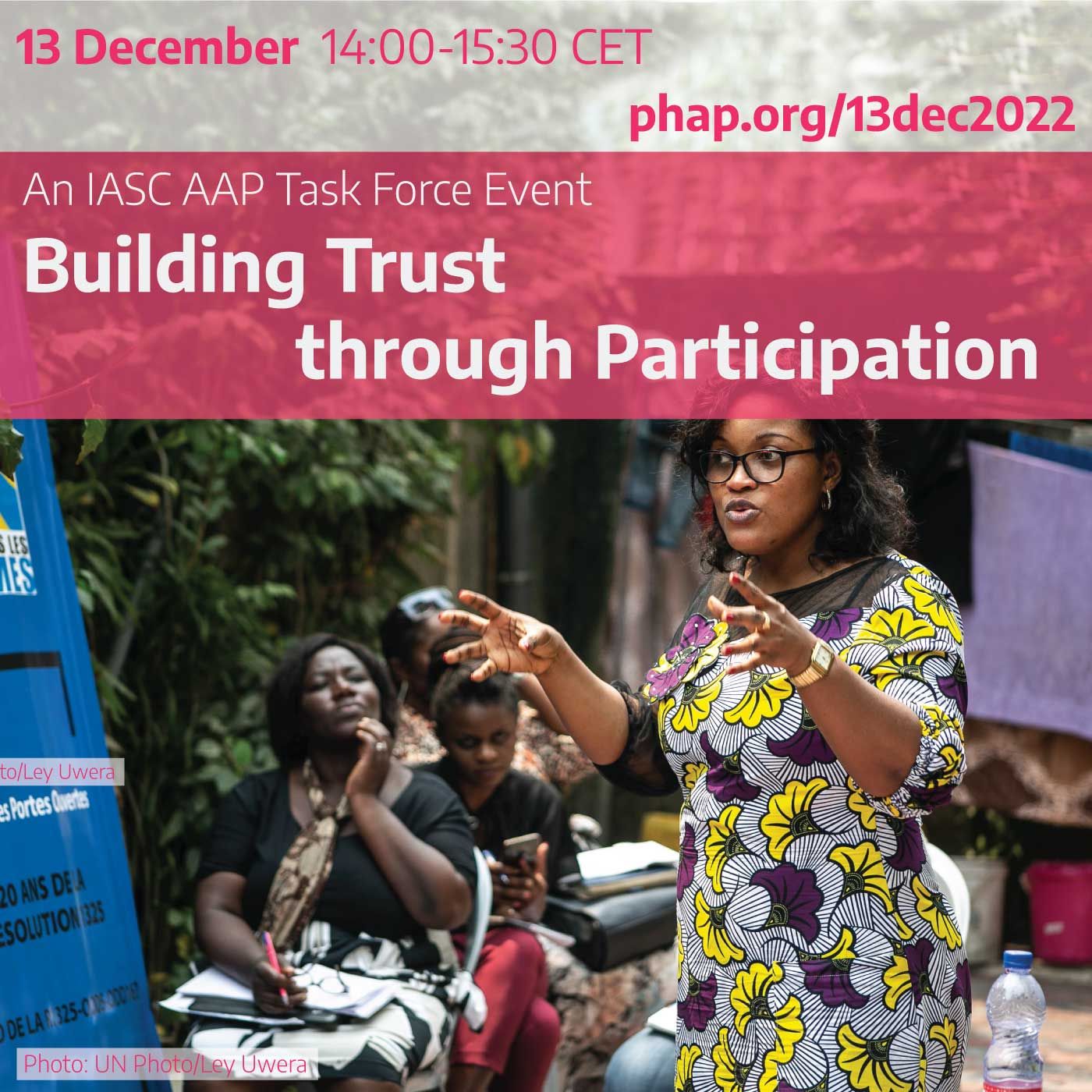
What is needed to move beyond consulting and listening to people affected by crises to ensure their representation and influence in decision...
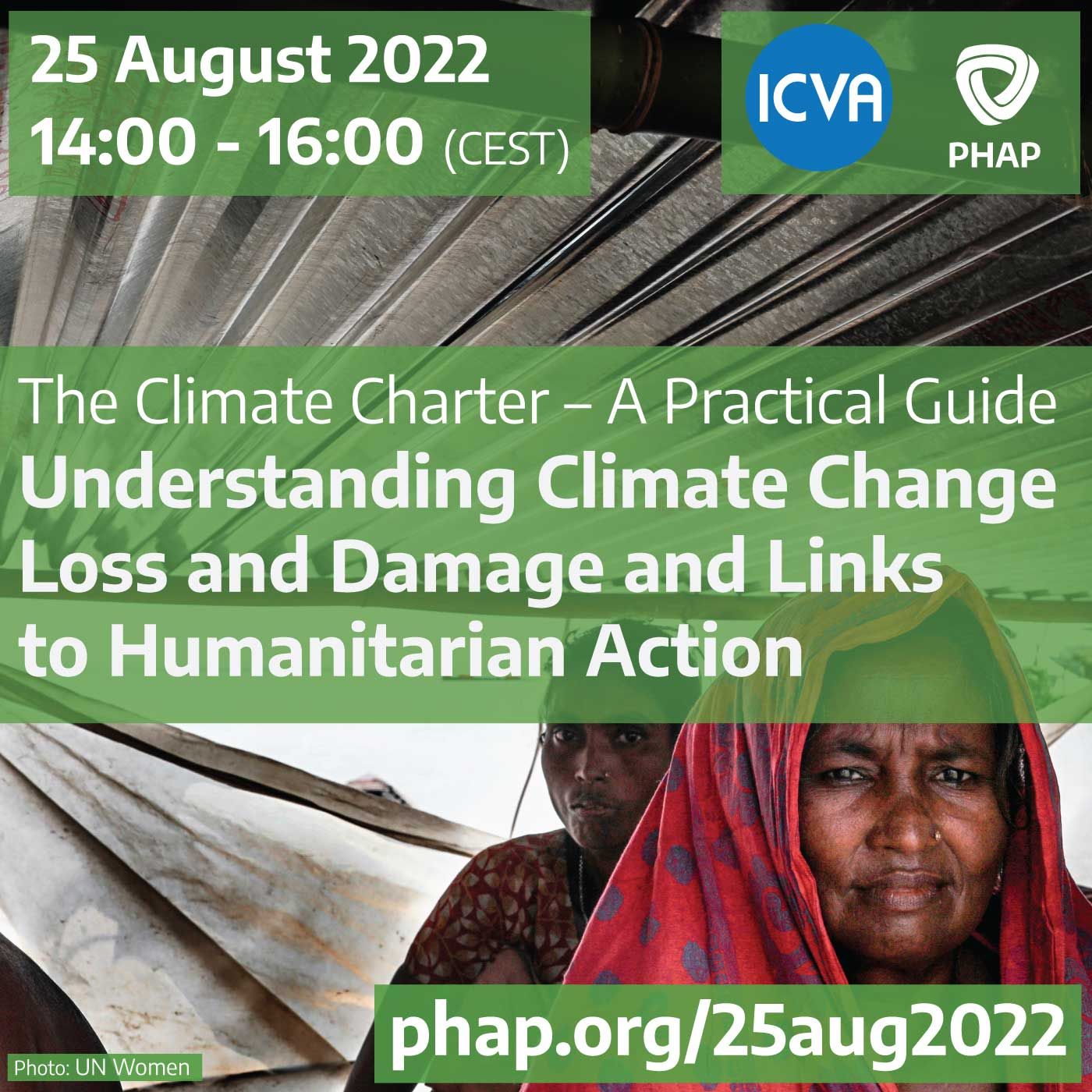
The United Nations Framework Convention on Climate Change (UNFCCC) includes commitments regarding “Loss and Damage” (L&D) – the impacts of c...
Over the last few years, we have seen a significant increase in awareness by the humanitarian community of the impacts of the climate crisis...
Over the last decade, individual agencies, and the humanitarian sector as a whole, have made progress in becoming more accountable to people...
Drawing from the experience of the Collective Service, this session will show examples of how a collective approach to community engagement...
Drawing on the outcomes of the discussions during the previous two sessions organized during the HNPW on Accountability to Affected Populati...
While there are still few examples of complaints and feedback mechanisms that systematically capture the views and feedback from affected pe...
The session will draw from a few contexts which have started the implementation of IASC AAP tools such as the AAP framework and the results...
Commitment #4 of the Climate and Environment Charter encourages organisations to better understand climate and environmental risks to calibr...
On 17 March, ICVA and PHAP will organize the next session of the Learning Stream on Climate Change and Humanitarian Action, exploring Commit...
As humanitarian actors are working towards reducing their environmental impact, it’s important to understand what tools are being developed...
It has long been recognized that affected people must play an active role in decisions that affect their lives. Yet recent evaluations show...
Commitment 2 of the Climate and Environment Charter for Humanitarian Organizations, in line with the principle of “Do No Harm,” calls on us...
The COVID-19 response, like any other public health emergency, has required a focus on communication around associated risks and the promoti...
We are already witnessing how climate and environmental crises disproportionately impact communities in vulnerable contexts and situations,...

Learning sessions and webinars organized by the International Association of Professionals in Humanitarian Assistance and Protection open to...
The recently launched Climate and Environment Charter for Humanitarian Organisations sends a clear signal that humanitarian organizations ha...
Accountability to affected populations (AAP) is an essential part of good humanitarian programming. But while some organizations may integra...
Risk management practices are playing an increasingly important role in partner selection and engagement when NGOs receive funding from UN a...

Partnerships between international organizations and local actors are key for the delivery of principled humanitarian aid. While progress ha...

In this webinar, the second of a two-part series exploring existing efforts to improve the safety of civilians during armed conflict, we wil...

In this first of two webinars exploring existing efforts to improve the safety of civilians during armed conflict, we will be discussing “pr...

Statelessness, the situation where a person is not recognized by any State as a citizen, has devastating impacts on millions of people aroun...

Research on forced migration provides critical input into the processes that help shape policy on displacement and humanitarian response. On...

For a long time, humanitarian organizations have faced situations reminding us that how we carry out our work is as important as what we do...

In the margins of the public health and economic crises with which the world has contended through 2020, COVID-19 ultimately looms as a long...

The UN Secretary General’s Policy Brief on COVID-19 in an Urban World reckons that urban areas are at the epicentre of the pandemic, account...

The capacities of those delivering response to humanitarian crises determine the quality of aid, its relevance, effectiveness, and sustainab...

Over the last few years the issue of “bank de-risking” has increasingly impacted the ability of humanitarian NGOs to safely and effectively...

While the COVID-19 pandemic is seriously affecting the health, livelihoods, and overall wellbeing of people all over the world, persons with...

The COVID-19 pandemic has exacerbated challenges for humanitarian work across the globe, including for how emergency response is being funde...

Read more and access resources at https://phap.org/8sep2020 Understanding and appropriately applying the concepts of risk tolerance and risk...

Read more and access resources at https://phap.org/9sep2020 Many humanitarian emergencies result in large-scale displacement, whether short-...

In most crisis response contexts, multiple protection actors are seeking to access affected populations. As humanitarian actors are interdep...

More than 61 per cent of the world’s refugees and 80 per cent of internally displaced people live in urban areas. The role of towns, cities,...

Read more about this event on https://phap.org/11jun2020 In order to carry out their work for the protection of affected people, humanitaria...

Read more at https://phap.org/5jun2020 The four principles of humanity, impartiality, neutrality, and independence are the foundations of hu...

Read more at https://phap.org/3jun2020 Humanitarian work is in most cases carried out in insecure environments and situations, making it cri...

Humanitarian actors often need to negotiate to gain access to populations affected by conflicts and other crises. While negotiating for acce...

Humanitarian protection is often the most needed in the very conflict zones where access is also the most restricted. Whether in areas contr...

As the novel coronavirus disease, or COVID-19, continues to spread globally, the risk it presents to populations living in camps and camp-li...

Through the Grand Bargain, humanitarian organizations and donors have committed to change the way humanitarian action is carried out and cre...

In the first sessions of the conference, we had heard from NGOs and other humanitarian actors on the challenges and risks related to princip...

With challenges to principled humanitarian action, NGOs are facing increased risks in their work. While NGOs accept risk as part of their wo...

Principled humanitarian action may be more important than ever for humanitarian actors managing risk in highly political and volatile operat...

The IASC recently endorsed guidelines for the inclusion of persons with disabilities in humanitarian action. How can these guidelines help m...

Coordination and collaboration are critical for humanitarian protection – just as it is for an effective overall humanitarian response. Rece...

The discipline of risk management is not new, and there has already been a significant amount of work to translate risk management practice...

The effects of a warming climate will likely be far-reaching and profound. In addition to warming and changed weather patterns, climate chan...