
Gender (re)balancing: the updated ICRC Commentary on the Fourth Geneva Convention
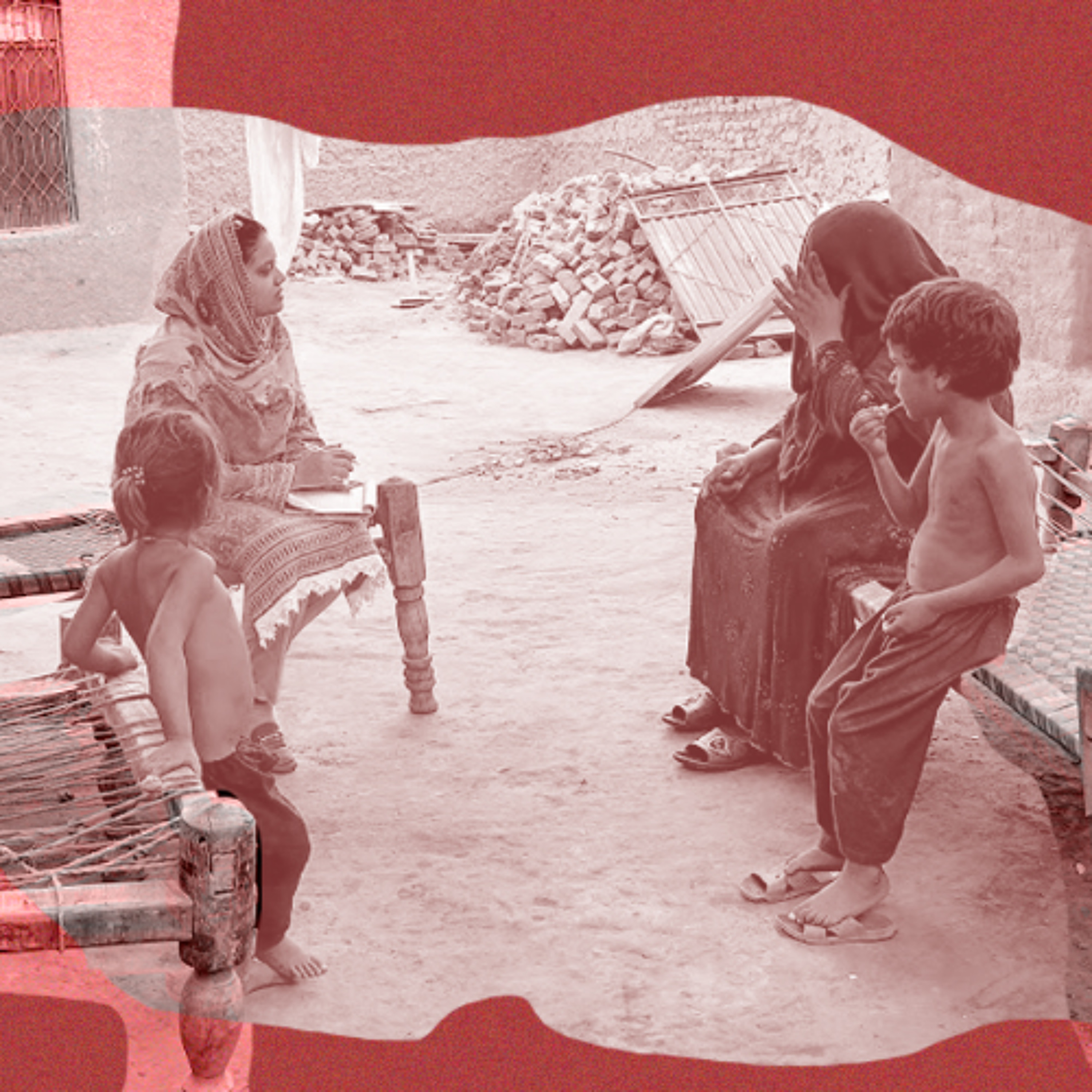
International humanitarian law (IHL) has long been critiqued for its gendered fault lines, specifically the marginalization of violence and...
Radio and PodcastLive Radio & PodcastsOpening Radio and Podcast...

Radio and PodcastLive Radio & PodcastsFetching podcast shows and categories...
Radio and PodcastLive Radio & PodcastsFetching podcast episodes...

The Humanitarian Law & Policy blog is a unique space for timely analysis and debate on international humanitarian law (IHL) issues and the policies that shape humanitarian action.

International humanitarian law (IHL) has long been critiqued for its gendered fault lines, specifically the marginalization of violence and...

Across the world, essential civilian services increasingly depend on information and communication technologies (ICTs). These same technolog...

By the end of 2024, the Office of the United Nations High Commissioner for Refugees estimated that 123.2 million people worldwide were forci...

As security concerns intensify across Europe following the escalation of the international armed conflict between Russia and Ukraine in 2022...

When armed conflict ends, education does not always return with it. In many post-conflict settings, schools remain closed long after ceasefi...

Climate change and armed conflict increasingly intersect in humanitarian settings. While the sector is now alert to climate-related risks –...

Artificial intelligence (AI)-based decision-support systems are increasingly embedded upstream of the use of force, shaping how military act...

The ICRC continues to witness unacceptable levels of suffering when the law designed to protect families, prevent people from going missing,...

More than seven decades after their adoption, the four Geneva Conventions of 1949 remain foundational to contemporary international humanita...

Islamic legal traditions and the modern framework of international humanitarian law (IHL) emerged from different contexts and traditions, bu...

The updated ICRC Commentary on the Fourth Geneva Convention (GC IV) includes a number of important updates to its treatment of Common Articl...

Following five years of research and consultations, the ICRC published a new, updated Commentary on the Fourth Geneva Convention (GC IV) of...

Naval warfare has undergone dramatic transformation, expanding across multiple domains and exposing civilian seafarers, infrastructure, and...

Militaries are gearing up for confrontation on a new battlefield: the human brain. While psychological operations aimed at deceiving enemies...

The International Criminal Court recently issued its first conviction for gender persecution as a crime against humanity, alongside related...

Many women and children are exposed to violence, exploitation and other risks, including death and family separation, during their migration...

As cyber operations are increasingly taking place during armed conflicts, and this trend is likely to continue, certain specific protections...

The ICRC’s 2005 study on customary international humanitarian law – along with the free, public database launched five years later – arrived...

Large-scale armed conflicts consistently sever the systems that sustain civilian life, leaving populations without essential services or acc...

The environmental toll of armed conflict is neither insignificant nor fleeting: it contaminates water, soil, and air, erodes ecosystems, und...

Five States Parties to the Anti-Personnel Mine Ban Convention have recently submitted instruments of withdrawal, citing national security an...

More than 200 million people live today in contested territories – places where the authority of the state is challenged outright and armed...

Restrictions on movement and access to medical supplies have become an often-unseen threat to health care in today’s armed conflicts. Even w...

As artificial intelligence (AI) begins to shape decisions about who is detained in armed conflict and how detention facilities are managed,...

When people go missing in war, their absence lingers far beyond the battlefield – splintering families, deepening social divides, and haunti...

When wars end, peace rarely begins overnight. It’s built, slowly and painstakingly, through acts that restore a sense of humanity where it w...

Picture a potential future armed conflict: missiles and drones crowding the skies, uncrewed vehicles rolling across borders, and governments...

In line with its mandate, the ICRC engages with all parties to an armed conflict, including non-state armed groups. The ICRC has a long hist...

The law of naval warfare is a complex collection of international laws, developed in an era that could not anticipate today’s global interde...

This year marks the 60th anniversary of the Fundamental Principles of the Red Cross and Red Crescent Movement – humanity, impartiality, neut...

Following five years of research and consultations, the ICRC has published a new, updated Commentary on the Fourth Geneva Convention (GC IV)...

The impact of armed conflict on mental health is increasingly evident. According to data from the World Health Organization, one in five peo...

For groups involved in long-running non-international armed conflicts, the decision to end the use of violence poses significant challenges...

The number of conflicts continues to rise – with the ICRC currently classifying some 130 armed conflicts worldwide – while at the same time,...

Across contemporary armed conflicts, the presence of civilian groups who take up arms to defend their communities raises enduring and comple...

For as long as humans have existed, stories have been our bridge to one another. Today, in a world shaped by digital networks, synthetic med...

The waters stretching from the Eastern Indian Ocean through Southeast and East Asia to the Western Pacific sustain global trade, host abunda...

As many states, especially those with large and resourceful militaries, are exploring the potential of using artificial intelligence (AI) in...

Brain-computer interfaces (BCIs) are no longer speculative technologies of future warfare – they are being field-tested by countries such as...

How AI learns, and what it misses: why data selection matters in humanitarian action by ICRC Law and Policy

On August 6th and 9th 1945, Hiroshima and Nagasaki became the first – and so far only – targets of nuclear weapons in warfare, killing over...

“Without information and telecommunication, people don’t know where to go for safety,” the ICRC reported from an ongoing armed conflict. Ano...

As people around the world become increasingly reliant on digital and telecommunications networks to access essential services, contact love...

When a powerful earthquake struck Myanmar on 28 March 2025, it tore through communities already living under the shadow of armed conflict an...

In contemporary humanitarian crises, handling the dead presents significant practical and ethical challenges. With a significant number of a...

The universality of international humanitarian law (IHL) assumes that its principles transcend cultural, geographical, and political boundar...

In today’s armed conflicts, hospitals are increasingly being attacked or misused for military purposes, undermining one of international hum...

This year marks eight decades since the Holocaust, a defining moment of human suffering and moral failure. The memory of six million murdere...

The accelerating integration of emerging technologies into armed conflict is transforming not only the tools of war, but its tactics, geogra...

Large-scale detention operations in international armed conflicts (IACs) pose significant humanitarian, legal, and operational challenges. I...