
Radio and PodcastRadio and PodcastLive Radio & Podcasts
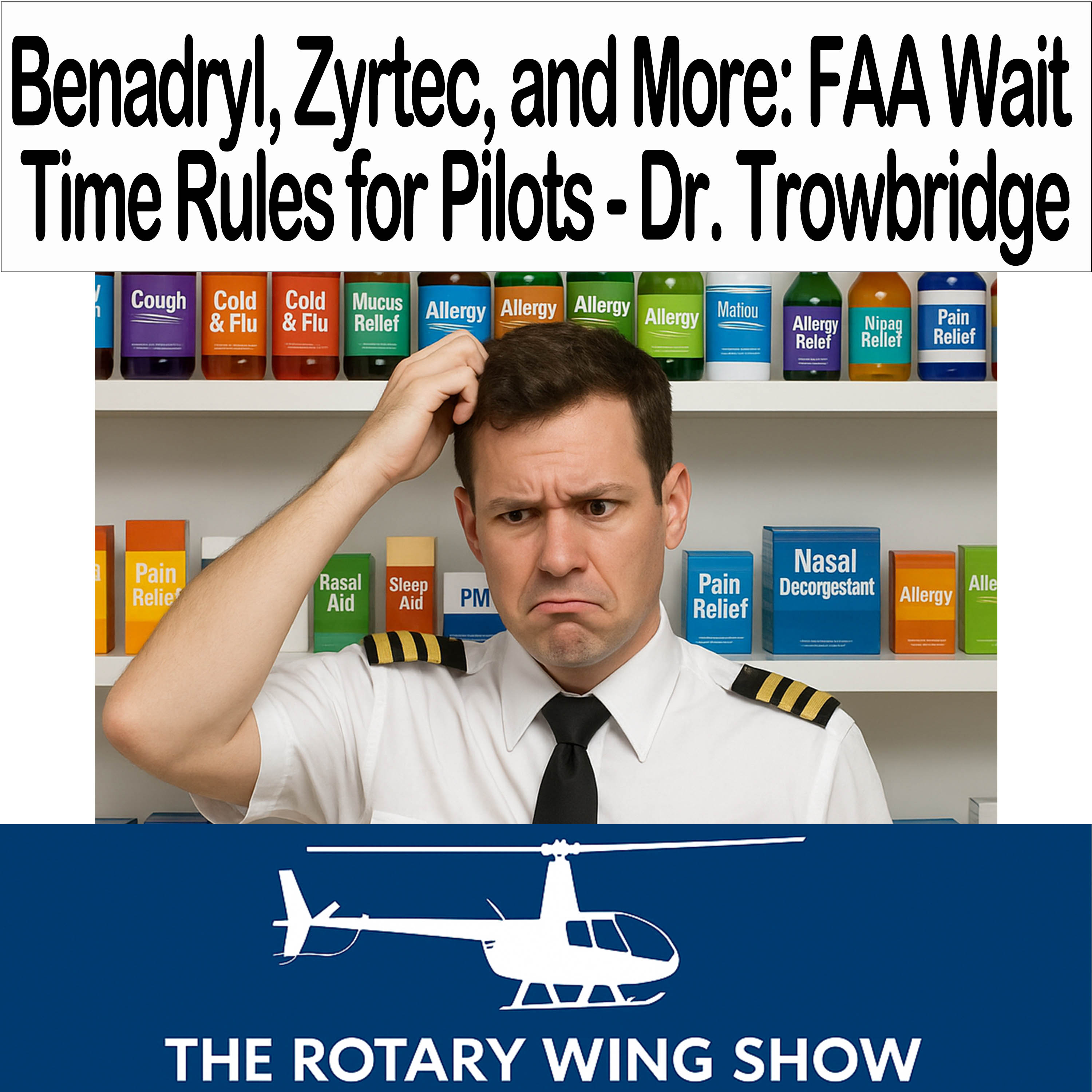
Benadryl, Zyrtec, and Other OTC medicine Wait Time Rules for Pilots artwork
Games & Hobbies

Benadryl, Zyrtec, and Other OTC medicine Wait Time Rules for Pilots

Rotary Wing Show - Interviews from the Helicopter Industry by Max Trescott | Aviation News Talk Network

Jul 21, 202551:11Games & Hobbies

This episode originally ran on the Aviation News Talk podcast. In it, Max Trescott interviews Dr. John Trowbridge, a physician and former senior Aviation Medical Examiner, to tackle a hidden yet critical safety topic: ho...

About This Episode

Benadryl, Zyrtec, and Other OTC medicine Wait Time Rules for Pilots is an episode from Rotary Wing Show - Interviews from the Helicopter Industry by Max Trescott | Aviation News Talk Network. This episode originally ran on the Aviation News...

Listen Online

Use the player on this page to stream the episode online.

Episode Details

Published Jul 21, 2025, 51:11 long, audio available.

Questions About This Episode

What is Benadryl, Zyrtec, and Other OTC medicine Wait Time Rules for Pilots about?

This episode originally ran on the Aviation News Talk podcast. In it, Max Trescott interviews Dr. John Trowbridge, a physician and former senior Aviation Medical Examiner, to tackle a hidden yet critical safety topic: how over-the-counter (OTC) and prescription medications contribute to general aviation accidents. Studies have found that up to 40% of fatal accidents involve pilots with impairing substances in their system—ranging from allergy medications to sleep aids to alcohol. The problem? Many of these substances are legal and even commonplace, yet can significantly degrade judgment, memory, attention, and coordination. Dr. Trowbridge emphasizes that many pilots—and even their doctors—are unaware of FAA wait-time guidelines. He explains the FAA’s “5x rule,” which states that a pilot must wait five times the recommended dosage interval before flying. So if a medication is taken every six hours, the pilot should wait 30 hours after the last dose. For 24-hour medications like Zyrtec, the wait time stretches to five full days. The discussion highlights the particular dangers of first-generation antihistamines like Benadryl (diphenhydramine), which are highly sedating and frequently found in sleep aids like Tylenol PM, NyQuil, and Unisom. These medications, even when taken the night before, can impair cognitive function well into the next day. Alarmingly, Benadryl is the most commonly detected OTC drug in fatal GA accidents. Dr. Trowbridge also warns about second-generation antihistamines like Zyrtec and Xyzal. While marketed as “non-drowsy,” these can still cause subtle sedation, especially in combination with alcohol or other medications. Alternatives like Allegra and Claritin are usually safer and FAA-approved—but only after personal ground-testing and AME consultation. Beyond antihistamines, they explore other drug categories. For pain relief, medications like aspirin, Tylenol, ibuprofen, and Aleve are generally safe, but anything with “PM” on the label likely contains sedating ingredients. Prescription painkillers like codeine are outright disqualifying. Dr. Trowbridge shares unconventional options too, like topical lidocaine, coconut oil, and even horse liniment—though with cautions about application and legality. Sleep aids are another minefield. Melatonin is the only one on the FAA’s “go list,” and even it should be ground-tested first. Nasal decongestants such as Afrin and Sudafed can raise blood pressure and cause jitteriness, making natural remedies like saline rinses or cool vapor inhalation preferable. Cough medications also pose risks. Products with dextromethorphan (like DayQuil or Delsym) can sedate, as can multi-symptom formulas marked “PM” or “nighttime.” Gastrointestinal issues are more straightforward: most antacids like Tums and Maalox are safe, but anti-diarrheals like Imodium are not, due to sedation risks. UTIs are covered with non-sedating options like AZO and D-Mannose, but Dr. Trowbridge cautions pilots never to fly if symptomatic or on unfamiliar antibiotics. The conversation then turns to alcohol. The FAA’s limit is 0.04%, but even lower levels can impair judgment, night vision, and reaction time—especially when combined with other medications or altitude-related hypoxia. Max cites an older FAA study showing that alcohol above 0.04% was found in 7% of fatal pilot crashes, with 3% involving both alcohol and drugs. Finally, Dr. Trowbridge emphasizes the importance of pilot self-awareness and due diligence. Most doctors are not trained in FAA regulations and may prescribe disqualifying medications unless reminded. He urges pilots to always research their medications, consult their AME, and even speak with pharmacists about interactions and cognitive side effects. Dr. Trowbridge’s website, ClearedForTakeoff.info, offers in-depth presentations on pilot health concerns like sleep, sinus issues, inflammation, and safe alternatives to disqualifying drugs. His goal is to help pilots avoid both illness and medication risks, empowering them to stay flying—and stay safe. If you're getting value from this show, please support the show via PayPal , Venmo , Zelle or Patreon . Support the Show by buying a Lightspeed ANR Headsets Max has been using only Lightspeed headsets for nearly 25 years! I love their tradeup program that let's you trade in an older Lightspeed headset for a newer model. Start with one of the links below, and Lightspeed will pay a referral fee to support Rotary Wing Show. Lightspeed Delta Zulu Headset $1299 Lightspeed Zulu 4 Headset $1099 Lightspeed Zulu 3 Headset $949 Lightspeed Sierra Headset $749 My Review on the Lightspeed Delta Zulu Send us your feedback or comments via email If you have a question you’d like answered on the show, let listeners hear you ask the question, by recording your listener question using your phone. Mentioned on the Show: Dr. Trowbridge’s website, ClearedForTakeoff.info Aviation News Talk Podcast NTSB News Talk Podcast UAV News Talk Podcast

Where can I listen to Benadryl, Zyrtec, and Other OTC medicine Wait Time Rules for Pilots?

You can listen to Benadryl, Zyrtec, and Other OTC medicine Wait Time Rules for Pilots online on Radio and Podcast. Open the player on this page to stream the available audio.

Which podcast is Benadryl, Zyrtec, and Other OTC medicine Wait Time Rules for Pilots from?

Benadryl, Zyrtec, and Other OTC medicine Wait Time Rules for Pilots is an episode from Rotary Wing Show - Interviews from the Helicopter Industry by Max Trescott | Aviation News Talk Network.

How long is this episode?

This episode is 51:11 long.

When was this episode published?

This episode was published on Jul 21, 2025.

Can I save Benadryl, Zyrtec, and Other OTC medicine Wait Time Rules for Pilots for later?

Yes. Use the heart button on the episode page to add it to your favorite episodes list.

Are there related episodes from Rotary Wing Show - Interviews from the Helicopter Industry?

Yes. This page shows related episodes from Rotary Wing Show - Interviews from the Helicopter Industry when more episodes are available from the podcast feed.

Quick Answers About This Episode

Where can I listen to Benadryl, Zyrtec, and Other OTC medicine Wait Time Rules for Pilots?

You can listen to Benadryl, Zyrtec, and Other OTC medicine Wait Time Rules for Pilots on this page when the episode audio is available from the podcast feed.

Which podcast is this episode from?

Benadryl, Zyrtec, and Other OTC medicine Wait Time Rules for Pilots is from Rotary Wing Show - Interviews from the Helicopter Industry by Max Trescott | Aviation News Talk Network.

What are the episode details?

Published Jul 21, 2025 and 51:11 long