The AI Models Smart Enough to Know They're Cheating — Beth Barnes & David Rein [METR]
May 4, 2026 - 01:53:26
 Radio and PodcastLive Radio & Podcasts
![The Universal Hierarchy of Life - Prof. Chris Kempes [SFI] artwork](https://d3t3ozftmdmh3i.cloudfront.net/staging/podcast_uploaded_episode/4981699/4981699-1761389525347-aa00a453b8ad9.jpg)
"What is life?" - asks Chris Kempes, a professor at the Santa Fe Institute. Chris explains that scientists are moving beyond a purely Earth-based, biological view and are searching for a universal theory of life that cou...
The Universal Hierarchy of Life - Prof. Chris Kempes [SFI] is an episode from Machine Learning Street Talk by Machine Learning Street Talk (MLST). "What is life?" - asks Chris Kempes, a professor at the Santa Fe Institute. Chris explains th...
This episode belongs to Machine Learning Street Talk.
Use the player on this page to stream the episode online.
Published Oct 25, 2025, 00:40:59 long, audio available.
Continue listening to more episodes from Machine Learning Street Talk.
May 4, 2026 - 01:53:26

Mar 13, 2026 - 01:18:06
Mar 3, 2026 - 01:26:39
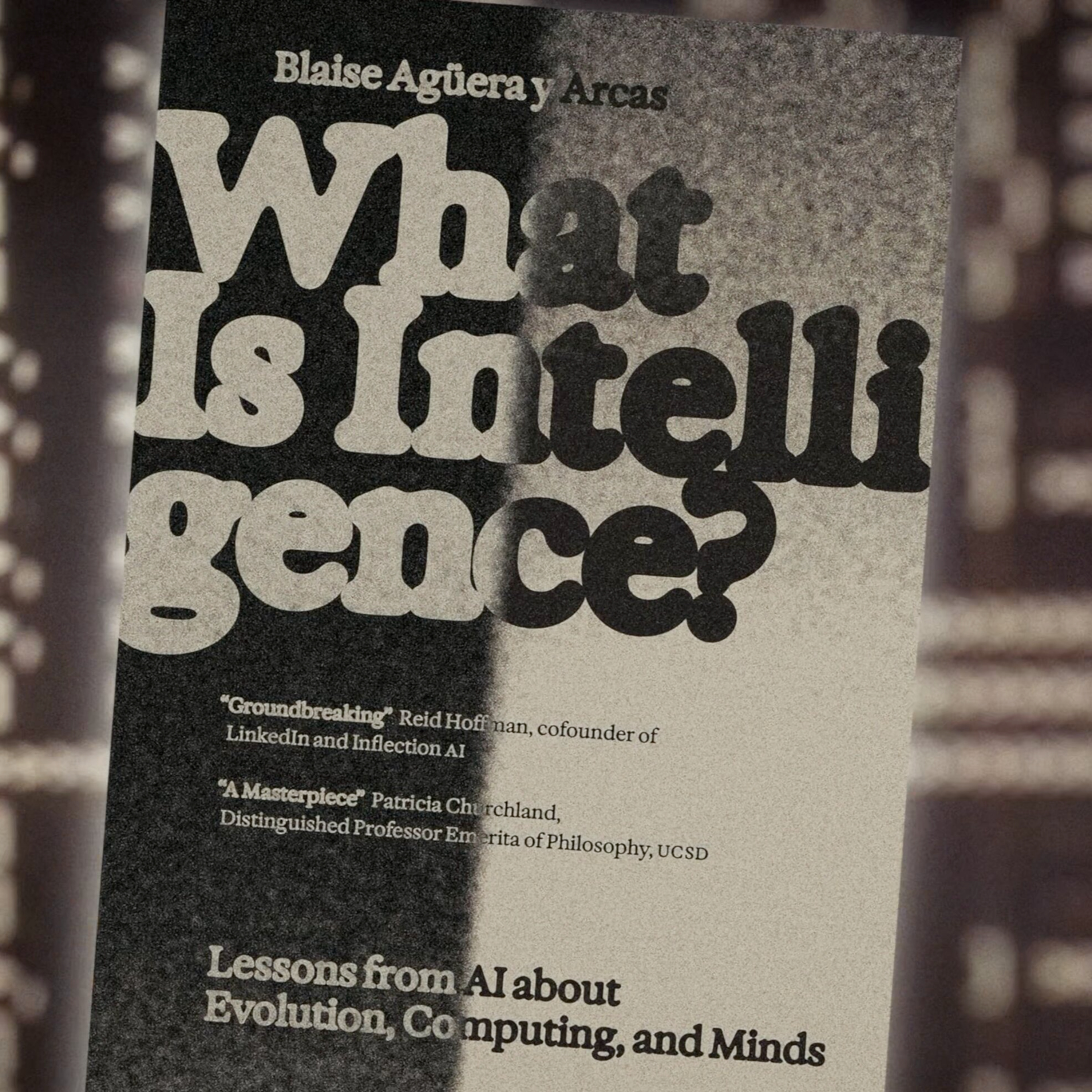
Feb 16, 2026 - 00:55:48
Jan 25, 2026 - 00:46:56
Jan 23, 2026 - 00:53:37

Jan 23, 2026 - 00:42:04
Dec 31, 2025 - 01:16:37
"What is life?" - asks Chris Kempes, a professor at the Santa Fe Institute. Chris explains that scientists are moving beyond a purely Earth-based, biological view and are searching for a universal theory of life that could apply to anything, anywhere in the universe. He proposes that things we don't normally consider "alive"—like human culture, language, or even artificial intelligence; could be seen as life forms existing on different "substrates". To understand this, Chris presents a fascinating three-level framework: - Materials: The physical stuff life is made of. He argues this could be incredibly diverse across the universe, and we shouldn't expect alien life to share our biochemistry. - Constraints: The universal laws of physics (like gravity or diffusion) that all life must obey, regardless of what it's made of. This is where different life forms start to look more similar. - Principles: At the highest level are abstract principles like evolution and learning. Chris suggests these computational or "optimization" rules are what truly define a living system. A key idea is "convergence" – using the example of the eye. It's such a complex organ that you'd think it evolved only once. However, eyes evolved many separate times across different species. This is because the physics of light provides a clear "target", and evolution found similar solutions to the problem of seeing, even with different starting materials. **SPONSOR MESSAGES** — Prolific - Quality data. From real people. For faster breakthroughs. — Check out NotebookLM from Google here - - it’s really good for doing research directly from authoritative source material, minimising hallucinations. — cyber•Fund is a founder-led investment firm accelerating the cybernetic economy Hiring a SF VC Principal: Submit investment deck: — Prof. Chris Kempes: TRANSCRIPT: TOC: 00:00:00 - Introduction to Chris Kempes and the Santa Fe Institute 00:02:28 - The Three Cultures of Science 00:05:08 - What Makes a Good Scientific Theory? 00:06:50 - The Universal Theory of Life 00:09:40 - The Role of Material in Life 00:12:50 - A Hierarchy for Understanding Life 00:13:55 - How Life Diversifies and Converges 00:17:53 - Adaptive Processes and Defining Life 00:19:28 - Functionalism, Memes, and Phylogenies 00:22:58 - Convergence at Multiple Levels 00:25:45 - The Possibility of Simulating Life 00:28:16 - Intelligence, Parasitism, and Spectrums of Life 00:32:39 - Phase Changes in Evolution 00:36:16 - The Separation of Matter and Logic 00:37:21 - Assembly Theory and Quantifying Complexity REFS: Developing a predictive science of the biosphere requires the integration of scientific cultures [Kempes et al] Seeing with an extra sense (“Dangerous prediction”) [Rob Phillips] The Multiple Paths to Multiple Life [Christopher P. Kempes & David C. Krakauer] The Information Theory of Individuality [David Krakauer et al] Minds, Brains and Programs [Searle] The error threshold Assembly theory and its relationship with computational complexity [Kempes et al]
You can listen to The Universal Hierarchy of Life - Prof. Chris Kempes [SFI] online on Radio and Podcast. Open the player on this page to stream the available audio.
The Universal Hierarchy of Life - Prof. Chris Kempes [SFI] is an episode from Machine Learning Street Talk by Machine Learning Street Talk (MLST).
This episode is 00:40:59 long.
This episode was published on Oct 25, 2025.
Yes. Use the heart button on the episode page to add it to your favorite episodes list.
Yes. This page shows related episodes from Machine Learning Street Talk when more episodes are available from the podcast feed.
You can listen to The Universal Hierarchy of Life - Prof. Chris Kempes [SFI] on this page when the episode audio is available from the podcast feed.
The Universal Hierarchy of Life - Prof. Chris Kempes [SFI] is from Machine Learning Street Talk by Machine Learning Street Talk (MLST).
Published Oct 25, 2025 and 00:40:59 long