Radio and PodcastRadio and PodcastLive Radio & Podcasts
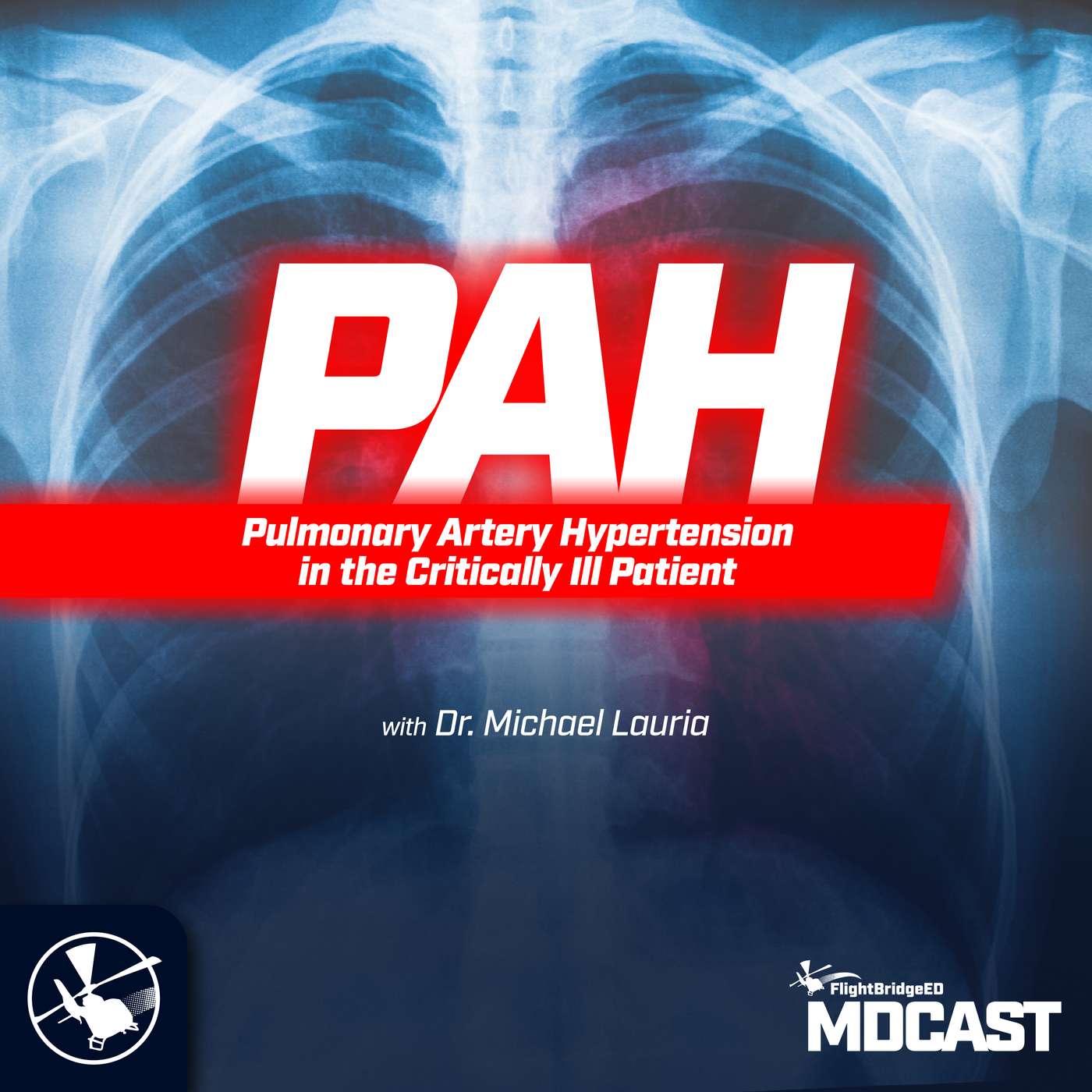
MDCAST: Pulmonary Artery Hypertension in the Critically Ill Patient artwork
Science & Medicine

MDCAST: Pulmonary Artery Hypertension in the Critically Ill Patient

The FlightBridgeED Podcast by Evan Claunch

Apr 21, 202638:02Science & Medicine

This episode focuses on the critically ill patient with pulmonary arterial hypertension (PAH) and explains why this subgroup is especially dangerous in emergency and transport medicine. Dr. Mike Lauria distinguishes PAH...

About This Episode

MDCAST: Pulmonary Artery Hypertension in the Critically Ill Patient is an episode from The FlightBridgeED Podcast by Evan Claunch. This episode focuses on the critically ill patient with pulmonary arterial hypertension (PAH) and explains wh...

Podcast

This episode belongs to The FlightBridgeED Podcast.

Listen Online

Use the player on this page to stream the episode online.

Episode Details

Published Apr 21, 2026, 38:02 long, audio available.

Questions About This Episode

What is MDCAST: Pulmonary Artery Hypertension in the Critically Ill Patient about?

This episode focuses on the critically ill patient with pulmonary arterial hypertension (PAH) and explains why this subgroup is especially dangerous in emergency and transport medicine. Dr. Mike Lauria distinguishes PAH from the broader label of “pulmonary hypertension,” emphasizing that elevated pulmonary pressures can come from several very different disease processes, but group 1 PAH is a rare intrinsic disease of the pulmonary arteries that creates fixed resistance to blood flow. Over time, this chronic increase in pulmonary vascular resistance places an enormous burden on the right ventricle, which may initially compensate but can eventually dilate and fail, especially when stressed by infection, hypoxia, medication interruption, or other acute illness. A major theme of the episode is that right ventricular failure is the central problem when these patients decompensate. Dr. Lauria reviews how rising RV afterload leads to RV dilation, reduced RV output, impaired LV filling, worsening cardiac output, and eventual shock. He also highlights an important practical pearl: many PAH patients depend on specialized outpatient therapies such as endothelin receptor antagonists, PDE-5 inhibitors, and especially continuous prostacyclin infusions like epoprostenol or treprostinil. Abrupt interruption of these medications can trigger rebound pulmonary hypertension and rapid deterioration, making continuation of home therapy a critical part of transport and ICU management. Management is framed around supporting the failing RV while avoiding interventions that can worsen hemodynamics . The speaker recommends maintaining MAP, usually with norepinephrine, carefully managing preload, and recognizing that this is one of the few shock states where patients may need both vasopressors and diuresis. The episode strongly warns against aggressive fluid loading, stresses the importance of correcting hypoxia and hypercapnia, and supports use of inhaled pulmonary vasodilators such as nitric oxide or epoprostenol in the right setting. It also cautions that intubation is particularly dangerous in PAH because induction and positive-pressure ventilation can sharply worsen RV function and precipitate cardiovascular collapse. Key points The episode distinguishes group 1 pulmonary arterial hypertension from the broader and more nonspecific category of pulmonary hypertension. PAH is dangerous because it creates fixed pulmonary vascular resistance , which can eventually cause right ventricular failure and shock . Medication interruption , especially stopping continuous prostacyclin infusions, can cause rebound pulmonary hypertension and sudden collapse. Management focuses on supporting the RV : maintain MAP, avoid unnecessary fluids, optimize oxygenation and ventilation, and consider inhaled pulmonary vasodilators. Intubation is high risk in these patients because positive pressure and induction can worsen RV afterload and trigger hemodynamic collapse.

Where can I listen to MDCAST: Pulmonary Artery Hypertension in the Critically Ill Patient?

You can listen to MDCAST: Pulmonary Artery Hypertension in the Critically Ill Patient online on Radio and Podcast. Open the player on this page to stream the available audio.

Which podcast is MDCAST: Pulmonary Artery Hypertension in the Critically Ill Patient from?

MDCAST: Pulmonary Artery Hypertension in the Critically Ill Patient is an episode from The FlightBridgeED Podcast by Evan Claunch.

How long is this episode?

This episode is 38:02 long.

When was this episode published?

This episode was published on Apr 21, 2026.

Can I save MDCAST: Pulmonary Artery Hypertension in the Critically Ill Patient for later?

Yes. Use the heart button on the episode page to add it to your favorite episodes list.

Are there related episodes from The FlightBridgeED Podcast?

Yes. This page shows related episodes from The FlightBridgeED Podcast when more episodes are available from the podcast feed.

Quick Answers About This Episode

Where can I listen to MDCAST: Pulmonary Artery Hypertension in the Critically Ill Patient?

You can listen to MDCAST: Pulmonary Artery Hypertension in the Critically Ill Patient on this page when the episode audio is available from the podcast feed.

Which podcast is this episode from?

MDCAST: Pulmonary Artery Hypertension in the Critically Ill Patient is from The FlightBridgeED Podcast by Evan Claunch.

What are the episode details?

Published Apr 21, 2026 and 38:02 long