Starts With A Bang #128 - Planet formation and proto-protoplanets
Apr 11, 2026 - 01:40:05
Radio and PodcastLive Radio & Podcasts
We often think about the Solar System as being our own cosmic backyard, and in many ways, it is: these are the closest objects to us in all the Universe, and our only opportunity to study lunar and planetary systems in s...
Starts With A Bang #129 - Triton and the outer solar system is an episode from Starts With A Bang podcast by Ethan Siegel. We often think about the Solar System as being our own cosmic backyard, and in many ways, it is: these are the closes...
This episode belongs to Starts With A Bang podcast.
Use the player on this page to stream the episode online.
Published May 9, 2026, 01:35:37 long, audio available.
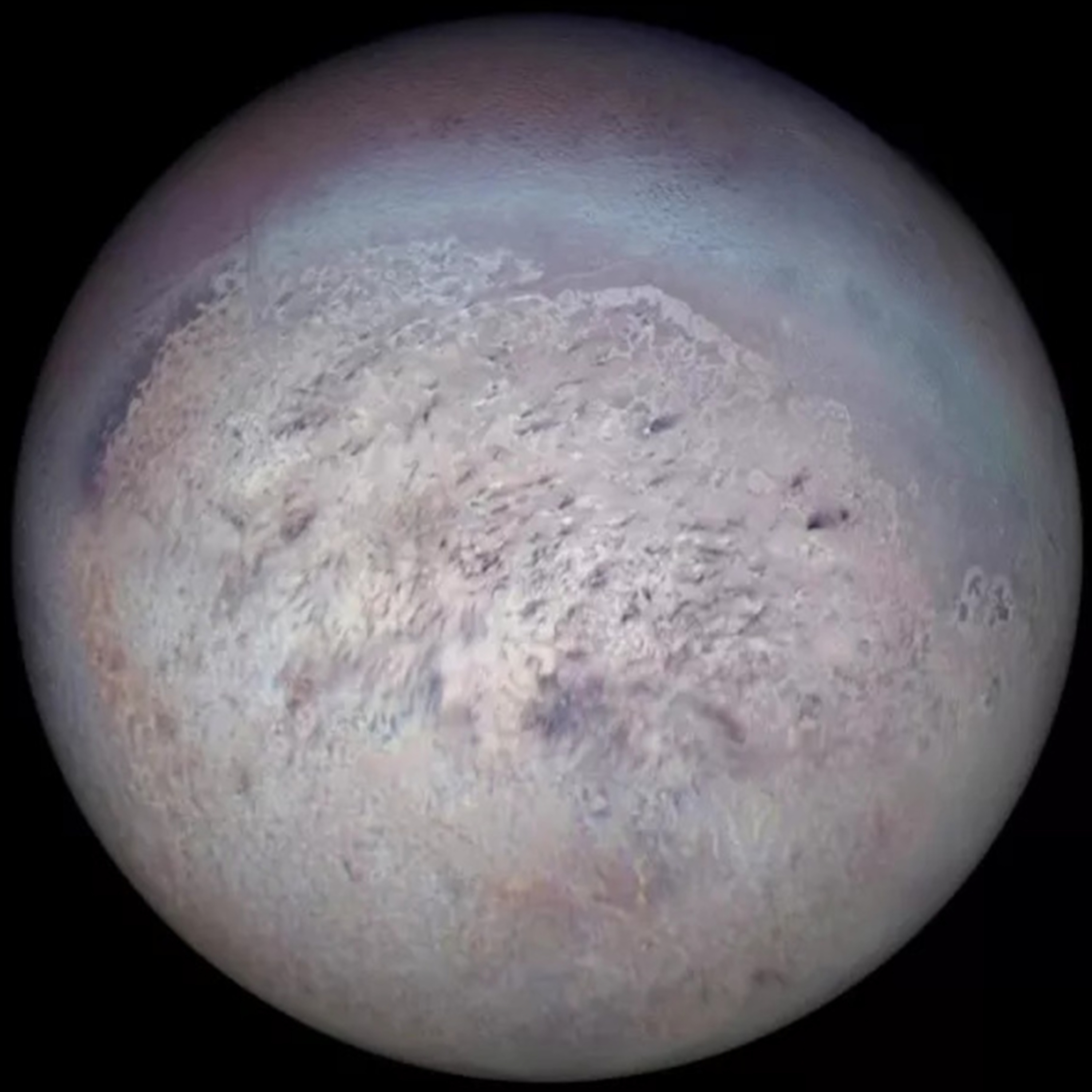
We often think about the Solar System as being our own cosmic backyard, and in many ways, it is: these are the closest objects to us in all the Universe, and our only opportunity to study lunar and planetary systems in situ. However, when it comes to the objects beyond Saturn, including the Uranian and Neptunian systems, as well as everything that lies in the Kuiper belt and beyond, the only probes we've ever sent their way are Voyager 2, which flew by Uranus and Neptune in the late 1980s, and New Horizons, which flew past Pluto in 2015. That means, unlike Jupiter and Saturn, we've never had a dedicated orbiter, lander, or atmospheric probe around the outermost planets or lunar systems even in our own backyard. Moreover, there are no such planned missions that are funded and slated to fly, which is really too bad, as there's so much to learn about these planets and worlds that are so well-represented in exoplanet analogues all across the galaxy and Universe. In particular, one moon stands out as the largest body with a solid surface: Triton, the 7th largest moon in the Solar System and which represents more than 98% of the mass of all the moons that orbit Neptune. Here to guide us through the far reaches of our Solar System, I'm so pleased to welcome PhD candidate Lana Tilke to the program. There's a whole lot of ground that we cover, and the conversation left me inspired with the questions that we're asking today, and brimming with hope that we take the steps we needed to answer them. If you'd like to know where we are and where we're headed next, you just might love this episode too! (This image shows a composite of Neptune's giant moon Triton, assembled from Voyager 2 imagery at the highest possible resolution. The dark streaks come from cryovolcanic geysers, also known as black smokers, from Triton's south polar region. Credit : NASA/JPL)
You can listen to Starts With A Bang #129 - Triton and the outer solar system online on Radio and Podcast. Open the player on this page to stream the available audio.
Starts With A Bang #129 - Triton and the outer solar system is an episode from Starts With A Bang podcast by Ethan Siegel.
This episode is 01:35:37 long.
This episode was published on May 9, 2026.
Yes. Use the heart button on the episode page to add it to your favorite episodes list.
Yes. This page shows related episodes from Starts With A Bang podcast when more episodes are available from the podcast feed.
You can listen to Starts With A Bang #129 - Triton and the outer solar system on this page when the episode audio is available from the podcast feed.
Starts With A Bang #129 - Triton and the outer solar system is from Starts With A Bang podcast by Ethan Siegel.
Published May 9, 2026 and 01:35:37 long