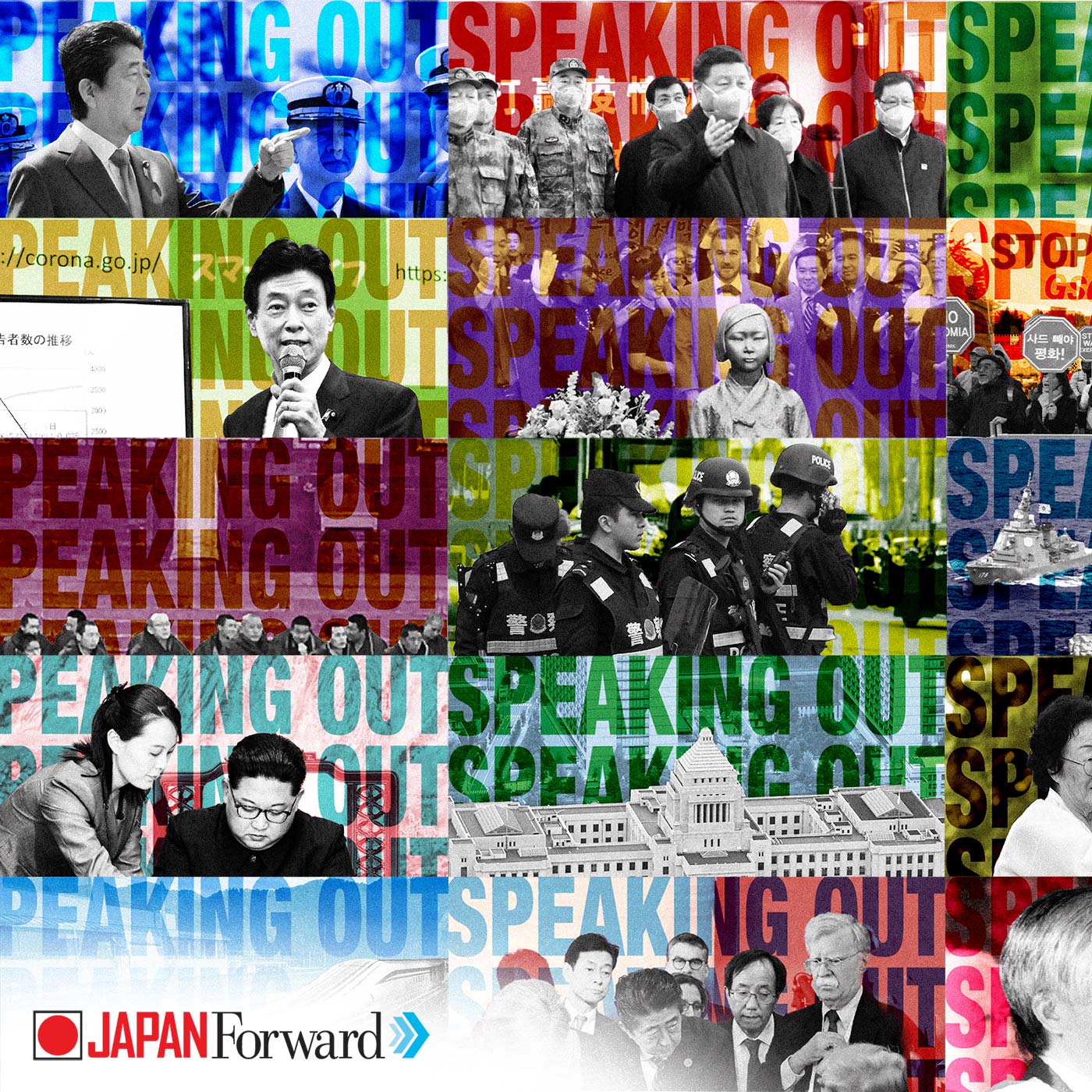
[Speaking Out] Japan Should Support Oppressed Ethnic Minorities in China
Aug 18, 2020 - 3:46

Radio and PodcastLive Radio & Podcasts![[Speaking Out] Anti-Japan Tribalism Undermines Tokyo-Seoul Relations artwork](https://japan-forward.com/wp-content/uploads/2020/07/podcast-speaking-out-hero.jpg)
Recently I had a talk with former Seoul University professor of economics Lee Yong Hoon, who authored the book Anti-Japan Tribalism. The book became a bestseller in Japan as well as in South Korea. What Lee calls anti-Ja...
[Speaking Out] Anti-Japan Tribalism Undermines Tokyo-Seoul Relations is an episode from Speaking Out with JAPAN Forward by JAPAN Forward. Recently I had a talk with former Seoul University professor of economics Lee Yong Hoon, who authored...
This episode belongs to Speaking Out with JAPAN Forward.
Use the player on this page to stream the episode online.
Published Dec 6, 2019, 3:10 long, audio available.
Recently I had a talk with former Seoul University professor of economics Lee Yong Hoon, who authored the book Anti-Japan Tribalism. The book became a bestseller in Japan as well as in South Korea. What Lee calls anti-Japan tribalism means living in an illusion unrelated to historical facts, rational thinking, or intellect. According to the book, when their country, society, or race is plagued with problems, Koreans view Japan as the root of all evil and blame Japan for causing their hardship, then step up anti-Japan campaigns to make themselves feel better without any further thinking, according to the book. Such intellectual laziness has undermined Japan-South Korea relations over historical awareness, economics, and politics. Lee wrote the book, foreboding the country’s ruin if Koreans fail to overcome their anti-Japan tribalism that prevents any rational thinking. Unless they correct their course, the future of the Republic of Korea will be dark. A Patriot Accusing a Country of Lies The book is full of surprisingly frank comments. It brands South Korea as a country of lies. It criticizes the people who lie, the politics which lie, the scholarship of lies, and the trials of lies. As a scholar, Lee heartfully urges South Korea to wake up and its people to use their brains. In the book, the author writes that comfort women were not coercively recruited or treated as sex slaves. He writes that wartime Korean workers in Japan were paid fairly according to their labor, receiving pay that was two, three, or four times more than for servicemen, teachers, company employees, and bankers of the time. He writes these things in detail because he has conducted research as a historian and deeply loves his mother country. The direct reason that caused the deterioration of Japan-South Korea relations to the brink of collapse is the South Korean Supreme Court’s ruling in October 2018 that defied the 1965 bilateral claims agreement. The issue of wartime Korean workers in Japan was completely and finally resolved in 1965. Nevertheless, anti-Japan tribalism prevented the South Korean Supreme Court from recognizing the facts, leading the court to totally deny the bilateral agreement and order the Japanese company to pay compensation to former wartime workers. Lee asked me a question on the matter: “Japanese companies’ assets in South Korea under seizure by relevant plaintiffs may be seized and put into a pension fund as early as December. How will the Japanese respond to that?” Neither the Japan Institute for National Fundamentals nor I as an individual is in a position to speak for the Japanese government. However, I responded by sharing the consensus of Japanese people. The view of the Japanese public is that the Japanese government should take retaliatory action to protect Japanese companies as soon as their assets are seized. “I really want Japan to do so. The South Korean government and people should recognize that their way of doing is unjustifiable and does not work in the international community,” Lee responded calmly. A Resolute Japan Can Build Friendship Lee’s remark might also be taken as a warning to Japan. Traditionally, Japan has accepted or conceded to South Korean demands with a sense of atonement, even if they were irrational or unreasonable. As such, this Japanese attitude has paved the way for the anti-Japan tribalism to spread. Japan is half-responsible for the current situation. For that reason, Japan should take a resolute attitude instead of repeating past counterproductive practices, and make an effort to build truly friendly relations with South Korea. That step is necessary in order that the initiative by Lee and his associates can be given an opportunity to bear fruit. A version of this article was first published by the Japan Institute for National Fundamentals, Speaking Out , on November 28, 2019. Author: Yoshiko Sakurai Yoshiko Sakurai is a journalist and president of the Japan Institute for National Fundamentals.
You can listen to [Speaking Out] Anti-Japan Tribalism Undermines Tokyo-Seoul Relations online on Radio and Podcast. Open the player on this page to stream the available audio.
[Speaking Out] Anti-Japan Tribalism Undermines Tokyo-Seoul Relations is an episode from Speaking Out with JAPAN Forward by JAPAN Forward.
This episode is 3:10 long.
This episode was published on Dec 6, 2019.
Yes. Use the heart button on the episode page to add it to your favorite episodes list.
Yes. This page shows related episodes from Speaking Out with JAPAN Forward when more episodes are available from the podcast feed.
You can listen to [Speaking Out] Anti-Japan Tribalism Undermines Tokyo-Seoul Relations on this page when the episode audio is available from the podcast feed.
[Speaking Out] Anti-Japan Tribalism Undermines Tokyo-Seoul Relations is from Speaking Out with JAPAN Forward by JAPAN Forward.
Published Dec 6, 2019 and 3:10 long