The Soundtrack of Australia
Aug 14, 2023 - 0:33:10

Radio and PodcastLive Radio & Podcasts
No music, no voices, just the sound of night time at a swamp on Wadawarrung Country in Victoria. Listening Notes from Ann Jones: There are at least three species of frogs calling all the way through this recording – mayb...
Midnight frog chorus is an episode from Nature Track. No music, no voices, just the sound of night time at a swamp on Wadawarrung Country in Victoria. Listening Notes from Ann Jones: There are at least three species of frogs calling all the...
This episode belongs to Nature Track.
Use the player on this page to stream the episode online.
Published Aug 9, 2021, 1:09:26 long, audio available.
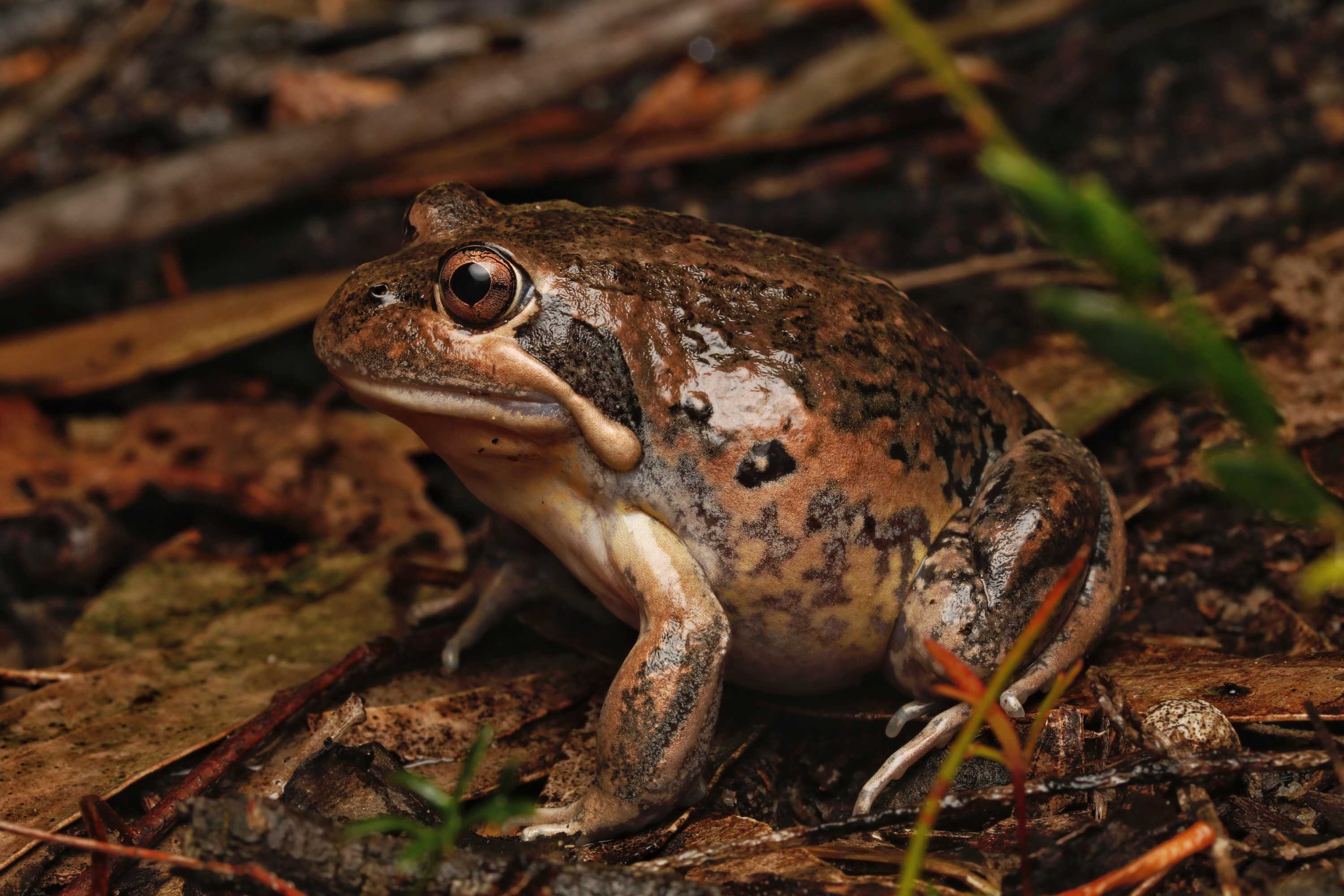
No music, no voices, just the sound of night time at a swamp on Wadawarrung Country in Victoria. Listening Notes from Ann Jones: There are at least three species of frogs calling all the way through this recording – maybe more. And they provide a wonderful blanket of noise for you to snuggle under. Here’s what I can hear: 00:00:07 – The ‘tonk’, ‘bonk’ and ‘donk’ of the pobblebonk (Limnodynastes dumerilii). These frogs are sometimes also called banjo frogs because of their plucking call. They are a relatively big frog, maybe 8 or 9 cm long when fully grown, with a very pleased look on their face. 00:00:15 This is the spotted marsh frog (Limnodynastes tasmaniensis) and it’s an interesting one. It sounds a bit like a striped marsh frog. But Jordann and Gracie from the Australian Museum FrogID team assure me it’s the southern call race of the spotted! In the north part of its range, the call of the spotted marsh frog is entirely different than in western Victoria. 00:00:44 The consisted creaking of thousands of common eastern froglets. Individually they sometimes sound like a ratchet creaking back, but together it’s a cacophony of clicks all blending together. These are tiny little things, even when fully grown they might hit a top of 3 cm. They’re brown, and sometimes they have gorgeous stripes in different brown and olive tones which makes them look a little bit like a lolly. 00:01:02 The high-pitched groups of calls that start softer and build in intensity are brown tree frogs. The frequencies really can hurt the human ear. These are a smallish brown frog that can live in drier parts of the bush. They don’t need to be right in the water all the time. 00:18:22 This is a set of sonar searching calls of a freetail bat. There are few microbats whose calls sit within the range of human hearing, and your ability to hear this will depend on your age and how well you’ve looked after your hearing. 00:25:20 This is the growling barky cough of the brushtail possum. With this call it is communicating its territory to the other possums in the vicinity. 00:30:10 The possum comes very, very close to the microphone and you can also hear lambs calling in the distant farmland. 00:46:10 There is something softly creeping here. Probably not the brushtails which tend to stampede everywhere they go. You can just hear the very, very quiet clicks of branches moving every once in a while, over the coming minutes. 00:50:20 More bat sounds. It is clicking and listening to the bounce back echoes to determine where its prey might be. 01:02:30 The brushtail is back.
You can listen to Midnight frog chorus online on Radio and Podcast. Open the player on this page to stream the available audio.
Midnight frog chorus is an episode from Nature Track.
This episode is 1:09:26 long.
This episode was published on Aug 9, 2021.
Yes. Use the heart button on the episode page to add it to your favorite episodes list.
Yes. This page shows related episodes from Nature Track when more episodes are available from the podcast feed.
You can listen to Midnight frog chorus on this page when the episode audio is available from the podcast feed.
Midnight frog chorus is from Nature Track.
Published Aug 9, 2021 and 1:09:26 long