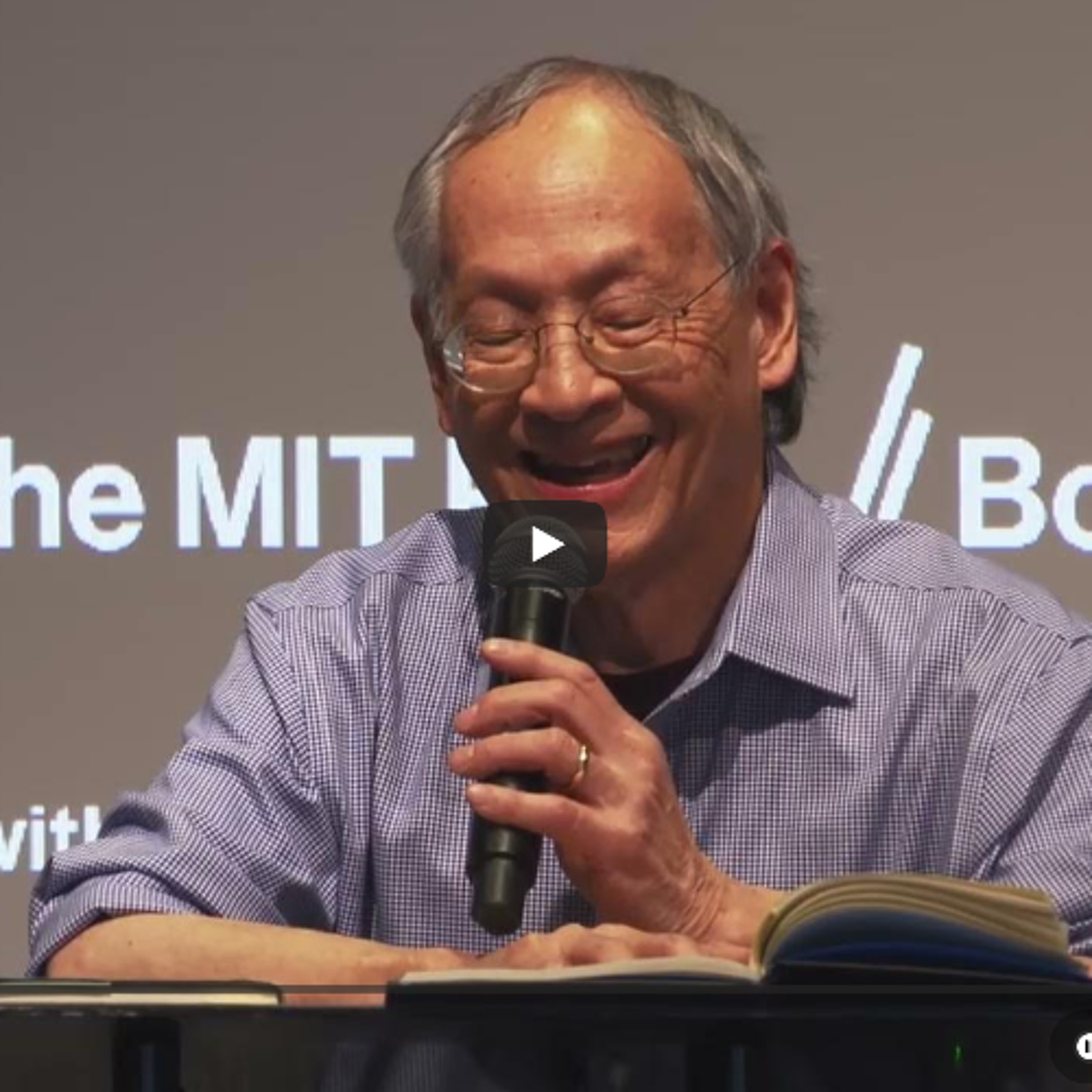
A Reading with Poet Laureate Arthur Sze
Apr 5, 2026 - 00:53:19

Radio and PodcastLive Radio & Podcasts
College radio has long been known as the weird, wacky signals on the left of the FM dial offering music that would never be mainstream. But this wasn’t always the case—and moreover, even at stations exemplifying musical...
Katherine Jewell, "Party City: WMBR, Institutional Change, and Democratic Media" is an episode from MIT Comparative Media Studies/Writing by MIT Comparative Media Studies/Writing. College radio has long been known as the weird, wacky signal...
This episode belongs to MIT Comparative Media Studies/Writing.
Use the player on this page to stream the episode online.
Published Mar 11, 2022, 01:20:36 long, audio available.
College radio has long been known as the weird, wacky signals on the left of the FM dial offering music that would never be mainstream. But this wasn’t always the case—and moreover, even at stations exemplifying musical adventurousness and the community potential of college signals, institutional constraints loomed. In this talk, Katherine Jewell delves into the history of WMBR at MIT from the 1960s to the 1980s to explore how this station, with a license held by an independent non-profit corporation, built a meaningful community institution despite transformations within the university, its student body and organizations, as well as regulatory changes regarding noncommercial radio and the music industry’s shifting business model. DJs debated and embraced the democratic obligations of their signal, particularly their commitment to diversity of sound. But achieving these lofty goals often proved complicated given the need to construct a program that appealed to and served many audiences in a fluctuating radio market. Despite these limits, college radio’s history can offer much to consider in considering how to pursue democratic media and community connection in the twenty-first century. Katherine Rye Jewell, Ph.D., is a historian writing about the history of college radio, including her forthcoming book, tentatively titled Live from the Underground: A History of College Radio from University of North Carolina Press. Her research on college radio is at the center of two additional book projects currently in progress. She is the author of Dollars for Dixie: Business and the Transformation of Conservatism in the Twentieth Century, published by Cambridge University Press (New York) in 2017. Her work has appeared in The American Historian, the Washington Post, among other scholarly publications. A graduate of Vanderbilt University (BA, 2001) and Boston University (MA, 2005; Ph.D., 2010), she studies the business and politics of culture. She is currently Associate Professor of History at Fitchburg State University, where she received the Fitchburg State University Faculty Research Award in 2018, and a year-long visiting fellowship from the University of Connecticut Humanities Institute.
You can listen to Katherine Jewell, "Party City: WMBR, Institutional Change, and Democratic Media" online on Radio and Podcast. Open the player on this page to stream the available audio.
Katherine Jewell, "Party City: WMBR, Institutional Change, and Democratic Media" is an episode from MIT Comparative Media Studies/Writing by MIT Comparative Media Studies/Writing.
This episode is 01:20:36 long.
This episode was published on Mar 11, 2022.
Yes. Use the heart button on the episode page to add it to your favorite episodes list.
Yes. This page shows related episodes from MIT Comparative Media Studies/Writing when more episodes are available from the podcast feed.
You can listen to Katherine Jewell, "Party City: WMBR, Institutional Change, and Democratic Media" on this page when the episode audio is available from the podcast feed.
Katherine Jewell, "Party City: WMBR, Institutional Change, and Democratic Media" is from MIT Comparative Media Studies/Writing by MIT Comparative Media Studies/Writing.
Published Mar 11, 2022 and 01:20:36 long