Radio and PodcastRadio and PodcastLive Radio & Podcasts
How to Design Better Experiments with Expected Information Gain artwork
Technology

How to Design Better Experiments with Expected Information Gain

Learning Bayesian Statistics by Alexandre ANDORRA

May 1, 202600:05:42Technology

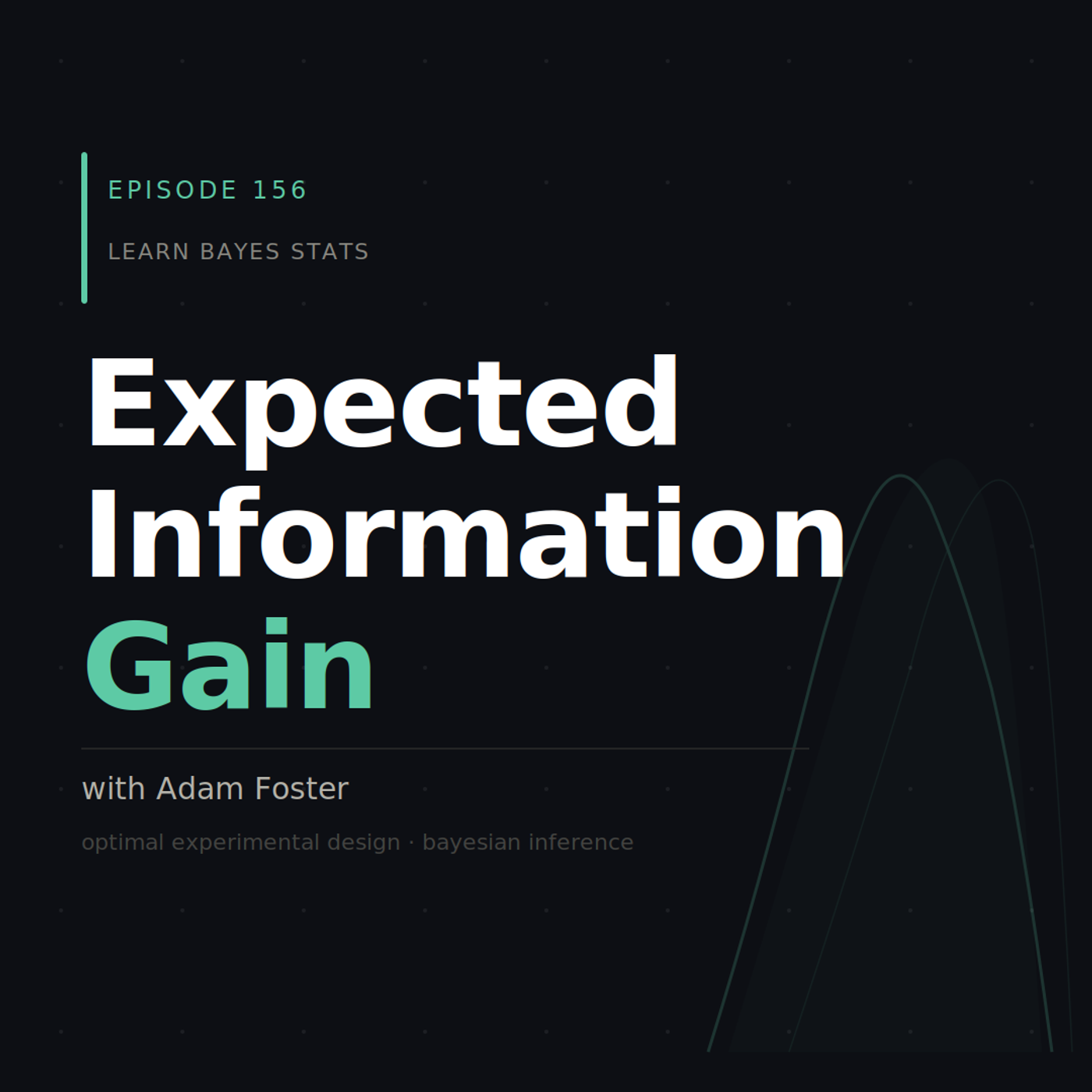
Today's clip is from Episode 156 featuring Adam Foster. In this conversation, Adam explains Expected Information Gain (EIG) -the scoring function at the heart of optimal Bayesian experimental design. The core idea: when...

About This Episode

How to Design Better Experiments with Expected Information Gain is an episode from Learning Bayesian Statistics by Alexandre ANDORRA. Today's clip is from Episode 156 featuring Adam Foster. In this conversation, Adam explains Expected Infor...

Podcast

This episode belongs to Learning Bayesian Statistics.

Listen Online

Use the player on this page to stream the episode online.

Episode Details

Published May 1, 2026, 00:05:42 long, audio available.

Questions About This Episode

What is How to Design Better Experiments with Expected Information Gain about?

Today's clip is from Episode 156 featuring Adam Foster. In this conversation, Adam explains Expected Information Gain (EIG) -the scoring function at the heart of optimal Bayesian experimental design. The core idea: when designing an experiment, you need a way to compare possible designs and pick the best one. EIG is that score - it tells you how much information you expect to gain about your model parameters from a given design. The higher the EIG, the better the design. Adam builds intuition for EIG from two directions that sound completely different but lead to the same place. First, the Bayesian angle: simulate datasets from your prior predictive distribution, run inference on each, measure how much uncertainty dropped, and average across datasets. Second, a classic puzzle - the 12 prisoners balance scale problem - where the best weighing strategy turns out to be the one that makes all three outcomes (tip left, tip right, balance) equally likely. This maximizes outcome entropy, which is exactly what EIG does: it steers you toward designs where every possible result narrows down your hypotheses as fast as possible. The takeaway: good experimental design isn't about intuition or convention - it's about making your data work as hard as possible, and EIG gives you a rigorous way to do that. Get the full discussion here Support & Resources → Support the show on Patreon → Bayesian Modeling Course (first 2 lessons free) Our theme music is « Good Bayesian », by Baba Brinkman (feat MC Lars and Mega Ran). Check out his awesome work

Where can I listen to How to Design Better Experiments with Expected Information Gain?

You can listen to How to Design Better Experiments with Expected Information Gain online on Radio and Podcast. Open the player on this page to stream the available audio.

Which podcast is How to Design Better Experiments with Expected Information Gain from?

How to Design Better Experiments with Expected Information Gain is an episode from Learning Bayesian Statistics by Alexandre ANDORRA.

How long is this episode?

This episode is 00:05:42 long.

When was this episode published?

This episode was published on May 1, 2026.

Can I save How to Design Better Experiments with Expected Information Gain for later?

Yes. Use the heart button on the episode page to add it to your favorite episodes list.

Are there related episodes from Learning Bayesian Statistics?

Yes. This page shows related episodes from Learning Bayesian Statistics when more episodes are available from the podcast feed.

Quick Answers About This Episode

Where can I listen to How to Design Better Experiments with Expected Information Gain?

You can listen to How to Design Better Experiments with Expected Information Gain on this page when the episode audio is available from the podcast feed.

Which podcast is this episode from?

How to Design Better Experiments with Expected Information Gain is from Learning Bayesian Statistics by Alexandre ANDORRA.

What are the episode details?

Published May 1, 2026 and 00:05:42 long