
The war on words: Is journalism disappearing from conflict zones?
Journalists are instrumental in raising awareness of conflicts and influencing the international community's humanitarian response to popula...
 Radio and PodcastLive Radio & Podcasts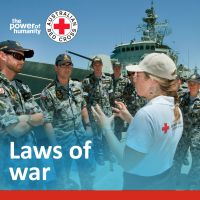
Why do wars have laws? Where did they come from and what do they mean for today’s armed conflicts? How do these laws affect humanitarian agencies, armed forces, prisoners and non-combatants?...
Journalists are instrumental in raising awareness of conflicts and influencing the international community's humanitarian response to popula...

Advances in science and technology have resulted in a rapid proliferation of new weapon systems, in particular cyber weapons and armed unman...

ICRC Legal Advisor Jean-Marie Henckaerts talks about his latest work as head of the ICRC project to update the commentaries on the Geneva Co...

Former war correspondent for Time and CNN, Michael Ware, has survived kidnappings and an intended execution in a back street of Baghdad. Mic...

Journalists witness and recount the horrific consequences of armed conflict, and are also among the most at risk of being wounded, kidnapped...

Why is Australian Red Cross – a neutral and impartial organisation – calling on the world’s governments to ban nuclear weapons? CEO Robert T...

The founding director of the Harvard Law School Program on International Law and Armed Conflict, Dr Modirzadeh outlines how the law and its...

Tim McCormack is a leading international authority on international humanitarian law (IHL) and the prosecution of war crimes. He retraces th...