An African Perspective for Building AI for Global South AI Summit Special
Apr 30, 2026 - 00:48:07
Radio and PodcastLive Radio & PodcastsFetching episode details...
Radio and PodcastLive Radio & Podcasts
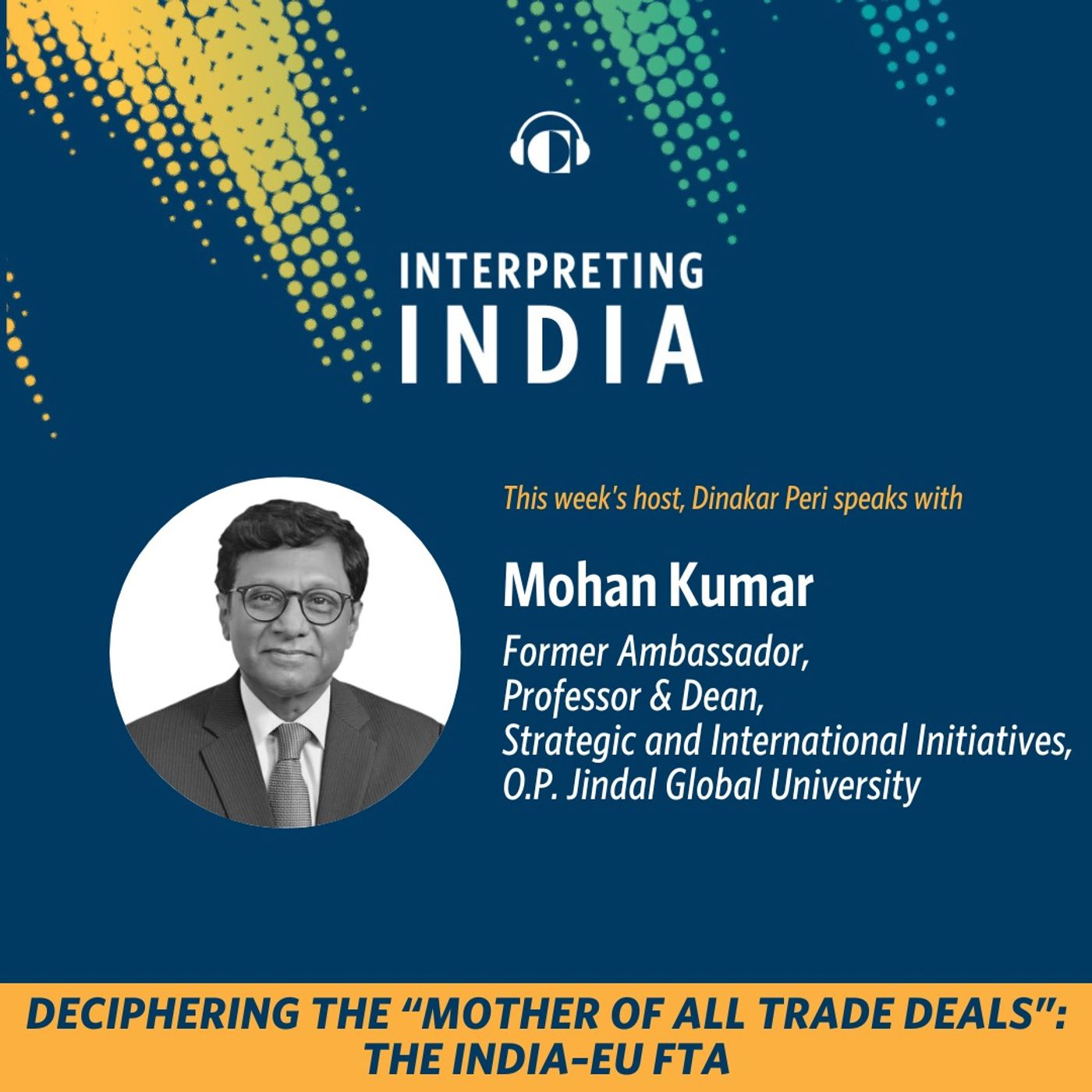
Kumar frames the India–EU FTA as a deal India needed, not one it merely chose, arguing that with the multilateral trade system weakened, FTAs have become the practical route to secure market access and signal openness to...
Deciphering the “Mother of All Trade Deals”: The India–EU FTA is an episode from Interpreting India by Carnegie India. Kumar frames the India–EU FTA as a deal India needed, not one it merely chose, arguing that with the multilateral trade s...
This episode belongs to Interpreting India.
Use the player on this page to stream the episode online.
Published Feb 3, 2026, 00:36:41 long, audio available.
Kumar frames the India–EU FTA as a deal India needed, not one it merely chose, arguing that with the multilateral trade system weakened, FTAs have become the practical route to secure market access and signal openness to investment. He places the EU among India’s “$100 billion club” trading partners and explains why this agreement fills a gap India cannot realistically close with China, and cannot replicate with the United States in the form of a full FTA. On timing, he calls the early 2010s a missed opportunity but notes that current geopolitical conditions have raised India’s value for Europe, including Europe’s push to de-risk from China and the absence of an EU–U.S. FTA. A major thread is regulation: Kumar acknowledges the EU’s regulatory intensity, but argues India must adapt to global technical and sanitary standards, using the agreement’s timelines and technical assistance to reduce friction and help industry upgrade over time. He clarifies the trade-offs that made the deal viable: core agriculture and dairy are left out due to political sensitivities on both sides; government procurement is excluded due to India’s constraints and federal realities; and investment protection and geographical indications are kept on separate tracks to avoid a more complex EU-wide ratification path. He also describes how negotiations manage domestic sensitivities through consultation with industry, transition periods, tariff-rate quotas, and product thresholds, particularly in sectors like autos, aiming to expose firms gradually to competition while pushing manufacturing to become more competitive. In closing, Kumar argues the hard work starts after signing. He stresses that Indian industry must actually use the agreement’s tariff concessions, pointing to historically low utilization of FTAs—and that domestic reforms cannot be postponed if India wants the deal to deliver results. He highlights reforms in agriculture, labor implementation, power, and land acquisition, and ties this to a broader shift he sees globally: trade policy and security policy are increasingly moving into alignment, especially in a world of dual-use technology and tighter strategic partnerships. Episode Contributors Dinakar Peri is a fellow in the Security Studies program at Carnegie India. Ambassador Mohan Kumar has an outstanding career in the Indian Foreign Service lasting 36 years which culminated in his being India’s Ambassador to France based in Paris. Under his watch, the Indo-French strategic partnership was strengthened and consolidated further in spheres such as defense, space, nuclear & solar energy, smart cities and investment. Earlier, Mohan Kumar was India’s Ambassador to the Kingdom of Bahrain where he witnessed and dealt with a strategically complex region characterized by events such as the “Arab Spring”. Every two weeks, Interpreting India brings you diverse voices from India and around the world to explore the critical questions shaping the nation's future. We delve into how technology, the economy, and foreign policy intertwine to influence India's relationship with the global stage. As a Carnegie India production, hosted by Carnegie scholars, Interpreting India, a Carnegie India production, provides insightful perspectives and cutting-edge by tackling the defining questions that chart India's course through the next decade. Stay tuned for thought-provoking discussions, expert insights, and a deeper understanding of India's place in the world. Don't forget to
You can listen to Deciphering the “Mother of All Trade Deals”: The India–EU FTA online on Radio and Podcast. Open the player on this page to stream the available audio.
Deciphering the “Mother of All Trade Deals”: The India–EU FTA is an episode from Interpreting India by Carnegie India.
This episode is 00:36:41 long.
This episode was published on Feb 3, 2026.
Yes. Use the heart button on the episode page to add it to your favorite episodes list.
Yes. This page shows related episodes from Interpreting India when more episodes are available from the podcast feed.
You can listen to Deciphering the “Mother of All Trade Deals”: The India–EU FTA on this page when the episode audio is available from the podcast feed.
Deciphering the “Mother of All Trade Deals”: The India–EU FTA is from Interpreting India by Carnegie India.
Published Feb 3, 2026 and 00:36:41 long