Radio and PodcastRadio and PodcastLive Radio & Podcasts
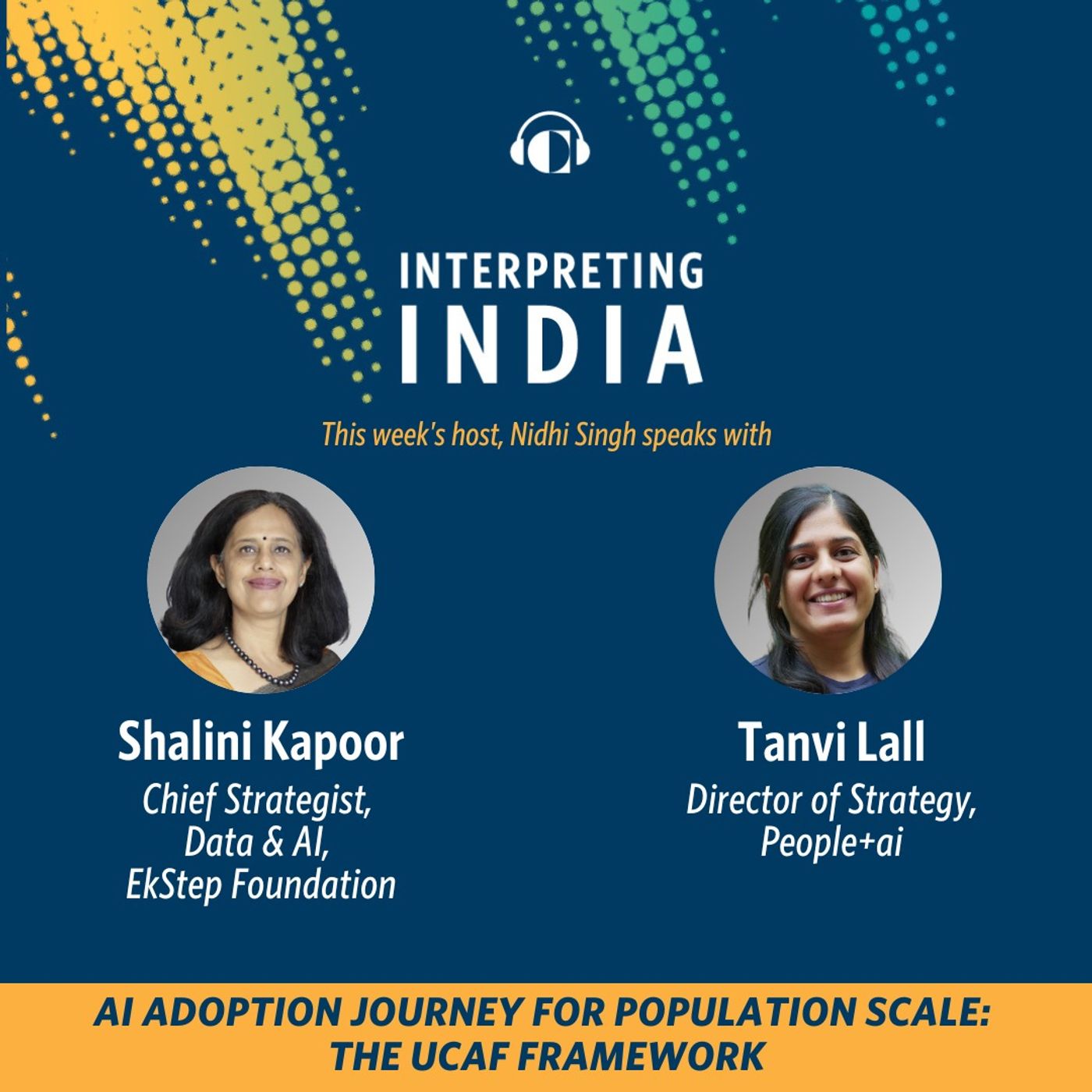
AI Adoption Journey for Population Scale: The UCAF Framework artwork
Government & Organizations

AI Adoption Journey for Population Scale: The UCAF Framework

Interpreting India by Carnegie India

Jan 30, 202600:46:39Government & Organizations

AI progress is often measured by the number of pilots launched, but this episode argues the real unit of progress should be how many AI use cases are reliably in production and embedded into everyday systems. Shalini Kap...

About This Episode

AI Adoption Journey for Population Scale: The UCAF Framework is an episode from Interpreting India by Carnegie India. AI progress is often measured by the number of pilots launched, but this episode argues the real unit of progress should b...

Podcast

This episode belongs to Interpreting India.

Listen Online

Use the player on this page to stream the episode online.

Episode Details

Published Jan 30, 2026, 00:46:39 long, audio available.

Questions About This Episode

What is AI Adoption Journey for Population Scale: The UCAF Framework about?

AI progress is often measured by the number of pilots launched, but this episode argues the real unit of progress should be how many AI use cases are reliably in production and embedded into everyday systems. Shalini Kapoor distinguishes AI innovation (models, chips, and breakthroughs) from AI adoption, emphasizing that adoption is frequently harder because it demands institutional integration, behavior change, and clear accountability—especially when AI advice affects livelihoods, health outcomes, or legal decisions. Tanvi Lall explains “pilot purgatory” as the frustrating middle state where use cases never move beyond controlled deployments. She shares how recurring barriers—compute constraints within real institutions (not just cloud credits), fragmented workflows, late-stage safety design, lack of sustained funding, and weak organizational readiness—prevent diffusion. The conversation highlights the UCAF approach to defining a use case as a commitment to improve a specific outcome for a specific persona in a specific context, and why trust and accountability are as central as the technology layer. The episode also explores “horizontal enablers” that make scale possible—data readiness, multilingual language support, voice interfaces for last-mile access, workforce integration, and guardrails. A detailed example (Mahavistar in Maharashtra) illustrates what scaling can look like when government partnership, data pipelines, voice infrastructure, safeguards, and long-term funding align. Finally, the guests look ahead to what AI adoption in India could look like over the next five years, arguing that the most impactful AI will feel “ordinary”—quietly embedded into routine decisions—supported by shared adoption infrastructure rather than one-off pilots. Episode Contributors Nidhi Singh is a Senior Research Analyst at Carnegie India. Shalini Kapoor is the Chief Strategist for Data and AI at the EkStep Foundation. Her work focuses on building practical pathways for AI adoption, with emphasis on institutional integration, accountable systems, and population-scale impact. Tanvi Lall is the Director for Strategy at People Plus AI. Her work focuses on AI use cases, adoption barriers, and developing frameworks that help move AI from pilots to sustained deployment and real-world outcomes. 00:00 Introduction to AI Adoption Challenges 01:37 Understanding AI Adoption vs. Innovation 04:55 Pilot Purgatory: The Stagnation of AI Projects 08:48 Fragmented Adoption: Real-World Examples 12:13 Barriers to AI Adoption: Mindset and Behavior Change 16:01 Defining Good AI Use Cases 20:00 Horizontal Enablers for AI Success 26:26 Case Study: Mahavistar's Impact on Farmers 34:34 Future of AI Adoption in India 40:29 Optimism for AI Diffusion and Adoption Readings AI Adoption Journey for Population Scale by Shalini Kapoor and Tanvi Lall Every two weeks, Interpreting India brings you diverse voices from India and around the world to explore the critical questions shaping the nation's future. We delve into how technology, the economy, and foreign policy intertwine to influence India's relationship with the global stage. As a Carnegie India production, hosted by Carnegie scholars, Interpreting India, a Carnegie India production, provides insightful perspectives and cutting-edge by tackling the defining questions that chart India's course through the next decade. Stay tuned for thought-provoking discussions, expert insights, and a deeper understanding of India's place in the world. Don't forget to

Where can I listen to AI Adoption Journey for Population Scale: The UCAF Framework?

You can listen to AI Adoption Journey for Population Scale: The UCAF Framework online on Radio and Podcast. Open the player on this page to stream the available audio.

Which podcast is AI Adoption Journey for Population Scale: The UCAF Framework from?

AI Adoption Journey for Population Scale: The UCAF Framework is an episode from Interpreting India by Carnegie India.

How long is this episode?

This episode is 00:46:39 long.

When was this episode published?

This episode was published on Jan 30, 2026.

Can I save AI Adoption Journey for Population Scale: The UCAF Framework for later?

Yes. Use the heart button on the episode page to add it to your favorite episodes list.

Are there related episodes from Interpreting India?

Yes. This page shows related episodes from Interpreting India when more episodes are available from the podcast feed.

Quick Answers About This Episode

Where can I listen to AI Adoption Journey for Population Scale: The UCAF Framework?

You can listen to AI Adoption Journey for Population Scale: The UCAF Framework on this page when the episode audio is available from the podcast feed.

Which podcast is this episode from?

AI Adoption Journey for Population Scale: The UCAF Framework is from Interpreting India by Carnegie India.

What are the episode details?

Published Jan 30, 2026 and 00:46:39 long