Radio and PodcastRadio and PodcastLive Radio & Podcasts
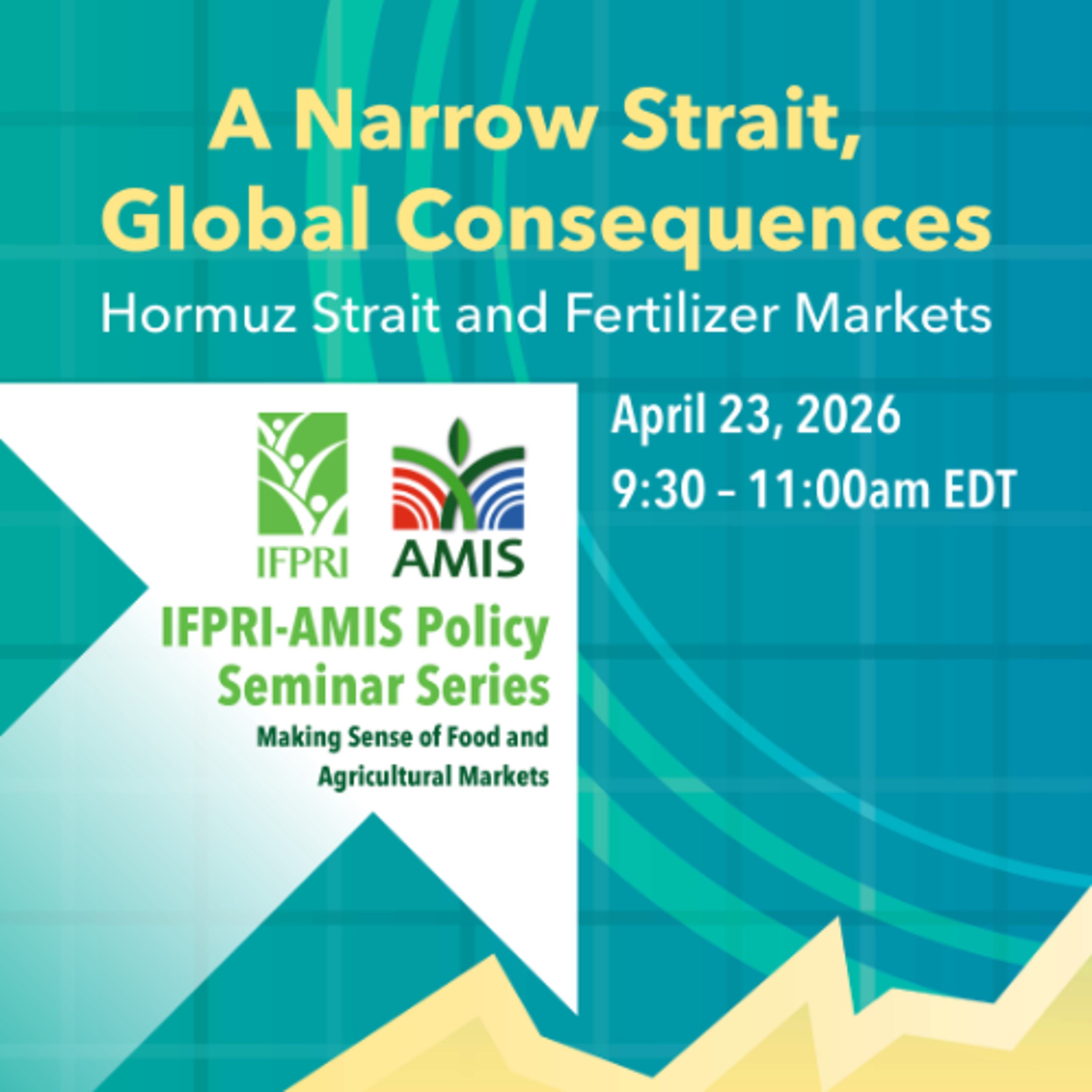
A Narrow Strait, Global Consequences: Hormuz Strait and Fertilizer Markets artwork
Government & Organizations

A Narrow Strait, Global Consequences: Hormuz Strait and Fertilizer Markets

IFPRI Podcast by International Food Policy Research Institute

Apr 23, 202601:31:43Government & Organizations

IFPRI-AMIS Seminar Series | IFPRI Policy Seminar A Narrow Strait, Global Consequences: Hormuz Strait and Fertilizer Markets Co-organized by IFPRI and Agricultural Market Information System (AMIS) April 23, 2026 Fertilize...

About This Episode

A Narrow Strait, Global Consequences: Hormuz Strait and Fertilizer Markets is an episode from IFPRI Podcast by International Food Policy Research Institute. IFPRI-AMIS Seminar Series | IFPRI Policy Seminar A Narrow Strait, Global Consequenc...

Podcast

This episode belongs to IFPRI Podcast.

Listen Online

Use the player on this page to stream the episode online.

Episode Details

Published Apr 23, 2026, 01:31:43 long, audio available.

Questions About This Episode

What is A Narrow Strait, Global Consequences: Hormuz Strait and Fertilizer Markets about?

IFPRI-AMIS Seminar Series | IFPRI Policy Seminar A Narrow Strait, Global Consequences: Hormuz Strait and Fertilizer Markets Co-organized by IFPRI and Agricultural Market Information System (AMIS) April 23, 2026 Fertilizer markets have entered a phase of heightened uncertainty, where geopolitical risks intersect with highly concentrated production, energy dependence, and fragile logistics. These risks are no longer hypothetical. The Strait of Hormuz represents a critical chokepoint for fertilizer trade, with around 35 percent of global urea flows, over one quarter of ammonia trade, just above 20 percent of phosphates, and roughly 45 percent of global sulfur exports transiting the Strait. Ongoing restrictions on maritime traffic through Hormuz underscore its role as a key pressure point in global fertilizer supply chains. Even partial or temporary disruptions can reverberate through markets, while a prolonged or intensified disruption would pose serious challenges for securing adequate nutrient supplies ahead of future cropping seasons. Moreover, even in the event of an easing or reopening, restarting production, logistical normalization, and contract re‑alignment would take time, delaying a full recovery in supply flows. This IFPRI-AMIS seminar looks ahead to assess how fertilizer markets may evolve under these conditions. Drawing on the latest market intelligence and trade analysis, speakers will examine transmission channels from constrained shipping and elevated insurance risks to energy‑driven production costs, price volatility, and regional supply vulnerabilities. The discussion will focus on implications for major importing regions, risks to fertilizer affordability and application decisions, and potential knock‑on effects for agricultural production and food security, as well as policy and market responses to strengthen preparedness in an increasingly uncertain global environment. Opening Remarks Monika Tothova, Senior Economist, Food and Agriculture Organization of the United Nations (FAO); Agricultural Market Information System (AMIS) Secretary Landscape of Fertilizer Markets Delphine Leconte-Demarsy, Fertilizer consultant, Agricultural Market Information System (AMIS) Changes in Fertilizer Trade Flows Shawn Arita, Associate Director and Associate Research Professor, Agricultural Risk Policy Center, North Dakota State University (NDSU) Panel Discussion Africa: Maria Wanzala, Director of Policy, African Fertilizer and Agribusiness Partnership (AFAP) Brazil: Joana Colussi, Assistant Professor, Department of Agricultural Economics, Purdue University India: Shalender Singh, Chief Manager, Marketing, Krishak Bharati Cooperative Limited United States: Veronica Nigh, Chief Economist, The Fertilizer Institute Concluding Remarks Joseph Glauber, Research Fellow Emeritus, IFPRI More about this Event:

Where can I listen to A Narrow Strait, Global Consequences: Hormuz Strait and Fertilizer Markets?

You can listen to A Narrow Strait, Global Consequences: Hormuz Strait and Fertilizer Markets online on Radio and Podcast. Open the player on this page to stream the available audio.

Which podcast is A Narrow Strait, Global Consequences: Hormuz Strait and Fertilizer Markets from?

A Narrow Strait, Global Consequences: Hormuz Strait and Fertilizer Markets is an episode from IFPRI Podcast by International Food Policy Research Institute.

How long is this episode?

This episode is 01:31:43 long.

When was this episode published?

This episode was published on Apr 23, 2026.

Can I save A Narrow Strait, Global Consequences: Hormuz Strait and Fertilizer Markets for later?

Yes. Use the heart button on the episode page to add it to your favorite episodes list.

Are there related episodes from IFPRI Podcast?

Yes. This page shows related episodes from IFPRI Podcast when more episodes are available from the podcast feed.

Quick Answers About This Episode

Where can I listen to A Narrow Strait, Global Consequences: Hormuz Strait and Fertilizer Markets?

You can listen to A Narrow Strait, Global Consequences: Hormuz Strait and Fertilizer Markets on this page when the episode audio is available from the podcast feed.

Which podcast is this episode from?

A Narrow Strait, Global Consequences: Hormuz Strait and Fertilizer Markets is from IFPRI Podcast by International Food Policy Research Institute.

What are the episode details?

Published Apr 23, 2026 and 01:31:43 long