
Radio and PodcastRadio and PodcastLive Radio & Podcasts
Episode 260: Community-centered Approaches to Green Mineral Mining: Lessons from Pact artwork
Government & Organizations

Episode 260: Community-centered Approaches to Green Mineral Mining: Lessons from Pact

Friday Podcasts From ECSP and MHI by Environmental Change and Security Program

According to the World Bank, building enough renewable energy infrastructure to keep global warming below 2C will require more than 3 billion tons of minerals. Reducing emissions quickly is crucial to minimizing risk for...

About This Episode

Episode 260: Community-centered Approaches to Green Mineral Mining: Lessons from Pact is an episode from Friday Podcasts From ECSP and MHI by Environmental Change and Security Program. According to the World Bank, building enough renewable...

Podcast

This episode belongs to Friday Podcasts From ECSP and MHI.
Listen Online

Use the player on this page to stream the episode online.

Episode Details

Published Nov 2, 2022, 22:04 long, audio available.

Questions About This Episode

What is Episode 260: Community-centered Approaches to Green Mineral Mining: Lessons from Pact about?

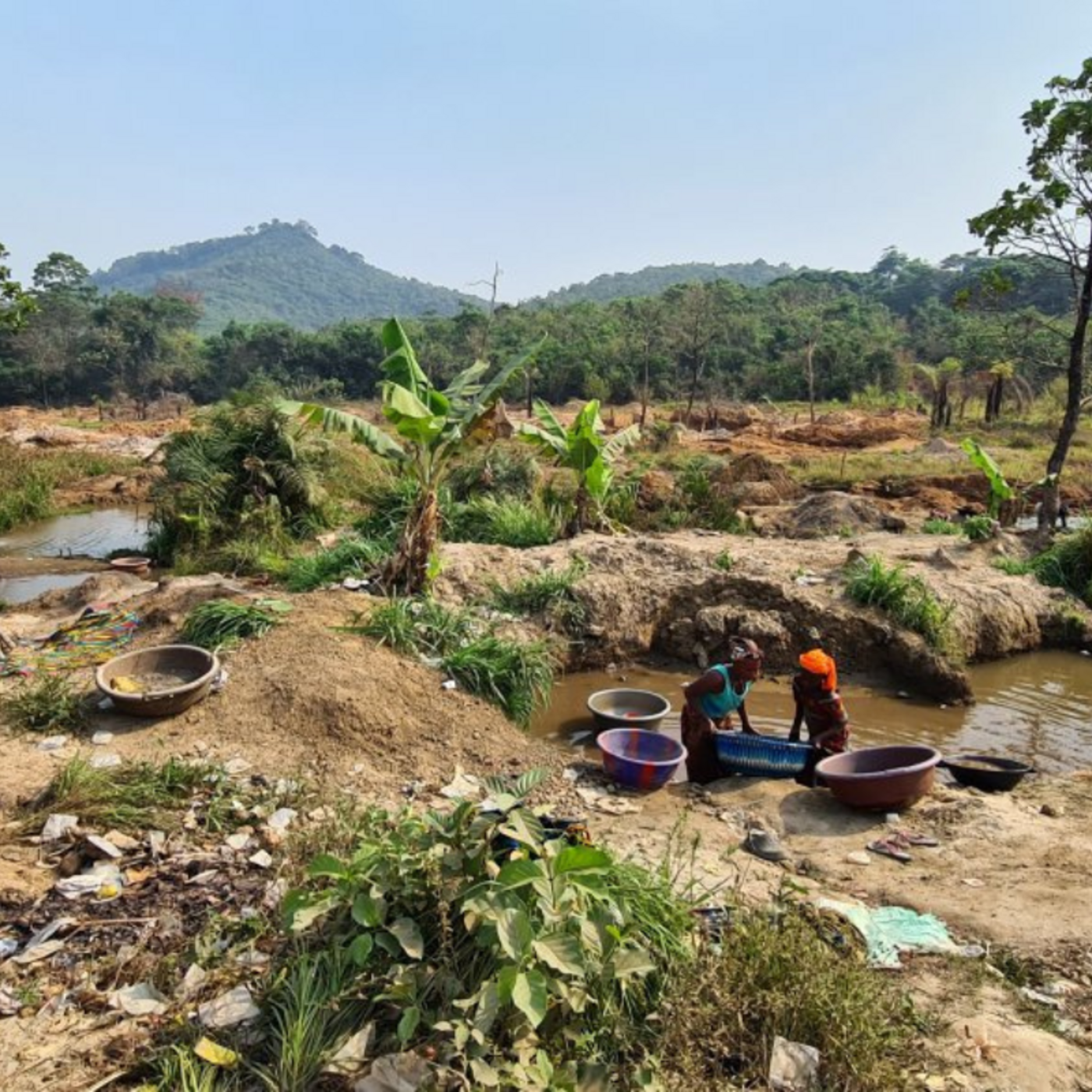
According to the World Bank, building enough renewable energy infrastructure to keep global warming below 2C will require more than 3 billion tons of minerals. Reducing emissions quickly is crucial to minimizing risk for the world’s most climate-vulnerable communities, many of whom are on the front lines of a crisis they did not create. But unless we are careful, ramping up mining in order to decarbonize could actually worsen inequity and injustice. “How do we do this quickly, safely, and sustainably, in ways that benefit all?” asks Lauren Risi, Director of the Wilson Center’s Environmental Change and Security Program in this week’s New Security Broadcast. Risi explores this question with Roger-Mark De Souza, a Global Fellow with the Wilson Center and Vice President of Sustainable Markets at Pact, an international development organization with decades of experience improving health, governance, sustainable markets, and local stakeholder engagement in mining activities. What Pact is most known for, says De Souza, is how it engages communities: “[It’s] very much a co-creation process in partnership with and led [by] communities.” Pact’s broad portfolio includes work on gold in Ghana, mica in Madagascar, cobalt in the Democratic Republic of Congo, and gemstones in Tanzania and Kenya. In the Great Lakes region of Africa, the organization has spent over a decade improving mining activities for the 3T minerals (tin, tantalum, and tungsten) through a program called ITSCI. De Souza explains that the project, which is implemented in partnership with the International Tin Association, “[looks] at the supply chain [of] the three T's with a focus on social protections, traceability, and due diligence.” According to De Souza, ITSCI is the only program that fully adheres to the OECD’s guidelines for due diligence. Across the world, Pact also works closely with artisanal and small-scale mining (ASM) operators—which De Souza calls “the hidden labor force of the mining sector.” Distinct from the more formalized, and more mechanized industrial mining sector, ASM accounts for a vast majority—as much as 90 percent—of the mining workforce worldwide. Artisanal and small-scale mining can bring significant economic benefits both for local populations and for global markets. “[ASM] is a tremendous source of livelihoods and income for communities,” says De Souza, “and [it] is critical to supply chains.” But ASM, and mining more broadly, can also be accompanied by serious human rights risks. “There's a tension [when] mining is the foundation of communities’ livelihoods,” observes Risi, because mining often simultaneously introduces child labor, hazardous working conditions, and environmental degradation—all of which undermine local livelihoods, health, and sustainability. Pact’s programming seeks to respond to some of these challenges. Under its ‘alternative livelihoods’ program, for instance, Pact helps children exit mining and then supports them in developing sustainable livelihood strategies post-graduation. The program has had major success in certain places: “In some mining sites, we're able to get more than 90 percent of the children out of these mines,” De Souza shares. Despite the challenges of ASM, its importance to local livelihoods and global supply chains means it merits attention in policy solutions. To that end, the World Bank, Pact, and other partners have developed a data hub called DELVE, which seeks to collate robust information about ASM and ultimately inform better decision-making. As a multipurpose tool, it serves a wide audience including communities, the mining sector, policymakers, and NGOs. As the demand for critical minerals continues to rise, De Souza says improving transparency across ASM and industrial mining should be a priority. “[It’s important to] have in place systems for better tracking, traceability, due diligence, tracking on conflict minerals.” For companies, looking at the risks in their supply chain is not just a moral imperative, he says. “It's also good business sense.” Encouragingly, corporate boards of directors and shareholders are increasingly asking for this information. Beyond transparent supply chains, de Souza emphasized the need to formalize the ASM sector and strengthen gender equity in mining, where discrimination—like taboos associated with menstruation—can limit women’s opportunities. Underlying these ways forward is the more fundamental philosophy that community voices and needs must be centered. In that vein, De Souza says Pact will continue to operate by its guiding principle: “Putting communities and their wellbeing first.” Sources: Delve, Organisation for Economic Co-operation and Development, Pact, The World Bank Photo Credit: Gold panning in Bolaneh, Sierra Leone, used with permission courtesy of Jorden de Haan/Pact.

Where can I listen to Episode 260: Community-centered Approaches to Green Mineral Mining: Lessons from Pact?

You can listen to Episode 260: Community-centered Approaches to Green Mineral Mining: Lessons from Pact online on Radio and Podcast. Open the player on this page to stream the available audio.

Which podcast is Episode 260: Community-centered Approaches to Green Mineral Mining: Lessons from Pact from?

Episode 260: Community-centered Approaches to Green Mineral Mining: Lessons from Pact is an episode from Friday Podcasts From ECSP and MHI by Environmental Change and Security Program.

How long is this episode?

This episode is 22:04 long.

When was this episode published?

This episode was published on Nov 2, 2022.

Can I save Episode 260: Community-centered Approaches to Green Mineral Mining: Lessons from Pact for later?

Yes. Use the heart button on the episode page to add it to your favorite episodes list.

Are there related episodes from Friday Podcasts From ECSP and MHI?

Yes. This page shows related episodes from Friday Podcasts From ECSP and MHI when more episodes are available from the podcast feed.

Quick Answers About This Episode

Where can I listen to Episode 260: Community-centered Approaches to Green Mineral Mining: Lessons from Pact?

You can listen to Episode 260: Community-centered Approaches to Green Mineral Mining: Lessons from Pact on this page when the episode audio is available from the podcast feed.

Which podcast is this episode from?

Episode 260: Community-centered Approaches to Green Mineral Mining: Lessons from Pact is from Friday Podcasts From ECSP and MHI by Environmental Change and Security Program.

What are the episode details?

Published Nov 2, 2022 and 22:04 long