
Announcing Panglot World Languages
There are around 7000 languages in the world, and we know so little about them. On my new podcast, Panglot World Languages, I speak with a g...

Radio and PodcastLive Radio & PodcastsOpening Radio and Podcast...

Radio and PodcastLive Radio & PodcastsFetching podcast shows and categories...
Radio and PodcastLive Radio & PodcastsFetching podcast episodes...

Education Bookcast is a podcast in which we talk about one education-related book or article per episode.

There are around 7000 languages in the world, and we know so little about them. On my new podcast, Panglot World Languages, I speak with a g...

Hello everyone, I have not been recording podcast episodes for over a year. This is because I started a company this year, Panglot Labs Ltd,...

In order to understand learning, we need to understand the result of learning - expertise. This is much easier to approach in so-called "kin...

There has been a ton of research on how experts see things differently than novices. (Like, with their eyes.) Everything from where they loo...

Mindset was the first thing I spoke about on this podcast. I even did a separate episode going into the controversies surrounding replicatio...

I haven't spoken on the podcast yet about my personal experience learning dancing. At university, I took part in dancesport, which is compet...

This is my first ever attempt at a VIDEO podcast. If you just listen to the audio, you should be fine. This was a video produced for the STE...

This is a quick review of where I am now after 150 episodes and just short of 8 years of Education Bookcast. Thanks for all of your support!...

Since I've now reached episode 150, I've decided to do something I've never done before - discuss a fiction book. (This episode contains spo...

A lot of the classic expertise research, especially the research about deliberate practice and the "10,000 hour rule", is inspired by K. And...

Any teacher in a Western cultural context knows that classroom behaviour is the most challenging part of the job. A lot of the time, it seem...

Dr Guy Emerson (a.k.a Guy Karavengleman) is a computational linguist working at the Cambridge University Computer Laboratory. In this episod...

In the second part of this two-part episode about lessons learned from my time working in the education technology sector, I wanted to share...

I've now been working as a data scientist in educational technology for over four years. In that time I've thought a lot about various educa...

This is the second part of the message for my friend Guy about becoming a better lecturer. In this part, I go over 27 practical techniques a...

Another in the series of "really long voice notes from Staś". My friend Guy is a lecturer in natural language processing. He asked me if I c...

Benjamin Bloom is best known for Bloom's Taxonomy, a scheme for categorising ways of thinking about or interacting with learning content on...
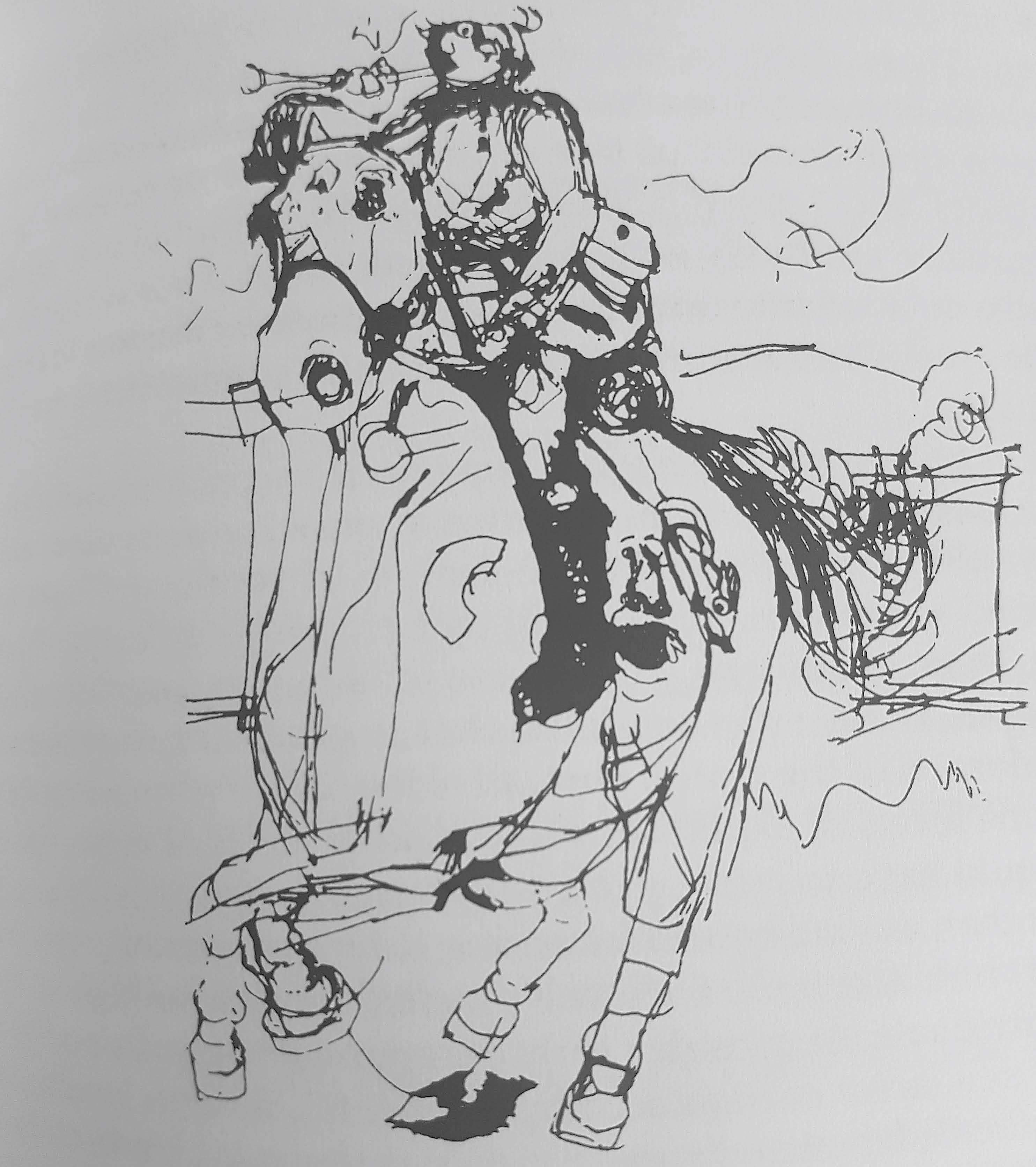
Cover image: horse and rider by Nadia, age 5. The nature of talent is something that I dealt with near the beginning of the existence of Edu...

Season 2 of the Pedagogue-Cast is here! The Pedagogue-Cast is a separate podcast project I share with Justin Matthys, founder of Maths Pathw...

After my last episode on behaviourism, cognitivism, and constructivism ("A Message for Zoë"), I heard back from Zoë herself, and also heard...

My friend Zoë (hi Zoë!) is taking a course on learning design. In it, she heard about Behaviourism, Cognitivism, and Constructivism, and whi...

In the previous recording, I was speaking about political economy using the example of prison gangs, taken from David Skarbek's book Social...

Please be advised that this episode contains mentions of violence and may be unsuitable for some listeners. I'd like to flesh out what I've...

Education Bookcast released its first episode on the 1st of January 2016. I'd like to take this opportunity to talk about some of the big th...

This is the second episode concerning self-related beliefs taken from chapters of The Cambridge Handbook of Motivation and Learning. Here I...

Among the huge academic tomes that I've been ploughing through recently is The Cambridge Handbook of Motivation and Learning. I've long felt...

In this interview, I have the honour to speak with Professor Christian Lebiere, researcher in cognitive architecture, co-author of The Atomi...

I have recently discovered the field of cognitive architecture. I have been reading around the area for the last couple of months, and I wou...

One of the patrons of the podcast wrote to me on the forum that while I have covered the research on learning to read in a fair amount of de...

In this episode, I have Judith Millecker on as a guest. Judith is the author of the Philosocats series of books, which aims to help children...

I was reading the Cambridge Handbook of Expertise and Expert Performance edited by K. Anders Ericsson yesterday, and after going through a c...

I now have a new podcast, the Pedagogue-Cast! Together with Justin Matthys, co-founder of Australian education technology company Maths Path...

In this part of the episode, I will discuss the evidence for the effectiveness of Direct Instruction, drawing from Project Follow Through, b...

I've spent a lot of time on the podcast so far discussing discovery learning, but not had any episodes explicitly dedicated to what might be...

[By the way, the cover image is of the proportion of children in different countries who have a growth mindset (darker red is more). The dat...

I stumbled across a fascinating paper looking into how children conceptualise the world around them. Mental Models of the Earth: A Study of...

You can now support Education Bookcast and join the community forum, where we discuss all things education. Visit https://www.buymeacoffee.c...

This episode has such huge implications that I didn't know what to call it. Efficiency and Innovation in Transfer , the actual name of the b...

I wanted to talk a bit about some areas in which my thinking about education has improved with the addition of nuance, and about the ways in...

A listener of the podcast by the name of Malin Tväråna (senior lecturer at Uppsala University's Department of Education) requested in a revi...

"Are you left-brained or right-brained?" Brain lateralisation has been known about in neuroscience since the early days, but it has been a t...

Dr Rasmus Koss Hartmann is an associate professor at Copenhagen Business School and author of the article that I covered in the first part o...

Entrepreneurship is an important part of a thriving economy, and entrepreneurship education is intended to make sure that those who have the...

I picked up The Cambridge Handbook of the Learning Sciences hoping for a longer term project of enrichment from a volume published by one of...

How the Brain Learns is one of the first books I bought about education, all the way back in summer of 2014. It sat on my shelf for seven ye...

In my episode on Stuart Ritchie's Intelligence: All that Matters I spoke about IQ and intelligence, after a long silence on this issue. In H...

This is the second part of the episode on the book Multiple Faces of Attachment - Cultural Variations on a Fundamental Human Need. In this s...

The title of this episode might ruffle some feathers. Attachment Theory is developmental psychology's shining star, the theory with the grea...

Which country was the first ever to have universal, free, compulsory education? Zero points if you said "Prussia". The correct answer is the...

I realised I missed something, and I kicked myself. For a while I've been toying with the idea that learning occurs in two stages, which can...