Radio and PodcastRadio and PodcastLive Radio & Podcasts
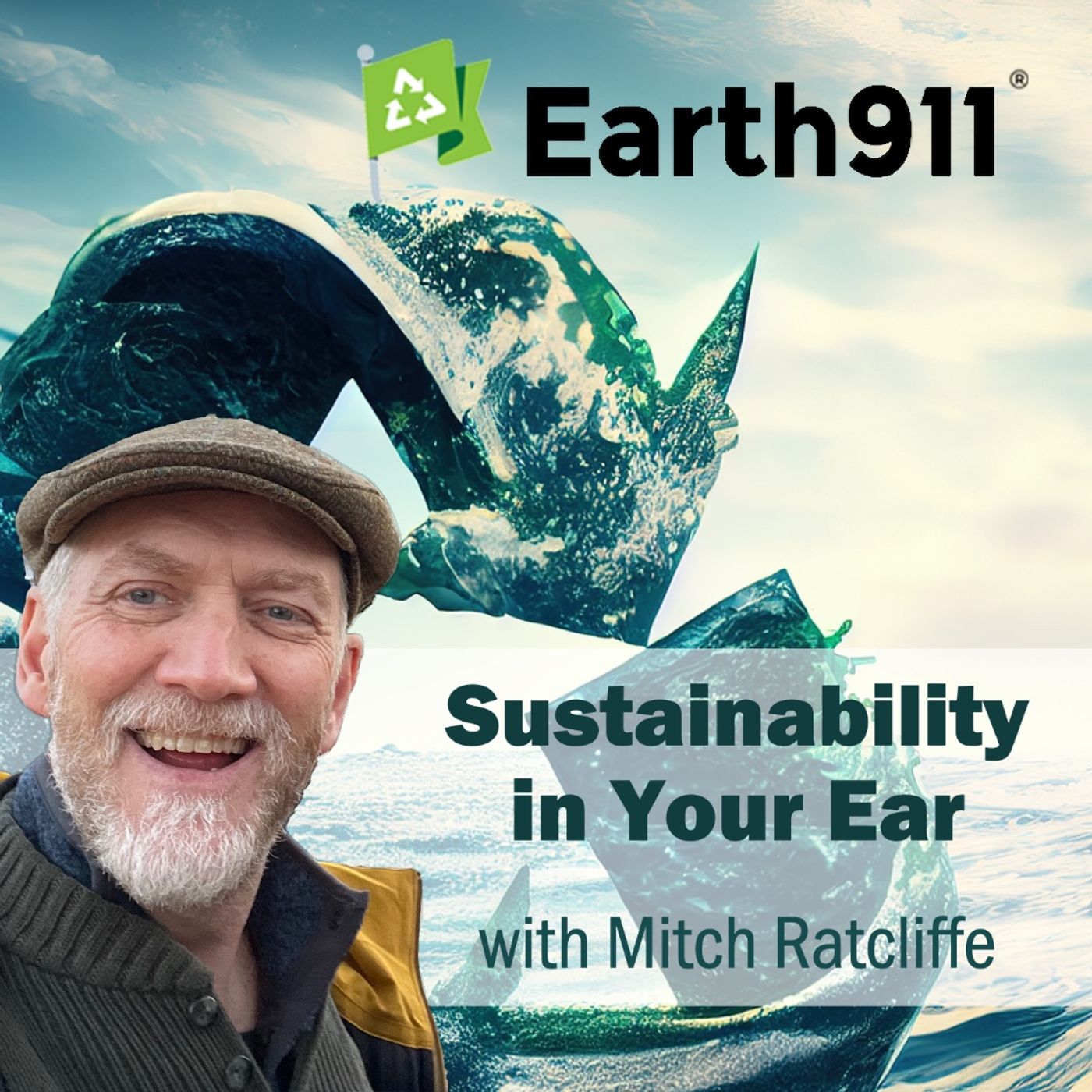
The Forest Stewardship Councils' Path to a Circular Bio-based Future with Loa Dalgaard Worm artwork
Science & Medicine

The Forest Stewardship Councils' Path to a Circular Bio-based Future with Loa Dalgaard Worm

Earth911.com: Sustainability In Your Ear by Earth911.com

Mar 2, 202651:05Science & Medicine

Forests are vital for people everywhere. They cover about 4.14 billion hectares, roughly a third of the world’s land, and store 714 gigatons of carbon. They also support 80% of land-based biodiversity. However, we are lo...

About This Episode

The Forest Stewardship Councils' Path to a Circular Bio-based Future with Loa Dalgaard Worm is an episode from Earth911.com: Sustainability In Your Ear by Earth911.com. Forests are vital for people everywhere. They cover about 4.14 billion...

Podcast

This episode belongs to Earth911.com: Sustainability In Your Ear.

Listen Online

Use the player on this page to stream the episode online.

Episode Details

Published Mar 2, 2026, 51:05 long, audio available.

Questions About This Episode

What is The Forest Stewardship Councils' Path to a Circular Bio-based Future with Loa Dalgaard Worm about?

Forests are vital for people everywhere. They cover about 4.14 billion hectares, roughly a third of the world’s land, and store 714 gigatons of carbon. They also support 80% of land-based biodiversity. However, we are losing 11 million hectares each year to deforestation, and the World Bank expects demand for forest-based products to rise by 400% by 2050. Many industries, from construction to textiles and automotive, are turning to wood fiber to replace fossil-based materials. Yet, a 2023 Circularity Gap Report found that over 90% of materials entering the global economy come from nature and end up in landfills. This approach is not sustainable. If we do not change how we use and reuse fiber, forests will be depleted faster than they can recover. Today’s guest, Loa Dalgaard Worm, leads the Forest Stewardship Council’s Circularity Hub . This innovation team, launched in 2023, is updating a certification system that was originally designed for a linear economy 30 years ago. Her team is working to add circular business models, like take-back, repair, and leasing, to FSC’s chain-of-custody standard, which already includes 70,000 companies worldwide. They are also creating a framework to certify agricultural leftovers, such as wheat straw, rice husks, and coffee chaff, as alternative fibers for pulp-based products. This helps reduce the need for new forest fiber. Loa’s boldest idea is a royalty system that would pay forest owners a small fee each time fiber from their forest is reused or recycled into a new product. Currently, forest owners are paid only once, when they harvest a tree, and do not receive ongoing rewards for protecting ecosystems, conserving biodiversity, or supporting communities. Companies buying recycled fiber would pay for verified origin data, which they increasingly need to meet the EU Deforestation Regulation and other international standards. The pieces for this plan are coming together. FSC already runs FSC Trace , a blockchain-based traceability platform, and works with World Forest ID on isotope testing that can identify a fiber’s origin within about 15 kilometers. They also partner with esri to improve earth observation capabilities. “We used to be able to do this,” Loa says about circularity, pointing out that remembering old habits, not just inventing new ones, is key to sustainability. “Our parents knew how to repair things. My grandmother knew how to mend all of her clothes.” FSC’s circularity work is focused on rebuilding the systems needed to help us relearn how to reuse and repair on a large scale. Loa hopes to test the royalty system within two years and present it to FSC’s General Assembly for discussion by 2029. The big question is whether institutions and markets will move quickly enough to protect forests. To learn more about the FSC Circularity Hub, visit fsc.org/circularity or email the team at circularity@fsc.org.

Where can I listen to The Forest Stewardship Councils' Path to a Circular Bio-based Future with Loa Dalgaard Worm?

You can listen to The Forest Stewardship Councils' Path to a Circular Bio-based Future with Loa Dalgaard Worm online on Radio and Podcast. Open the player on this page to stream the available audio.

Which podcast is The Forest Stewardship Councils' Path to a Circular Bio-based Future with Loa Dalgaard Worm from?

The Forest Stewardship Councils' Path to a Circular Bio-based Future with Loa Dalgaard Worm is an episode from Earth911.com: Sustainability In Your Ear by Earth911.com.

How long is this episode?

This episode is 51:05 long.

When was this episode published?

This episode was published on Mar 2, 2026.

Can I save The Forest Stewardship Councils' Path to a Circular Bio-based Future with Loa Dalgaard Worm for later?

Yes. Use the heart button on the episode page to add it to your favorite episodes list.

Are there related episodes from Earth911.com: Sustainability In Your Ear?

Yes. This page shows related episodes from Earth911.com: Sustainability In Your Ear when more episodes are available from the podcast feed.

Quick Answers About This Episode

Where can I listen to The Forest Stewardship Councils' Path to a Circular Bio-based Future with Loa Dalgaard Worm?

You can listen to The Forest Stewardship Councils' Path to a Circular Bio-based Future with Loa Dalgaard Worm on this page when the episode audio is available from the podcast feed.

Which podcast is this episode from?

The Forest Stewardship Councils' Path to a Circular Bio-based Future with Loa Dalgaard Worm is from Earth911.com: Sustainability In Your Ear by Earth911.com.

What are the episode details?

Published Mar 2, 2026 and 51:05 long