Episode 221: High-Output Heart Failure
Mar 24, 2026
Radio and PodcastLive Radio & Podcasts
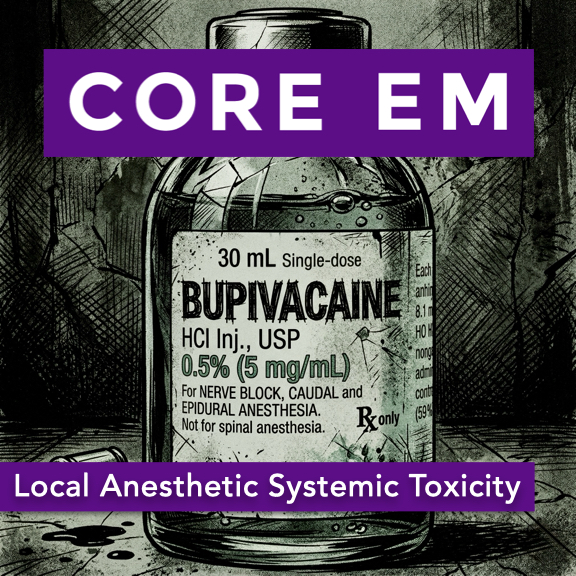
We discuss this ominous complication of providing local anesthesia. Hosts: Elaine Jonas, MD Brian Gilberti, MD Download Leave a Comment Tags: Critical Care , Toxicology Show Notes I. Pathophysiology & Mechanisms Definiti...
Episode 222: Local Anesthetic Systemic Toxicity (LAST) is an episode from Core EM Podcast by Core EM. We discuss this ominous complication of providing local anesthesia. Hosts: Elaine Jonas, MD Brian Gilberti, MD Download Leave a Comment Ta...
This episode belongs to Core EM Podcast.
Use the player on this page to stream the episode online.
Published Apr 7, 2026, audio available.
We discuss this ominous complication of providing local anesthesia. Hosts: Elaine Jonas, MD Brian Gilberti, MD Download Leave a Comment Tags: Critical Care , Toxicology Show Notes I. Pathophysiology & Mechanisms Definition: Systemic toxicity secondary to local anesthetic (LA) via accidental intravascular injection or excessive systemic absorption. Threshold: Occurs when plasma concentration exceeds the safety threshold for cardiac and neural tissue. Agent Profile: Bupivacaine (High Risk) Highly lipophilic with high protein binding. “Fast-on, Slow-off” Kinetics: Strong N a + channel binding with extremely slow dissociation during diastole. Myocardial Depression: Direct inhibition of C a 2+ release from the sarcoplasmic reticulum, impairing contractility. Low CC:CNS Ratio: The dose required for cardiac collapse is very close to the dose that triggers seizures (narrow safety margin). Contributing Factors: Acidosis/Hypercapnia: Increases the fraction of free drug and promotes ion trapping in the brain/heart; shifts the LA-binding curve toward higher toxicity. Hypoxemia: Exacerbates myocardial depression and lowers seizure threshold. II. Risk Assessment & Prevention Patient-Specific Risk Factors Extremes of Age: Neonates (low α -1-acid glycoprotein) and elderly (reduced clearance). Body Composition: Low muscle mass/frailty (decreased volume of distribution). Organ Dysfunction: Hepatic: Reduced metabolism of amide LAs. Renal: Accumulation of metabolites; risk of metabolic acidosis lowering seizure threshold. Cardiac: Reduced cardiac output slows hepatic delivery/clearance; heart failure patients are more sensitive to N a + channel blockade. Pregnancy: Increased sensitivity to cardiotoxicity. Procedural Risk Factors Vascularity of Site (Highest to Lowest Risk): Intercostal blocks (highest absorption rate). Caudal/Epidural. Interfascial plane blocks (e.g., TAP block). Psoas compartment/Sciatic. Brachial plexus. Technique: Large volume infiltration, lack of ultrasound, lack of incremental injection. Prevention Mandates Weight-Based Dosing: Lidocaine (Plain): Max 4.5 mg/kg . Lidocaine (with Epi): Max 7 mg/kg . Bupivacaine: Max 2.5 – 3 mg/kg . Incremental Injection: 3 – 5 mL aliquots with frequent aspiration. Intravascular Marker: Use Epinephrine ( 1 : 200 , 000 ) to detect accidental IV placement (HR increase > 10 bpm or SBP increase > 15 mmHg ). III. Clinical Presentation Neurologic Phase (Early to Late) Subjective: Metallic taste, tinnitus, circumoral numbness/tingling. Objective: Visual disturbances, agitation, confusion, tremors. Critical: Generalized tonic-clonic seizures, rapid progression to CNS depression, coma, and apnea. Note: Early phases are often masked in patients receiving midazolam or propofol. Cardiovascular Phase Initial: Hypertension and tachycardia (if epi used) or transient stimulatory phase. Conduction Defects: PR prolongation, QRS widening (classic sign), bundle branch blocks. Dysrhythmias: Bradycardia (most common), VT/VF, PEA, asystole. Contractility: Profound, refractory hypotension and cardiogenic shock. IV. Immediate Management Algorithm Goal: Prevent hypoxia/acidosis and sequester the toxin. 1. Initial Actions Stop Injection: Immediately halt all LA administration. Call for Help: Specify “LAST Protocol” and “Intralipid Kit.” Airway Management: 100% O 2 . Hyperventilate slightly if needed to counter respiratory acidosis. Low threshold for intubation (hypoxia/acidosis rapidly worsen LAST). 2. Seizure Control First-line: Benzodiazepines (e.g., Midazolam). Avoid: Propofol if hemodynamically unstable (exacerbates cardiac depression). Neuromuscular Blockers: May be needed for ventilation, but remember they do not stop CNS seizure activity. 3. Lipid Emulsion Therapy 20% Indications: Start at first sign of serious toxicity (airway compromise, seizures, or CV instability). Bolus: 1.5 mL/kg IV over 1 minute . Infusion: 0.25 mL/kg/min immediately following bolus. If Instability Persists: Repeat bolus (up to 2 times). Increase infusion to 0.5 mL/kg/min . Upper Limit: ≈ 12 mL/kg total dose. 4. Modified ACLS Epinephrine: Use low doses ( < 1 mcg/kg ) to avoid worsening arrhythmias and interfering with lipid rescue. Antiarrhythmics: Amiodarone is preferred. CONTRAINDICATED: Lidocaine: (Class Ib antiarrhythmic—will worsen toxicity). Vasopressin: Associated with poor outcomes in animal LAST models. Calcium Channel Blockers / Beta Blockers: Exacerbate myocardial depression. Refractory Arrest: Early consultation for ECMO or Cardiopulmonary Bypass (CPB). V. Differential Diagnosis for the Peri-Procedural Patient High Spinal: Ascending sensory/motor block, profound sympathectomy (hypotension/bradycardia). Anaphylaxis: Urticaria, wheezing (rare with amides, more common with esters). Air/Gas Embolism: Sudden dyspnea, “mill-wheel” murmur, acute right heart strain. Vasovagal Syncope: Bradycardia/hypotension, usually lacks the QRS widening or seizure activity. VI. Post-Resuscitation & Complications Observation: At least 2 hours after a CNS-only event. At least 4–6 hours after a CV event. Lipid Complications: Lab Interference: Lipemia interferes with hemoglobin, creatinine, and electrolyte measurements (draw labs before ILE if possible). Pancreatitis: Rare, delayed complication of high-dose ILE. Fat Embolism/Overload: Rare pulmonary complications. VII. Clinical “Red Flags” for Toxicity Unexpected Agitation: In a patient who just received a block, don’t assume “anxiety.” Wide QRS: Any widening of the QRS complex post-injection is LAST until proven otherwise. Refractory Arrest: Standard ACLS failing in a patient who received LA. Lipid must be given. Critical Note: LAST is a clinical diagnosis. Do not wait for serum lidocaine levels or laboratory confirmation to initiate Lipid Emulsion Therapy. Immediate correction of pH and P a CO 2 is as vital as the lipid itself. Read More
You can listen to Episode 222: Local Anesthetic Systemic Toxicity (LAST) online on Radio and Podcast. Open the player on this page to stream the available audio.
Episode 222: Local Anesthetic Systemic Toxicity (LAST) is an episode from Core EM Podcast by Core EM.
The episode duration depends on the source podcast feed and may not always be available.
This episode was published on Apr 7, 2026.
Yes. Use the heart button on the episode page to add it to your favorite episodes list.
Yes. This page shows related episodes from Core EM Podcast when more episodes are available from the podcast feed.
You can listen to Episode 222: Local Anesthetic Systemic Toxicity (LAST) on this page when the episode audio is available from the podcast feed.
Episode 222: Local Anesthetic Systemic Toxicity (LAST) is from Core EM Podcast by Core EM.
Published Apr 7, 2026