 Radio and PodcastLive Radio & Podcasts
Technology
Top Down Ventures closes oversubscribed C$38M Founders Fund I, with a 5.3x agentic AI exit already in the books
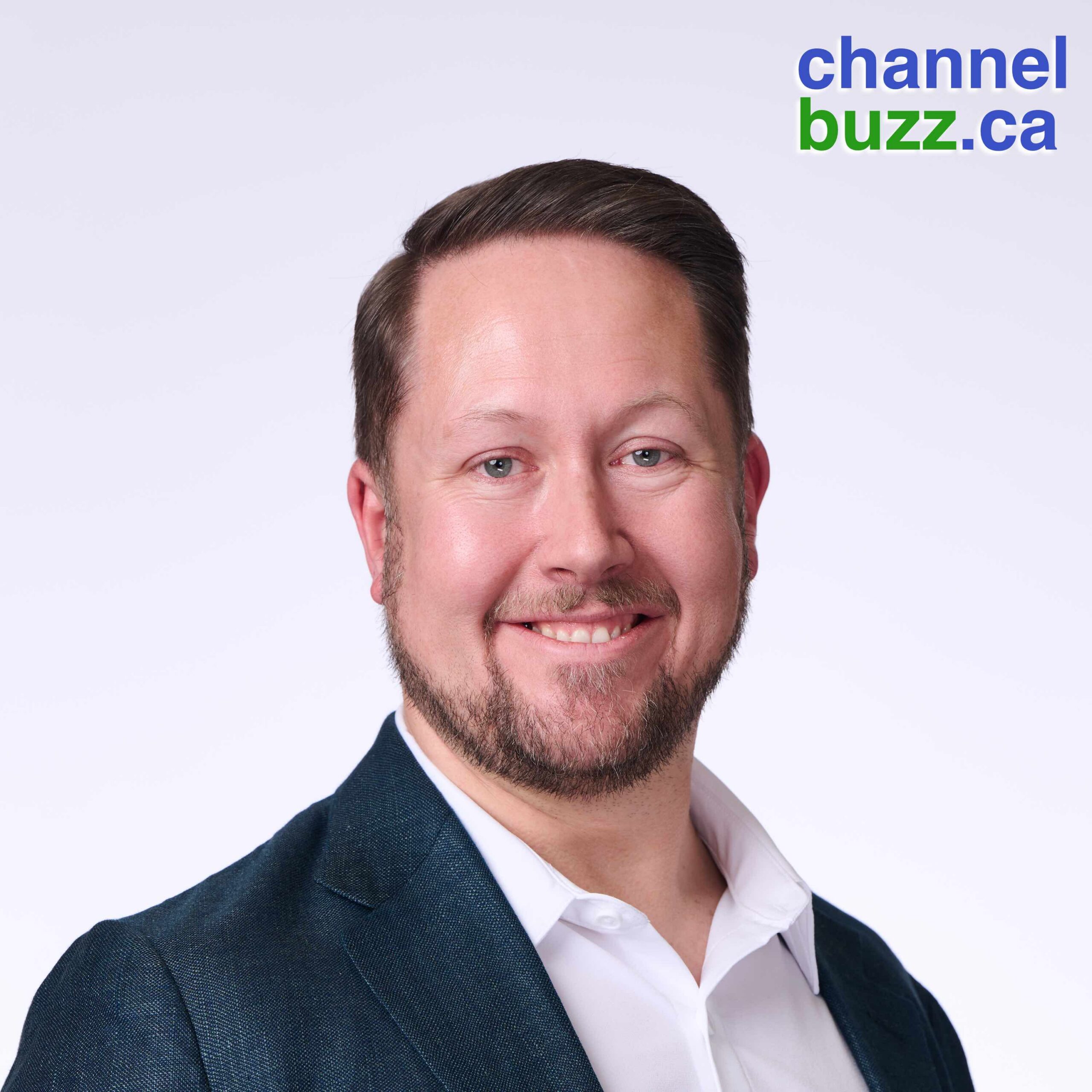
Joel Abramson, managing partner at Top Down Ventures Today’s In The Channel episode lands on the same morning that Vancouver-based Top Down Ventures announces the close of Founders Fund I at C$38 million – ov...
About This Episode
Top Down Ventures closes oversubscribed C$38M Founders Fund I, with a 5.3x agentic AI exit already in the books is an episode from ChannelBuzz.ca by ChannelBuzz.ca. Joel Abramson, managing partner at Top Down Ventures Today’s In The C...
Podcast
This episode belongs to ChannelBuzz.ca.
Listen Online
Use the player on this page to stream the episode online.
Episode Details
Published May 12, 2026, 37:35 long, audio available.
Related Episodes
Continue listening to more episodes from ChannelBuzz.ca.


Questions About This Episode
What is Top Down Ventures closes oversubscribed C$38M Founders Fund I, with a 5.3x agentic AI exit already in the books about?
Joel Abramson, managing partner at Top Down Ventures Today’s In The Channel episode lands on the same morning that Vancouver-based Top Down Ventures announces the close of Founders Fund I at C$38 million – oversubscribed against an original target of US$25 million, and positioned as the first institutional venture fund focused exclusively on early-stage software and AI for the managed service provider ecosystem. Managing partner Joel Abramson joined the show to walk through the fund’s thesis and what it means for the channel. Abramson co-founded and led Fully Managed through more than a dozen acquisitions before its $137 million acquisition by Telus Business Solutions in 2021. He joins general partners Chris Day (founder of IT Glue and ScalePad ) and Mark Scott (founder of N-able ) at Top Down – three operators who between them have spent about 75 years building and scaling companies inside the MSP ecosystem. The fund’s first exit – zofiQ to ConnectWise , which closed in January 2026 – returned 5.3 times the invested capital in roughly six months. Abramson describes it as a case study in what Top Down looks for: founders solving singular problems with exceptional depth, validated by real MSP operators rather than generalist investors. The macro thesis is equally compelling. The global IT services market is projected to grow from $600 billion to over $1 trillion by 2030. And in 2026, SMB IT spend is on track to outpace enterprise IT spend for the first time ever – a shift Abramson contrasts with what he calls the “SaaSpocalypse” in enterprise, where headcount reductions are translating directly into fewer SaaS licenses. The fund’s LP base of more than 100 MSP operators – including Pax8 – acts as a flywheel for validating investments, sourcing design partners, and connecting portfolio companies with the customers best positioned to stress-test what they’re building. Find Top Down Ventures, including their newsletter and annual research report, at topdown.com . Read Full Transcript Robert Dutt: Hello and welcome to In The Channel from ChannelBuzz. ca , bringing news and information to the Canadian IT channel community for the last sixteen years. I’m Robert Dutt, editor of ChannelBuzz.ca and your host for the show. If you caught The Buzz this morning – and you really should have – you already know the headline. Vancouver-based Top Down Ventures has closed Founders Fund I at $38 million Canadian, oversubscribed, as the first institutional venture fund focused exclusively on early-stage software and AI for the managed service provider ecosystem. The story behind it, though, is rich. Top Down was founded with three partners with deep roots in the Canadian channel community: Chris Day of IT Glue and ScalePad, Mark Scott who founded N-able, and today’s guest, Joel Abramson, who ran Fully Managed through more than a dozen acquisitions before its $137 million sale to Telus Business Solutions in 2021. The fund already has its first exit in the books. zofiQ, an agentic AI platform for MSP service desks that ConnectWise acquired just six months after Top Down’s investment, at 5.3 times the invested capital. Joel joined me this morning to talk about why MSP software needs its own dedicated venture fund, what the first exit tells us about where agentic AI is headed, and one market shift that has the team genuinely excited about the decade ahead. Let’s get right into it. My chat with Joel Abramson. Joel, thanks for taking the time. I appreciate it. Joel Abramson: Great to be here, Rob. Robert Dutt: I wanted to start with the origin story here. I think it’s an interesting one in that you had a big role in building and running Fully Managed through a dozen or so acquisitions, then sold – instead of going off and retiring on a boat somewhere or that sort of thing, you ended up in venture investing in specifically MSP software. Can you walk me through how that happened? How did Top Down come together? Was this something that you sought out or something that Chris Day pulled you into? How did that happen? Joel Abramson: Yeah, well, let’s be clear – I do love being on boats. To tell the origin story, you get to go through a 25-year journey of the MSP ecosystem itself, because there are three general partners: Mark Scott, Chris Day, and myself, Joel Abramson. Our journey dates back to the early 2000s when Mark Scott started N-able, and he was one of the pioneers that really helped value -added resellers and break-fix IT service providers become MSPs. I meet people every time I’m out on the road who have a story about working with N-able – transitioning their revenue model from break-fix to recurring. N-able is a phenomenal company today and I think Mark’s legacy lives on there. Mark started that company and then exited just before the SolarWinds acquisition. Then he went on to start a service provider called CareWorks – an MSP focused on senior care facilities. A really interesting vertical, as well as broad SMB. But I’ll pause his story and focus on Chris, because Chris is founder and chairman and really sets the vision for Top Down. Chris had an MSP as well back in the early 2000s. Eventually that was Fully Managed, and that’s where I joined him. I had a small – much less successful – MSP called Packetsafe Networks, and I rolled my little MSP into Chris’s marquee MSP, Fully Managed, and together we set on this journey. We wanted to bring that company to ten cities with $10 million in revenue in each city and then sell it to a Canadian telco – and it’s not revisionist history, it was actually the goal. But then a couple of years into our shared journey at Fully Managed, Chris got pulled into building software. It was because I’d built a bunch of software for Fully Managed to run on, and he made the mistake – or the fortuitous opportunity – of showing it to his peer group. His peer group was like, “I want to use that.” So he said, “Okay, well, I’ll build it for you.” He started building a documentation platform from the ground up and called it IT Glue, and that was a phenomenal ride for him – taking it from a couple of peer group mates trying it out to selling to Kaseya in 2018 and building a very large company in a relatively short amount of time. Not without a tremendous amount of hard work and grind. He was on the road with pop-up banners signing up logo by logo by logo in the early days, but eventually the movement just took shape and every MSP realized that they needed a documentation platform, and IT Glue took off. So IT Glue exits to Kaseya in 2018. Chris has to make that decision: do I want to golf and travel for the rest of my life, or what brings me joy? And so he actually started Top Down as a way to re-engage back with the MSP community. He had an early portfolio of three companies: Warranty Master, a company he had started with his brother; Backup Radar; and Quoter. Together those three early companies started to grow at their own individual pace. Keep in mind, we’re still running Fully Managed over here – I’m running it for him. Then we ended up putting Fully Managed together with Mark Scott’s MSP, and that’s how the three of us came together. Then yes, we did a number of acquisitions. We grew Fully Managed to be $100 million in revenue. It wasn’t the straight line Chris and I had talked about – ten cities in ten years – but it was maybe seven cities. The bridge version: Telus came in and said they wanted to acquire Canada’s largest MSP, which was Fully Managed at the time. They had done a bunch of research and nine months later we consummated that transaction, at the end of 2021. I’d been working with Chris for a number of years on the early-stage portfolio, because we’d get a couple of calls every month with people saying, “Hey, I’m starting this project, Chris, are you interested in taking a look?” So we started to build this reputation as investors in early-stage MSP software companies. We tried some other stuff – everything from consumer packaged goods (we still have a couple of investments) to starting a country music label, which we’ll save for another time. But we always knew our home, I think, was in the MSP space. After the Fully Managed exit, we decided we wanted to really compound our impact. We had this idea of a venture fund – and maybe I’ll pause there, because I can continue the journey, but we’ll wait and see if you have any questions up to that point. Robert Dutt: Understandable. It’s a wild journey, and it really is back to the heart of the early days of the MSP movement – as you say, from break-fix and VAR models. I guess tell me a little bit about where you’re at now. The fund is positioned as the first institutional VC targeting early-stage software and AI for this ecosystem. Why do you think this space needs a dedicated fund? What does a generalist venture fund miss or get wrong when they’re looking at the space? Joel Abramson: We’ve been doing early-stage investing for a few years – five years. At the same time, Warranty Master became ScalePad, and ScalePad started to gain really, really great momentum. ScalePad brought in a growth equity partner, Integrity Growth Partners, who are just phenomenal folks. They capitalized the business and that grew ScalePad from $10 million to $50 million. They were great partners, great board members, and we watched these guys – we were like, wow, we’ve been through this journey a couple of times. They add a lot of value, and we’re really excited about that relationship. We were doing our thing with the early-stage companies, and so we looked across the ecosystem. We said, there is a ton of capital that’s ready to invest in companies in the MSP ecosystem when they get to a certain scale – that was kind of the scale that ScalePad had gotten to. Then we looked down and said, well, what about the guys that are just starting out? There’s not a ton of support. There’s a ConnectWise pitch contest that grants $60,000 or $70,000 to early-stage companies. And there are early-stage investors – we’ve seen companies like Pax8 and Huntress go through many rounds of financing and they started somewhere. But we saw that the strongest source of capital in the MSP ecosystem was actually coming from angel investors. It was Joe Paniterri and Kevin Blake and Channel Angels, and they had done a number of deals, bringing together really early-stage capital and putting $100,000 into a business fueled from a number of different folks. That’s really, really cool. But where’s all the venture? You look across horizontal software and there are funds of venture that just pour in. In the big markets – the Valley and New York – and then in secondary markets, there are funds focused on those areas. But we saw early-stage MSP software companies as vastly overlooked. So we said, what if we could bring together capital from the MSP ecosystem? Because we’ve made plenty of millionaires just by acquiring them with Fully Managed. You look at how that scales out across the ecosystem: you’ve got Evergreen and Integris and Thrive and all these folks buying up MSPs. The stats are over 200 search funds, family offices, and MSP aggregators buying MSPs right now. That’s generating a lot of wealth for a lot of people. Then you have MSPs that are super profitable and people are making good cash flow. Then you have all the software companies that have exited with similar stories to Chris’s. There’s actually quite a bit of capital that could be put to work back into the ecosystem if we just found a way to harness it and focus it on innovation. We said, instead of doing a couple of deals a year, what if we could make 8 to 10 investments a year by bringing capital together? And then what if we could build a system around that to take everything we’ve learned working with early-stage companies – applying those practices, bringing folks together for design partners, early customers, advice, and partnerships in the MSP ecosystem? So we set out to raise a $25 million venture fund, and we said we were going to focus on educating the MSP ecosystem on what investing in a venture fund looks like, because it’s really just going to fuel innovation for MSPs themselves. Our goal was to have half the fund raised from the MSP community and half from outside – similar to what it was at Fully Managed: let’s tell the world about what a great opportunity exists in MSP. We were super successful in the first bucket. We got really well received by the MSP community. We have over 100 LPs in the fund and we exceeded our target of $25 million. In the second bucket, we still have a lot of work to do. We’re one year into our Outliers podcast, we’ve produced one white paper, and we’ve had hundreds and hundreds of conversations in the institutional community, educating funds of funds and family offices on the opportunity for early-stage MSP software investing. We only got a couple of participants in this fund – which is all right, because it shows the strength of the MSP ecosystem. We still oversubscribed our target. But we’re excited to continue that journey of educating institutional investors for our second fund and beyond. Robert Dutt: You mentioned you’re in at the early stage. Where in the lifecycle do you typically start looking, and what does a target portfolio company look like at the point you’re getting involved? Joel Abramson: I’ve only been doing this for a few years, so I’m still learning some of the language, Rob. But we talk about early stage being right at inception – which is called pre-seed, the first money into a company. Maybe they have an idea of what they want to build, a prototype, a business plan, some people, but they haven’t actually started that path to launch – all the way up to around that first million or million and a half of revenue, where they’d be called a late-seed investment or an early Series A. So maybe it’s the second money in, or in a Series A it could be the third. But really we’re focused on the early stage where we can leverage the strength of our LP base – a lot of strong MSPs – as well as the strength of the community that Top Down works to enable and bring together. That can be for design partners, early customers, folks to help with advice, and then partnerships in the MSP ecosystem. Maybe a company is working with ScalePad to solve a problem and ScalePad can help by bringing that product to its customer base. It’s really about building the things that matter most to MSPs. And that’s why I think we love this ecosystem so much – it’s a partnership of vendors and service providers. If we look forward to how AI is going to impact things, you have small and medium businesses at the frontline – all the enablement use cases there, all the cybersecurity use cases. Then you have the service provider layer, which is MSPs helping them with all those things. Then you have a middle layer of supply chain software like the companies we invest in. And on top of that, you have the hyperscalers, the cloud companies, the frontier companies. That four-tiered system really matters, because without the innovation from Microsoft and Anthropic, the macro doesn’t move forward. But very rarely is it going to go straight from there into frontline workers’ hands. The two layers in between – the layer we invest in, and the MSPs themselves – are really what’s helping bring the value from the top to the end market. We think it’s an incredibly resilient ecosystem. We think there’s nobody better positioned to help with AI transformation than MSPs. And that layer between the frontier companies and the hyperscalers and the MSPs is really important – that’s where innovation happens on their behalf, and that’s the kind of companies we’re investing in. Robert Dutt: One example of that would be zofiQ, which I think was your first exit – and some pretty startling numbers there: a six-month turnaround, selling to ConnectWise, bringing back more than 5x what you put in. What did you see in that company that made you say “we’re in,” and what did the ConnectWise acquisition tell you about the market for PSA and agentic AI and where that’s all headed? Joel Abramson: It starts with Lee and his team. We get the fortunate opportunity to look at a lot of things that are being built and we’re still learning, trying to keep pace. As the last couple of years have played out, we’ve been students of what people are building and how they’re looking at solving problems, arme
Where can I listen to Top Down Ventures closes oversubscribed C$38M Founders Fund I, with a 5.3x agentic AI exit already in the books?
You can listen to Top Down Ventures closes oversubscribed C$38M Founders Fund I, with a 5.3x agentic AI exit already in the books online on Radio and Podcast. Open the player on this page to stream the available audio.
Which podcast is Top Down Ventures closes oversubscribed C$38M Founders Fund I, with a 5.3x agentic AI exit already in the books from?
Top Down Ventures closes oversubscribed C$38M Founders Fund I, with a 5.3x agentic AI exit already in the books is an episode from ChannelBuzz.ca by ChannelBuzz.ca.
How long is this episode?
This episode is 37:35 long.
When was this episode published?
This episode was published on May 12, 2026.
Can I save Top Down Ventures closes oversubscribed C$38M Founders Fund I, with a 5.3x agentic AI exit already in the books for later?
Yes. Use the heart button on the episode page to add it to your favorite episodes list.
Are there related episodes from ChannelBuzz.ca?
Yes. This page shows related episodes from ChannelBuzz.ca when more episodes are available from the podcast feed.
Quick Answers About This Episode
Where can I listen to Top Down Ventures closes oversubscribed C$38M Founders Fund I, with a 5.3x agentic AI exit already in the books?
You can listen to Top Down Ventures closes oversubscribed C$38M Founders Fund I, with a 5.3x agentic AI exit already in the books on this page when the episode audio is available from the podcast feed.
Which podcast is this episode from?
Top Down Ventures closes oversubscribed C$38M Founders Fund I, with a 5.3x agentic AI exit already in the books is from ChannelBuzz.ca by ChannelBuzz.ca.
What are the episode details?
Published May 12, 2026 and 37:35 long