
 Radio and PodcastLive Radio & Podcasts
Technology
Outcomes before hardware: Microserve CTO Nigel Brown on AI readiness, tokenomics, and resilience from Dell Technologies World
Nigel Brown, CTO of Microserve Not every voice at Dell Technologies World last week belonged to a vendor. For a partner perspective on the week’s biggest themes, In The Channel sat down with Nigel Brown, CTO of Mic...
About This Episode
Outcomes before hardware: Microserve CTO Nigel Brown on AI readiness, tokenomics, and resilience from Dell Technologies World is an episode from ChannelBuzz.ca by ChannelBuzz.ca. Nigel Brown, CTO of Microserve Not every voice at Dell Techno...
Podcast
This episode belongs to ChannelBuzz.ca.
Listen Online
Use the player on this page to stream the episode online.
Episode Details
Published May 27, 2026, 27:55 long, audio available.
Related Episodes
Continue listening to more episodes from ChannelBuzz.ca.

Questions About This Episode
What is Outcomes before hardware: Microserve CTO Nigel Brown on AI readiness, tokenomics, and resilience from Dell Technologies World about?
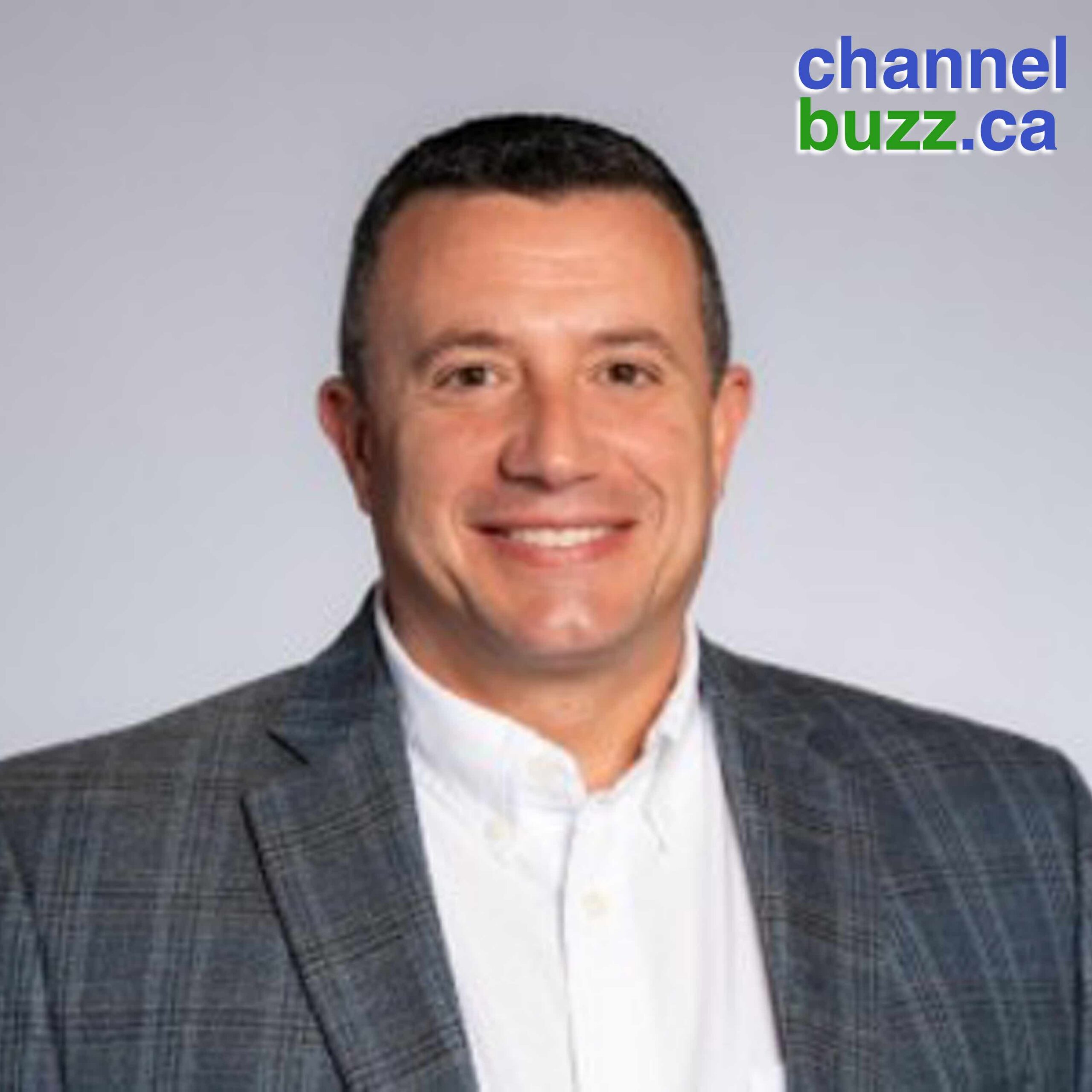
Nigel Brown, CTO of Microserve Not every voice at Dell Technologies World last week belonged to a vendor. For a partner perspective on the week’s biggest themes, In The Channel sat down with Nigel Brown, CTO of Microserve – a Burnaby, BC-based solution provider, Dell Titanium partner, and Dell’s Client Solutions Partner of the Year in Canada in consecutive years. Brown walked away from DTW with deskside agentic AI as his headline takeaway, particularly after hands-on time in a Dell lab showcasing NemoClaw – NVIDIA’s enterprise -governance take on the OpenClaw open-source agent framework. “They’ve set it up closed by default – it can’t leave the box,” Brown says. “That’s a safety net that really opens the conversation.” That said, he’s clear-eyed about where most of his public sector and enterprise clients actually are. “Broad scope, it’s ahead. The hardware is going to follow it.” The tokenomics reality landed hard too. Brown shared a personal story about spending a hundred dollars testing Claude on a single flight – a relatable example he’s started using to frame the real cost implications of unmanaged AI usage, well before any on-premises or local inference conversation begins. On cyber resilience, Brown says he’s had to evolve his approach: “I got to be more of a jerk. I was being too nice.” His firm’s managed backup practice has seen firsthand the damage when clients – and even other MSPs – treat backup as a checkbox. When you show up after a ransomware event to find the backup server was on the same domain and hit just as hard, the conversation changes. And on Canadian data sovereignty, Brown goes beyond the standard data-residency talking points. FISA Section 702 and the CLOUD Act, he argues, represent far more serious legal exposure than most clients realize – even those who believe a Canadian cloud region is sufficient protection. The conversation also covers the AI PC refresh cycle colliding with supply chain pressure, the end-user adoption gap that’s undermining Copilot investments, and what Dell’s revised partner incentive structure signals about where the growth opportunities are. Read Full Transcript Robert Dutt: Hello and welcome to In the Channel from ChannelBuzz.ca, bringing news and information to the Canadian IT channel community for the last 16 years. I’m Robert Dutt, editor of ChannelBuzz.ca and your host for the show. Last week, I was at Dell Technologies World in Las Vegas, Dell’s big annual customer and partner event. Over the course of the week, I had a number of conversations that I’ll be bringing here on In the Channel. Last week, we featured three Dell executives. This week, we’re bringing you some partners. Today, we start on that partner perspective, specifically from one of Canada’s top Dell partners. Nigel Brown is CTO of Microserve, a Burnaby, BC-based solution provider that has earned Titanium status with Dell and taken home Dell’s Client Solutions Partner of the Year in Canada in consecutive years. Microserve serves an enterprise and public sector-heavy client base, which means Nigel’s job is regularly about taking what gets announced on a stage in Las Vegas and translating it into something that makes sense for organizations that don’t necessarily move at conference speed. I caught up with Nigel on site at DTW last week. We covered a lot of ground – deskside agentic AI and what it’s actually going to take to make that real for customers, the very real cost of token economics, why he’s had to be, as he put it, more of a jerk about cyber resilience, and why the Canadian data sovereignty conversation is more urgent than most people realize. Let’s get right to it. My chat with Nigel Brown. Nigel, thanks for taking the time. Appreciate it. Nigel Brown: Happy to be here. Thanks for having me. Robert Dutt: So you guys are here, obviously, as a Titanium-level Dell partner, consecutive years as the Client Solutions Partner of the Year in Canada. What’s your overall read on this week? What made your ears stand up? What caught your attention? What are you taking back to both your team and to your customers when you go back to Burnaby? Nigel Brown: That’s a really good question. It’s also a big one. There’s been a lot of announcements, a lot of dialogue over the last couple of days. I’m trying to process that a little bit, assuming you were going to ask me that. I think the biggest takeaway I had – everybody’s heard of OpenClaw, everybody’s heard all the IT people are terrified of it, so it’s more, how do we get rid of it in our environments? Seeing this whole push around deskside agentic AI, especially given our market where we play a lot with clients – I actually had the opportunity, I did the lab today because I couldn’t resist seeing what it’s like. The governance and security wrapper on it totally makes sense and it’s opened my eyes. I think that’s probably the biggest. Beyond that, I would say the Dell hardware being able to run frontier models, seeing Gemini running local for sovereignty conversations – I think that’s a really good thing to see as well. Robert Dutt: Along those lines, obviously you touched on one of the big stories this week, which is deskside AI – the idea of physical infrastructure that’s at or near the customer’s desk, either in the data center or right there in the PC, that’s processing the models locally. It sounds like something that you’re interested in. I’m curious where it lands for your customers. Is it something that’s a conversation point, or is it ahead of where they are in the AI discussion at this point? Nigel Brown: I would say broad scope – I don’t want to lump all my customers into one bucket – but broad scope, it’s ahead. I don’t think you’re seeing a lot of organizations ready for it. We also deal heavily with public sector enterprise accounts, for example. We’re doing more and more in the commercial market where you’re going to see a little bit more playing and adoption within tech teams . But in ours, yeah, I’d say we’re definitely ahead right now. So it gives you a chance to get in there and pitch the idea as something new and plant those seeds. Once I get it past my IT and security folks, then that’s where it’s all going to start. If I can’t get it through mine in a good conversation, then I’m never going to be able to with our clients. Robert Dutt: But it sounds like there’s at least that – from your comments on OpenClaw, it sounds like there’s that door, that area of interest. Nigel Brown: Seeing it today under the NemoClaw and Viya umbrella – yeah, I think there’s definitely something there. They’ve set it up closed by default. It can’t leave the box. That’s what I saw in the lab today. So until you set up essentially like a firewall rule to allow it to do something, it’s a safety net that I think really opens the conversation and allows the idea of end users actually playing. Those are really early adopters anyway. And how could I integrate agentic AI into organizations? Robert Dutt: Man, how often does it come back down to governance with AI? Nigel Brown: Oh, absolutely. That’s pretty much the name of the game everywhere. And so we’re doing it well, and many are still scrambling. Robert Dutt: You touch on you guys having a lot of public sector, healthcare, education , all those kinds of verticals – not always the fastest to move on new tech. Along the lines of the previous questions, but sort of taken out a notch – how much of what the AI announcements we’ve heard this week translate directly to where your customers are at, versus how much needs to be, shall we say, adapted for the reality of your accounts? Nigel Brown: Well, you go to any of these events and it’s, “We’re behind if we’re not doing agentic AI everywhere.” Reality is, it’s just not true. I think it’s very forward-thinking – or very optimistic – to think we’re all moving that fast. It’s headed in that direction quicker and quicker. Executive tables are always the ones sitting there going, “We want it, we need it in our organizations, we’re going to get left behind.” So it’s very top of mind. But some organizations have very niche deployments – they’re figuring out the right solutions. Healthcare – I’ve seen it, they’ve done some phenomenal things in radiology and other areas. So it’s picking up. We’re dealing with one client right now that’s looking at online pharmacy and they’re looking at a huge Dell compute cluster to run AI on. So you see it, but it’s not commonplace. It’s not every organization. Certainly as you get into municipalities and things like that, it’s Copilot at best – that’s really where they’re trying to play – and their user base just isn’t adopting, not even close. Robert Dutt: So it sounds like there are at least a couple of steps that need to happen to get to the point of, A, using what’s already in place and, B, potentially looking at building out something internally – and the stuff that’s been talked about here a lot, the idea of running those AI workloads internally on the data center side. Nigel Brown: Yeah. I think it’s going to get there for sure. Right now the conversation has to be outcomes – not “I want AI.” And right now it’s so heavily, “Well, I know I need it, I don’t know what for yet.” I’ve seen it even in some peer groups – the dialogue is, “Well, we’re going to do AI, we’re going to build agents.” So, what for? And then there’s a long pause. Driving outcomes conversations is where it’s going to start, in my opinion. The hardware is going to follow it. And that really ties into, well, where are you going to run it? Do you understand token economics – or tokenomics, whatever the buzzword is right now – and that’s a really big deal. For me, getting that message out really loud and clear around the cost of tokens – I’ve done it, I’ve gotten burned. I spent a hundred bucks on a plane because I wanted to see Claude do something cool. And you’re going, wow, if I can do that in 10 minutes, think of what larger organizations will spend if they don’t find a smarter way to run it. Robert Dutt: That’s a good point – it’s not something you necessarily understand, but it’s something you can sure feel if you start to have adventures with the stuff. Nigel Brown: Well, exactly. And all it’s going to take – like I said, a lot of organizations started with Copilot under the Microsoft umbrella, because it was like an easy button. It was there for them, it was already set up. I am worried about some of those days changing, where that subscription turns into usage-based models. And we’ll see where that goes. You’re seeing it with Anthropic, you’re seeing it with Perplexity. I bounce off my limits all the time. Most of what I’m doing I can wait till tomorrow – but it’s easy to get out of control. Robert Dutt: And user computing is pretty core to what you guys do. There are a few things going on there – Windows 11 end-of-life support coming in October, the AI PC push coming from every direction at the same time. I’m curious if those two things are coming together in customer conversations as one refresh decision, or are they still separate tracks – the need to modernize for the Windows upgrade versus the need to modernize to get the most out of AI workloads? Nigel Brown: I think the end-of-support conversation and hardware refresh, honestly, is the biggest driver of the conversation that I’ve seen. And then that leads into, well, do I need an AI PC, and why, and what’s going to run on it? Everybody’s exploring and curious about it. There’s more skepticism about whether you need it now. Robert Dutt: How is that hitting along with the current fun situation with hardware constraints and prices spiking? And we’re hearing pretty directly from Jeff Clarke that, you know, telling customers, let us know what you want as early in the process as you can. I think the natural addendum to that is, make decisions knowing you might have this machine for a little bit longer than you previously expected. Nigel Brown: Totally right. So it’s very much my dialogue with our clients – it’s future-proofing. You better do it now. You don’t want to be stuck with a machine that can’t run an NPU for the next five years. So even if right now there’s skepticism about how much is going to run on it today, I think it is an important conversation to have and make sure that we’re ready for the moments where we’re really seeing workloads and inferencing running on device. You have to have that conversation now and pre-plan for it. But yeah, it’s been – especially in public sector – a hard conversation to have right now. Supply chain – we’re like a broken record. It still surprises me how many clients we talk to that haven’t seen this coming, that don’t know it’s real, or you get the ones going, “Well, I think it’s going to clear up in September, I’ll just wait till then.” Oh man. Brace for it. We’ve got to be ready. It just feels like a conversation on repeat these days – and it’s more than worth it, making sure we’re doing model selection with the future in mind. Robert Dutt: I find it’s a fun time to be a partner in that particular space. Nigel Brown: Well, you know, quote volume has quadrupled, because that same customer deal might take four different passes before they’ve made it through, especially in government. Pricing validity is a real challenge. It’s a moving target – no decision ever gets made fast. Robert Dutt: I want to talk a little about cyber resilience – another big topic here at the event. You guys run a managed backup practice, I understand, and you’re doing a lot of what vendors are asking MSPs to evolve towards. When you get into a customer environment today, what’s the most common gap between what they think their backup situation looks like and the reality of the situation? Nigel Brown: That’s an interesting question. It’s a real mixed bag. I always start with, “How confident are you in your ability to recover?” And most leaders – business leaders, outside of IT – there’s like a long pause. “Well, I don’t know.” Okay. Have you ever tested your recovery capability? No. Well, that’s where we’re going to start. And in other dialogues, they think they’ve got the backups running, but nobody’s been looking at them – they’re coming from doing it themselves, or maybe a mom-and-pop IT person taking care of it. They’re not watching, they’re not looking at tools, they’re not getting alert notifications on whether it’s keeping up and whether they’re protected. So that’s very foundational. Warning new clients – it’s just, let’s take them on that journey, do an assessment of the whole environment, make sure we’re protected. And a lot of conversations are, “Do you know that you’re not protected? Like, if you got ransomware tomorrow, there’s nothing I could do to help you, even though I’m your MSP.” That’s a scary reality. I’ve seen that have to go back to boards and make some tough decisions, find budget and solve it. They usually do – they react fast – but you’ve got to make the risk abundantly clear. Robert Dutt: That makes sense. In talking to Rob Emsley, who’s on the marketing team for the cyber resilience side at Dell, he was saying that 97% of cyber attacks now are specifically targeting backup infrastructure – because it turns out that’s where all the stuff is. Does that match what you’re seeing, and has that shift changed what you’re recommending to customers about what being protected really means for them? Nigel Brown: I wouldn’t say it’s really changed our messaging. I’d like to think we were maybe ahead of the curve in talking about storage and immutability – some of these key elements of, well, you just need it. That’s how we run our hosted service for clients that use it. And if we’re building out an architecture for another client, it’s just fundamental these days. You can’t even consider a solution that doesn
Where can I listen to Outcomes before hardware: Microserve CTO Nigel Brown on AI readiness, tokenomics, and resilience from Dell Technologies World?
You can listen to Outcomes before hardware: Microserve CTO Nigel Brown on AI readiness, tokenomics, and resilience from Dell Technologies World online on Radio and Podcast. Open the player on this page to stream the available audio.
Which podcast is Outcomes before hardware: Microserve CTO Nigel Brown on AI readiness, tokenomics, and resilience from Dell Technologies World from?
Outcomes before hardware: Microserve CTO Nigel Brown on AI readiness, tokenomics, and resilience from Dell Technologies World is an episode from ChannelBuzz.ca by ChannelBuzz.ca.
How long is this episode?
This episode is 27:55 long.
When was this episode published?
This episode was published on May 27, 2026.
Can I save Outcomes before hardware: Microserve CTO Nigel Brown on AI readiness, tokenomics, and resilience from Dell Technologies World for later?
Yes. Use the heart button on the episode page to add it to your favorite episodes list.
Are there related episodes from ChannelBuzz.ca?
Yes. This page shows related episodes from ChannelBuzz.ca when more episodes are available from the podcast feed.
Quick Answers About This Episode
Where can I listen to Outcomes before hardware: Microserve CTO Nigel Brown on AI readiness, tokenomics, and resilience from Dell Technologies World?
You can listen to Outcomes before hardware: Microserve CTO Nigel Brown on AI readiness, tokenomics, and resilience from Dell Technologies World on this page when the episode audio is available from the podcast feed.
Which podcast is this episode from?
Outcomes before hardware: Microserve CTO Nigel Brown on AI readiness, tokenomics, and resilience from Dell Technologies World is from ChannelBuzz.ca by ChannelBuzz.ca.
What are the episode details?
Published May 27, 2026 and 27:55 long