
 Radio and PodcastLive Radio & Podcasts
Technology
Lenovo’s two Taylors on simplifying the channel, the services shift, and life after Accelerate
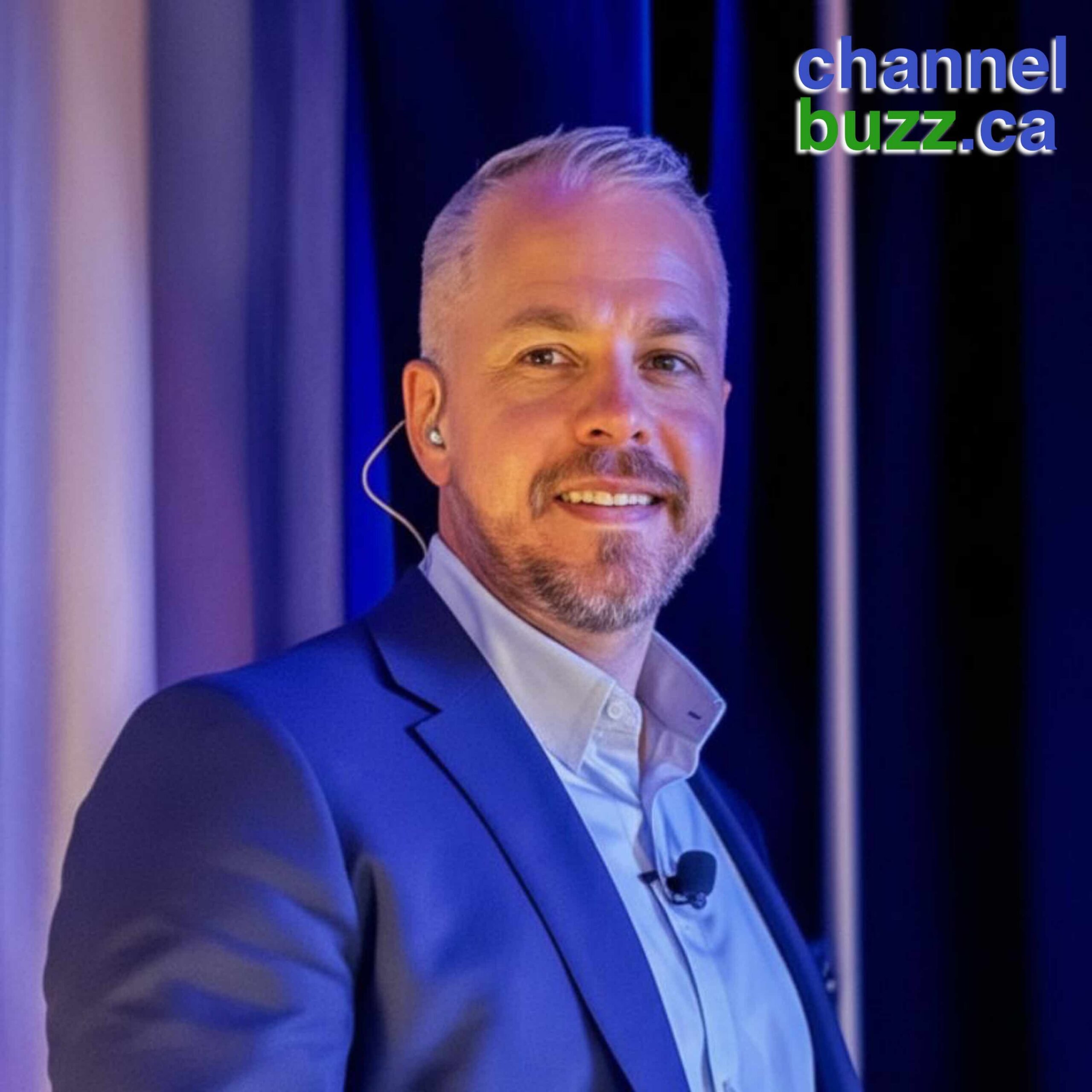
Jeff Taylor, executive director of global partner ecosystem and operations for Lenovo There are not many conversations where you get both the global architect of a vendor’s partner program and the Canadian channel...
About This Episode
Lenovo’s two Taylors on simplifying the channel, the services shift, and life after Accelerate is an episode from ChannelBuzz.ca by ChannelBuzz.ca. Jeff Taylor, executive director of global partner ecosystem and operations for Lenovo There...
Podcast
This episode belongs to ChannelBuzz.ca.
Listen Online
Use the player on this page to stream the episode online.
Episode Details
Published May 15, 2026, 40:02 long, audio available.
Related Episodes
Continue listening to more episodes from ChannelBuzz.ca.



Questions About This Episode
What is Lenovo’s two Taylors on simplifying the channel, the services shift, and life after Accelerate about?
Jeff Taylor, executive director of global partner ecosystem and operations for Lenovo There are not many conversations where you get both the global architect of a vendor’s partner program and the Canadian channel chief in the same room. In this episode of In The Channel, recorded the week after Lenovo 360 Accelerate wrapped up in Austin, we had both: Jeff Taylor, executive director of global partner ecosystem and programs at Lenovo , and Craig Taylor, senior director and Canada channel chief. The headlining number from the conversation is the dramatic simplification of Lenovo’s incentive structure. Jeff confirmed that Lenovo has reduced its active global incentives from 2,300 down to approximately 200 – a 92 per cent reduction – while maintaining the same total investment pool. The analogy he reached for: the same pizza, fewer slices, each one bigger. The earning power stays; the complexity goes. For Canadian partners, Craig noted that over 90 per cent either maintained or improved their tier status in the move to the new Lenovo 360 Authorized, Gold, and Platinum structure. Craig Taylor, senior director and Canada channel chief at Lenovo The conversation moved quickly into services. Lenovo is targeting a 15 to 20 per cent partner revenue mix from services and solutions within the next one to two years. Craig pointed to TruScale as the on-ramp, noting Canadian partner feedback has consistently positioned it as more flexible than competing offerings in market. On AI, Jeff described a “reimagination of enablement” – moving partner portals from static, backward-looking data tools into agentic AI-driven platforms that are intuitive and forward-looking. Craig pointed to Lenovo’s CIO Playbook as the practical tool helping Canadian partners move customers from proof of concept to proof of execution on their AI investments. Read Full Transcript Robert Dutt: Hello and welcome to In The Channel from ChannelBuzz.ca, bringing news and information to the Canadian IT channel community for the last sixteen years. I’m Robert Dutt, editor at ChannelBuzz.ca and your host for the show. You want to understand how a global technology vendor thinks about its partner program, not the press release version, but the actual mechanics of how design decisions get made and how they land in markets like Canada. Today’s conversation is a fairly rare opportunity. We have at the same time the global architect of the Lenovo partner ecosystem and the Canadian channel chief. Jeff Taylor is executive director of global partner ecosystem and operations for Lenovo, responsible for the Lenovo 360 framework that governs how the company works with partners worldwide and for the new consolidated partner ecosystems and program structure for the international markets that Lenovo unveiled earlier this year. Craig Taylor is senior director and Canada channel chief at Lenovo, a 2026 CRN channel chief and the person responsible for translating all that global framework into real outcomes for Canadian partners on the ground. We recorded this conversation just after Lenovo 360 Accelerate, the company’s annual North American partner event wrapped up in Austin, Texas. So this is about as fresh a read on the state of the Lenovo partner ecosystems you’re gonna get. We covered the dramatic simplification of Lenovo’s incentive structure, the push towards services-led selling and recurring revenue, how AI is reshaping both the partner conversation with customers and Lenovo’s own approach to enablement, and how Canadian partners should be thinking about a volatile period in hardware pricing. And yes, they’re both named Taylor. We had asked some questions. Let’s get right into it. My chat with Jeff Taylor and Craig Taylor. [Music] Gentlemen, thank you for taking the time. Jeff Taylor: Hey Robert, how are you? Robert Dutt: Very well, thank you. Craig Taylor: Excellent. Good afternoon, Robert. Robert Dutt: Interesting situation, one of those channel journalist dream situations, chatting with both the global architect of the partner program and the Canadian channel chief at the same time. And as fate would have it, you’re both just coming back from Austin. Jeff, for people who weren’t there in the room for Accelerate this year, the event was themed “unified as one” — pretty deliberate choice of words, I dare say. What were you trying to signal with that framing? Jeff Taylor: Yeah, well, I mean, obviously one with our partners is probably the first and foremost thing, but also to represent Lenovo holistically. From Motorola all the way through our devices, tablets, PCs, etc. and then into the data center. So we are one company and as an extension of that, one company includes our partners and the whole intent of the event was to bring everybody together and unify. Feedback has been really, really positive and it’s, you know, it’s only been a week, but lots of really good discourse and wonderful event. Robert Dutt: Craig, from a Canadian perspective, what did the Canadian attendance look like and what did Austin feel like compared to previous Accelerate events from a Canadian partner point of view? Craig Taylor: Yeah, our Canadian partners had very positive feedback to Jeff’s point. We’re always very well represented in these types of North American based events. We always punch above our weight class, I’d like to say. So all of the key strategic partners across our ecosystem were there in present and actively participating in our discussions as to how we’re going to strategize for our next fiscal year. Robert Dutt: Jeff, one thing that stood out for me from Austin was the choice of putting Jay McBain, Steve Brazier and Tiffany Bova on stage together, three analysts who ostensibly compete against each other in the market. Curious what the goal was in putting them together and what came out of that conversation that you think partners should take away. Jeff Taylor: Yeah, I think a couple of things. First of all, the moderator of that panel was with Alex Smith. So we had four great analysts all on the stage at the same time. I think if you take a step back and just look at the theme overall, what we’re trying to accomplish at Accelerate, it was really about industry topics. So we had representatives from the US Department of Energy as an example, talking about power and what’s happening at a governmental level. And part of that was to get these four analysts together who, as you say, they mix in a lot of the same circles, but they’d never been on the stage at the same time. And the idea was to propagate a little bit. And in some cases, they were aligned in a lot of their messages to the channel. In some cases, they differed. And it was a really lively and engaging conversation. And folks at Lenovo, we engage with these folks all the time, but having them all together, kind of representing their unique perspectives on the market right now was super valuable and engaging. Robert Dutt: So to dig into what you guys have been doing on the partner side of things, back in March, you announced the new consolidated partner ecosystem and programs, International Markets Organization. Now that Accelerate’s happened, partners have had a chance to hear it explained in person. What’s the clearest way to explain what operationally changed and what didn’t? Because from the outside, centralize where it makes sense can go a lot of different directions. Jeff Taylor: Yeah, look, I think the easiest way to explain it is we now have a single common framework across the globe. That framework is a guidepost, very intentionally set up as a framework, because execution has to remain local. And the input, the guidance, the feedback that we receive from our Canadian partners, from Craig, representing the viewpoints of those Canadian partners is absolutely critical to what we’re doing. And so by, you know, over time, as we had a lot of different markets and a lot of different geographies kind of expand over time as the company grew, there was similar objectives happening in multiple markets. And maybe the execution model was slightly different. And we thought by kind of bringing some of that together, we could simplify and we could gain efficiencies for our partners. But it’s really important to understand that the execution happens locally, sales happens locally, channel partners happen locally. And so it’s one really about standardizing the framework and not centralizing execution. Robert Dutt: How has that landed here in Canada, both with Canadian partners and in terms of how things operate for you, Craig? Craig Taylor: Yeah, the feedback has been really positive, Rob. You know, from a Canadian perspective, it’s all about leveraging our local teams and our local relationships, which haven ‘t changed. And feedback from our partner community is we are often best in class when it comes to how we represent our organization in front of the partner ecosystem. What I think is what more exciting for me now is we’re elevating those relationships to be consistent as to how we’re going to market with our partners. Consistency in the programs, consistency in the incentives, and also how quickly we can execute. What that means is our partner facing team can spend more time in market with our partners trying to win opportunities together with our mutual customers. Jeff Taylor: And if I could add, Rob, real quick, I mean, this was a very thoughtful process. This wasn’t something that happened kind of quick and without a lot of forethought. We have been working on this for years through the introduction of Lenovo 360 as that kind of framework itself. And then over time, as we’ve built some meat on the skeleton, the timing was just really right for us to go do this. But again, that premise of local execution is probably the most important thing. Robert Dutt: Well, I know that internally you guys have kind of had the mantra of “global might, local fight” internally for a while now, kind of being applied to the partner org, it seems here. I guess I’m still a little curious where there is a certain tension between global consistency and local relevance. You’ve kind of unpacked it, but where does that actually land in terms of which side takes the lead? Jeff Taylor: Yeah. So let me give you some real tangible numbers and examples. Three years ago in market across the globe, we had 2,300 active incentives in the market. I’m going to repeat that. We had 2,300 active incentives in the market. So if you think of your investment pool as a pizza, right, and you divide that 2,300 ways, the relative impact of those individual slices can be quite small. Now, what we found in talking to markets was that there was absolutely a consistency and intent. And maybe that intent was new customer acquisition, or maybe it was growth targets, or maybe it was something else. There was consistency in intent, but the execution was different, and that created operational complexity. It created our ability to report seamlessly and consistently over time more of a challenge than simplification. So in just the last two years, we’ve gone from that 2,300 partner incentives to about 200. So almost a 92% reduction without any change in investments, any negative change in investments, because the intent was still there, right? The intent was consistent across the globe. So that’s one where we centrally can look at the forest through the trees. We can see an opportunity for simplification. Then we can bring that to the markets while still driving that strategic intent that we want to accomplish with our partners. So that’s just one example. Craig Taylor: Yeah, well said. Just to add to that, Rob, one of the things that was very important was to make sure we had local input to the global framework that was being created at Jeff’s level. So we had many conversations as to what our market needs and demands were, and make sure that we shaped it to be properly represented within the framework. That worked out very, very well. We also are allowed to have some nuances in this organization as well. And so what we’re allowed to do is perhaps if a certain pathway doesn’t make sense to the Canadian market, for example, being more of an SMB-based market, we’re going to pivot and we’re going to make those changes to make sure that we service our partners the best that we should. And kind of beef up that SMB-facing side of things. Robert Dutt: Yeah, that makes sense. Jeff Taylor: It’s really interesting. It’s interesting, Robert. From day one, we called Lenovo 360 a framework and not a program from day one. And the whole idea was that we wanted to ask three basic questions like, how do you best engage with your partners? How do you best connect with your partners and how do you best grow with your partners? But depending on the conversation, the answers to those three questions might be different. So as an example, if you’re talking to a traditional hardware solution provider, you have answers for those three questions. If you’re talking to a GSI or an MSP or an MSSP, same questions may be very different answers. And so the whole idea with this framework was to be able to flex accordingly. And that went down all the way to the market level. So Craig mentioned that Canadian being more oriented towards an SMB type of approach, the framework has to flex to be able to support that. Whereas in other markets, it may flex a slightly different way, but it’s still all about engaging, connecting and growing. Robert Dutt: OK, back to your pizza point, Jeff, and one of my favorite, probably apocryphal Yogi Berra quotes, “cut my pizza in four slices, please, I can’t eat eight.” Curious, though, for a partner who looks at it and says, “all right, well, I used to have three incentives applied to my business and now there’s only really the one. The math doesn’t work for me.” What’s sort of the answer for them? Because the earning power says we didn’t take away the earning power. Jeff Taylor: So again, it’s the intent stays the same. The earning power stayed the same. The whole idea now is operationally, it should be easier for… the intent was that it would be easier for the partners to have a path towards that earning power. So instead of Jenga or a very complicated jigsaw puzzle, the intent here was to simplify that. So it’s a clear path to that earning potential with the same intent around growth, acquisition, those types of things. Craig Taylor: Yeah. And Robert, one of the things our partners have been asking us for is to provide more direction, focus as to where they want us to go win together in the market. And I think by simplifying these programs, it’s also allowed us to provide more focus to our partner community in the ecosystem to make sure that we’re winning together in the areas that we want to win. Jeff Taylor: And Robert, it goes beyond just traditional incentives programs, too. So we’ve simplified things like our certification programs. I’m going to get this number slightly wrong, but in the ballpark, in the last two years, we’ve driven 80,000 new certifications globally through some of the simplified changes that we’ve made. So all of these things, it’s look at the globe and then apply it locally. And again, with the full intent of making it as easy as possible for the partner. Robert Dutt: As with most partner programs slash framework changes, updates, you’ve acknowledged that some partners will land at a different tier under the new structure. How are you managing the transition and what should a partner do if they feel the new placement doesn’t reflect where they’re actually at in the relationship with Lenovo? Jeff Taylor: We’re very conscious about that. And I think, Robert, you know, any time there’s even a small change in some type of construct within the program, there’s some unfortunate circumstances associated with that. But we really tried to minimize it. And I’ll just give another example to hit a tier level. We have a volume requirement. OK, that’s the framework. But what that volume requirement is, it’s going to differ by market. So, you know, it might be very different in the U.S. than it is in France, than it is in Canada, than it is in Indonesia, as an example. And the whole intent there was through our analysis was to kind of minimize those impacts as much as possible while still creating the right type of incentive and the right value associated with each of those tier levels. Craig Taylor: And to that point, Robert, it was very thoughtful in Canada as to what the thresholds should be in order to properly reflect our market. And what’s happened as a result of that is over 90 percent of the partners have either maintained or actually improved their tier status as a result of the simplification and restructuring. What we’re doing with that remaining 10 or less than 10 percent is getting out in front of our foot, making sure that we have those discussions, working together through joint business plans to determine how we’re going
Where can I listen to Lenovo’s two Taylors on simplifying the channel, the services shift, and life after Accelerate?
You can listen to Lenovo’s two Taylors on simplifying the channel, the services shift, and life after Accelerate online on Radio and Podcast. Open the player on this page to stream the available audio.
Which podcast is Lenovo’s two Taylors on simplifying the channel, the services shift, and life after Accelerate from?
Lenovo’s two Taylors on simplifying the channel, the services shift, and life after Accelerate is an episode from ChannelBuzz.ca by ChannelBuzz.ca.
How long is this episode?
This episode is 40:02 long.
When was this episode published?
This episode was published on May 15, 2026.
Can I save Lenovo’s two Taylors on simplifying the channel, the services shift, and life after Accelerate for later?
Yes. Use the heart button on the episode page to add it to your favorite episodes list.
Are there related episodes from ChannelBuzz.ca?
Yes. This page shows related episodes from ChannelBuzz.ca when more episodes are available from the podcast feed.
Quick Answers About This Episode
Where can I listen to Lenovo’s two Taylors on simplifying the channel, the services shift, and life after Accelerate?
You can listen to Lenovo’s two Taylors on simplifying the channel, the services shift, and life after Accelerate on this page when the episode audio is available from the podcast feed.
Which podcast is this episode from?
Lenovo’s two Taylors on simplifying the channel, the services shift, and life after Accelerate is from ChannelBuzz.ca by ChannelBuzz.ca.
What are the episode details?
Published May 15, 2026 and 40:02 long