Certain and Wrong: Why False Facts Feel True | Wired For This
Today, we’re joined by Dr. Cecilie S. Traberg. The transcript for this episode will be available the day following the original airdate. Lin...

Radio and PodcastLive Radio & PodcastsOpening Radio and Podcast...

Radio and PodcastLive Radio & PodcastsFetching podcast shows and categories...
Radio and PodcastLive Radio & PodcastsFetching podcast episodes...

Periodic audiocasts from American Scientist, a publication of Sigma Xi, The Scientific Research Society.

Today, we’re joined by Dr. Cecilie S. Traberg. The transcript for this episode will be available the day following the original airdate. Lin...
Today, we’ll hear from Dr. Dan Willingham, a Professor of Psychology at the University of Virginia. He’s taught there since 1992, and until...
In this episode, we're talking about how we consume, process, and share information—and how all of this is changing as our relationships wit...
Emma Levine and Shereen Chaudhry join this episode of Wired for This. Transcript Links/Sources mentioned : HOPE LAB , led by Dr. Levine and...
What does it take to change a mind? In episode two of Wired for This , we’ll hear from Dr. Katy Milkman, James G. Dinan Professor at The Wha...
Welcome to Wired for This—a deep dive into how we think , believe , change , and connect . In this limited series, we’ll explore the psychol...

The American Scientist Podcast presents a new audio series, Wired for This , premiering on September 10, 2025. Wired for This offers an in-d...
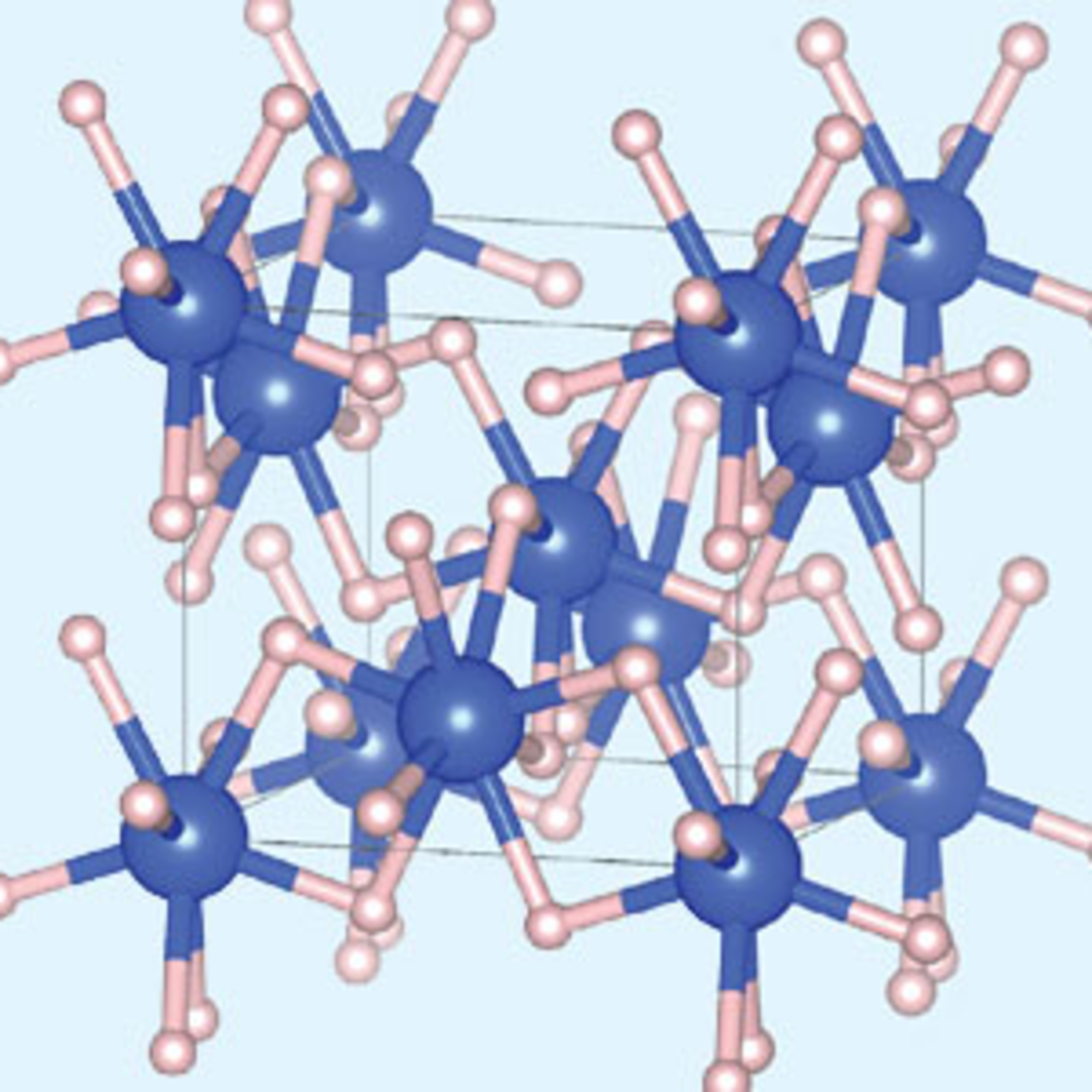
Chris Pickard is a materials scientist who employs what are called first principles methods—modeling techniques that work out material prope...

An interview with the president and founder of African Gong, Elizabeth Rasekoala. Her current book "Race and Sociocultaral Inclusion in Scie...

An interview with Virginia Tech environmental engineer, Linsey Marr. Her expertise in aerosols came to center stage as she and her colleague...

We'll hear from science communication leaders and podcasters on why podcasting is an important platform for Science. Interviews from Samir H...

Andrea "Annie" Kritcher discusses her and her team's achieved ignition, raising new hopes for fusion as a practical energy source. Host Core...

Cecilia Padilla-Iglesias is melding enviromental data and how these early populations interacted. Host Corey S. Powell and American Scientis...

The collision of the Great Resignation and long-standing gender inequities in medicine is heightening calls for improved family leave polici...

On using synthetic biology to create next-generation diagnostics and therapeutics -- an interview with James J. Collins of Harvard and MIT,...

How science fiction promotes science curiosity and why that matters. Hear from science communication practitioners and scholars Reyhaneh Mak...

The first images from the James Webb Space Telescope (JWST) are already transforming our view of the universe. Hear from John Mather, Nobel...

There are many ways organisms adapt to their environments, which can be seen both with the eye and in an organism's genetic sequence.

Researchers are working to understand the cellular composition and diversity of the brain, creating a catalog of cell types as well as seeki...

Arrays of microneedles that could replace injections have been the subject of research for some 50 years, but have not yet been commercially...

As entomologist Suzanne W.T. Batra has long argued, there are far better pollinator bees than they honeybee. Hear an interview with the rese...

Liquid-filled scaffolds that are not enclosed, but don’t leak? A team at Lawrence Livermore National Laboratory came with a 3D-printed unit...

Rewards and pitfalls to communicating science on social media: a discussion with Michael Xenos at the University of Wisconsin-Madison, Black...

Astrophysicist Hakeem Oluseyi discusses his memoir, A Quantum Life: My Unlikely Journey from the Streets to the Stars.

Structural problems in STEM workplaces, and the importance of inclusivity in institutions -- a conversation with Shirley Malcom.

Structural problems in STEM workplaces, and the importance of inclusivity in institutions -- a conversation with Shirley Malcom.

Lessons from past biotechnology controversies and the potentials and concerns that lie ahead -- a conversation with Insoo Hyun.

Approaches to engage marginalized communities -- a conversation with Stephaun Elite Wallace.

Exploring all things data visualization.

Using art as a tool for environmental education.

How science communicators are using music to make science more reflexive, equitable, and engaging to audiences.

This remarkably diverse group of dinosaurs went far beyond Triceratops.

Seeking to better describe the world, researchers are attempting to blend the languages of science and art.

An interview with virologist Peter Jay Hotez on the anti-vaccine movement and other challenges to vaccine development, including poverty, wa...

An interview with Anina Rich, who heads the Perception in Action Research Centre at Macquarie University and the Synaesthesia at Macquarie r...

An interview with Manuel Lima, Senior UX Design Leader for Google, avid historian, and author of books exploring how certain visual themes,...

New computing applications are ahead for soft materials that can guide light.

An interview with atmospheric scientist Ben Santer, who helped to author the Intergovernmental Panel on Climate Change's famous conclusion i...

All-ages programming is a challenge, but Tinkercast's "WOW in the World" is popular among both parents and children.

Detecting gerrymandering is an active research field, particularly given new voting methods such as ranked-choice voting, but ending the pra...

New imaging reveals the hidden structure that makes enamel in human teeth so tough, inspiring researchers to use the knowledge to create tou...

An interview with high school teacher Matt Brady -- author of "The Science of Rick and Morty: The Unofficial Guide to Earth's Stupidest Show...

An interview with University of Maryland engineer Ryan Sochol, whose team has developed a technique to do three-dimensional printing at capi...

An interview with Geraldine L. Richmond, Presidential Chair in Science and professor of chemistry at the University of Oregon, and the curre...

Coal-ash spills and water quality: an interview with Avner Vengosh, a geochemist at Duke University, on his latest research.

Overuse, population growth, and climate change are turning water into a powerful tool for conflict in many parts of the world.

Modern life is costing us months of our lives.

Live imaging of body-sensing neurons required both new techniques and new technology.

An interview with Jeff Dean, head of artificial intelligence at Google, about the major advances and concerns facing current artificial inte...

Young women have a low risk of heart disease, and sex differences in this bodily system could help explain why.